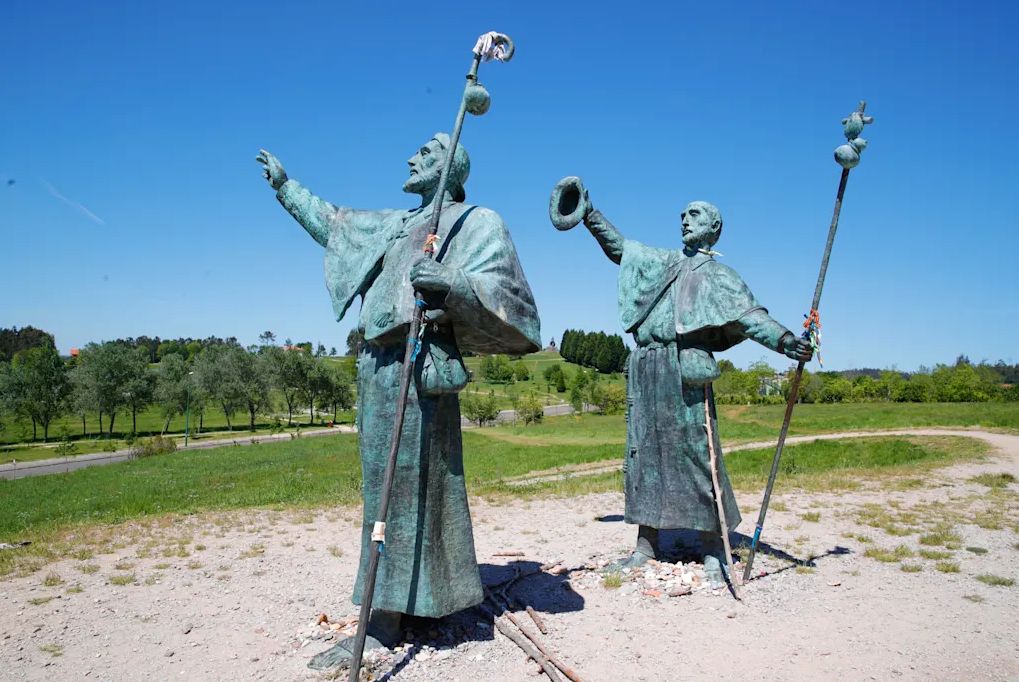
The staff was not only intended to provide stability on rough terrain; it also symbolized:
• being on a journey
• support during the pilgrimage
• trust in God
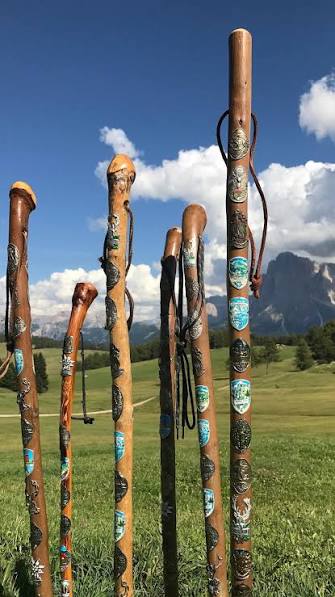
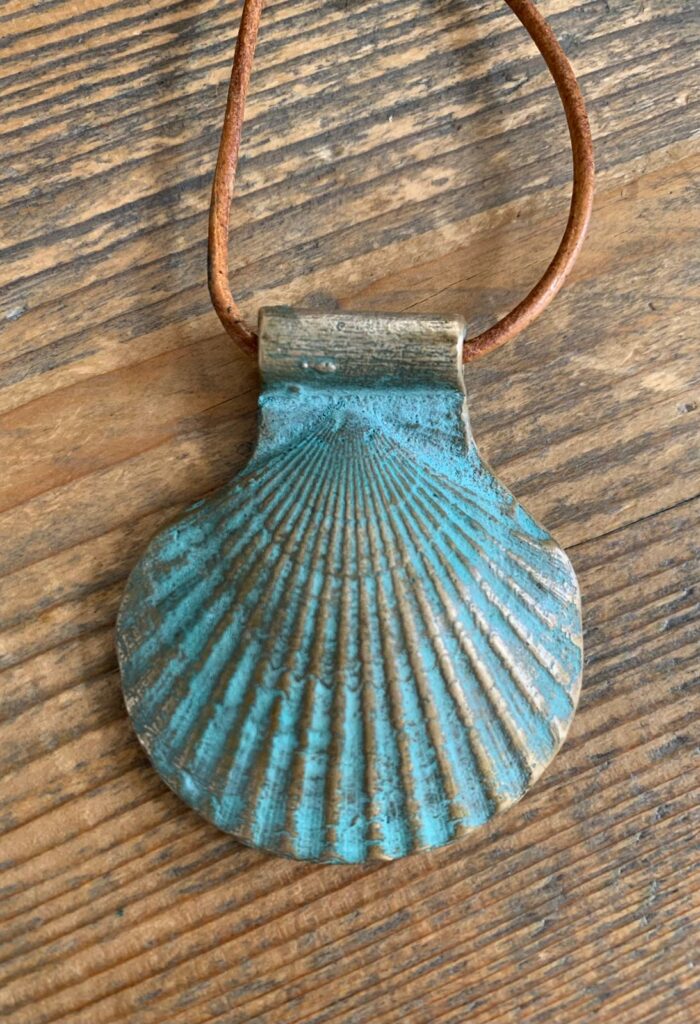
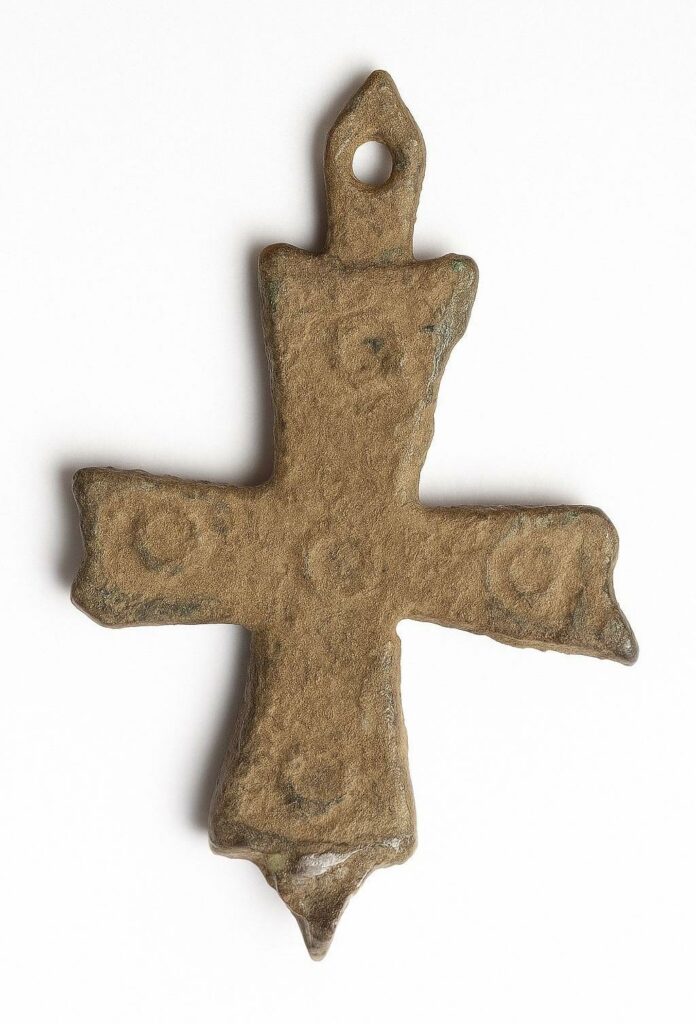
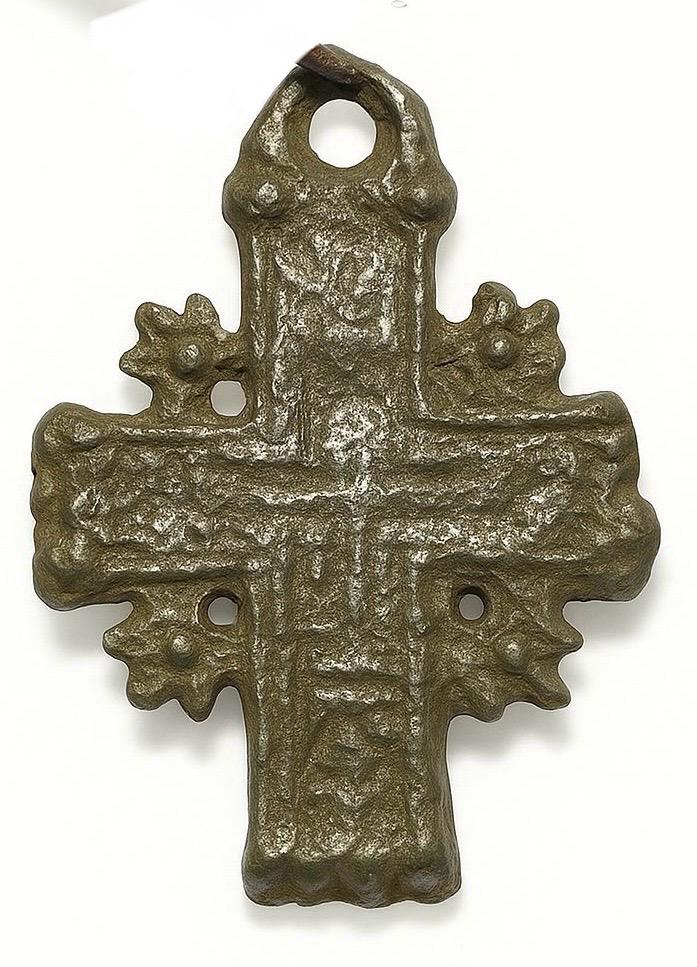
The staff could also be decorated, sometimes with ornaments and sometimes with pilgrim badges, such as the Scallop Shell of Santiago. What has been passed down from that to the present day are the well-known small shields on a walking stick; that is their origin.
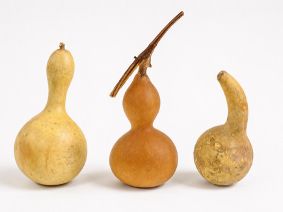
A small gourd used as a drinking flask. But sometimes also a small pouch, was sometimes hung from the staff, as well as a little bell, a pilgrim badge, or other decorations. In later centuries, ribbons and other keepsakes were added as well.
Such a pouch was also for spiritual support, In turn, this symbolized owning little, trusting in God’s provision during the journey, and leaving room to receive something from others.
In a way, it was a small medieval survival kit — but also a place to keep meaningful mementos.
What was kept inside the pilgrim’s pouch?
For example:
Rosary or prayer beads
– for prayer, to provide courage, confidence, and spiritual support.
Salt
– a symbol of purity and faithfulness
– “You are the salt of the earth.” (Matthew 5:13)
A small stone
– a reminder of the labyrinth or the path someone has walked
– God as the Rock
A small piece of oak wood or an acorn
– strength and steadfastness
– a reference to your oak tree at the entrance
A small piece of bread or a grain of wheat
– life, nourishment, and community
A short piece of red cord or red ribbon
– a symbol of connection with the brotherhood and the path someone has travelled
Herbs
– not only for cooking, but also as medicine. Equally important, however, was their symbolic meaning.
Not all of this was included as standard. It is all according to the needs of the pilgrim himself. The beauty of such a small bundle is that it quietly says: “You continue your journey, and now you carry a part of this place with you.” It also says: “Here, I found peace.”
The scrip – the pilgrim’s bag or pouch:
A pilgrim did not carry the contents of an entire camper. So no kitchen with a gas stove, a spare bed, a spice rack, and certainly no goat tucked away in the bag.
The most important point first: there was no standard packing list for every medieval pilgrim.
What someone carried depended on their financial means, the distance to be travelled, the season, the destination, and whether they travelled alone or in a group. Moreover, the scrip was not large. The whole idea was to travel lightly and to depend along the way on inns, monasteries, hospices, purchases, and the generosity of others.
It probably contained simple, everyday necessities, such as:
• bread or other non-perishable food;
• a small purse with some money;
• a knife for eating and everyday use;
• letters of travel or recommendation;
• a small prayer book or other devotional item, if the pilgrim owned one;
• after visiting a shrine: a pilgrim badge, ampulla, or another keepsake. Small ampullae could contain holy water or oil from a holy shrine.
In addition, a pilgrim might carry a drinking vessel, bowl, or bottle. However, these were often attached to the belt or the staff rather than stored inside the bag. A staff, a scrip, and a drinking vessel therefore did not necessarily mean that everything was crammed into one overfilled pilgrim’s pouch.
Cloak and hat:
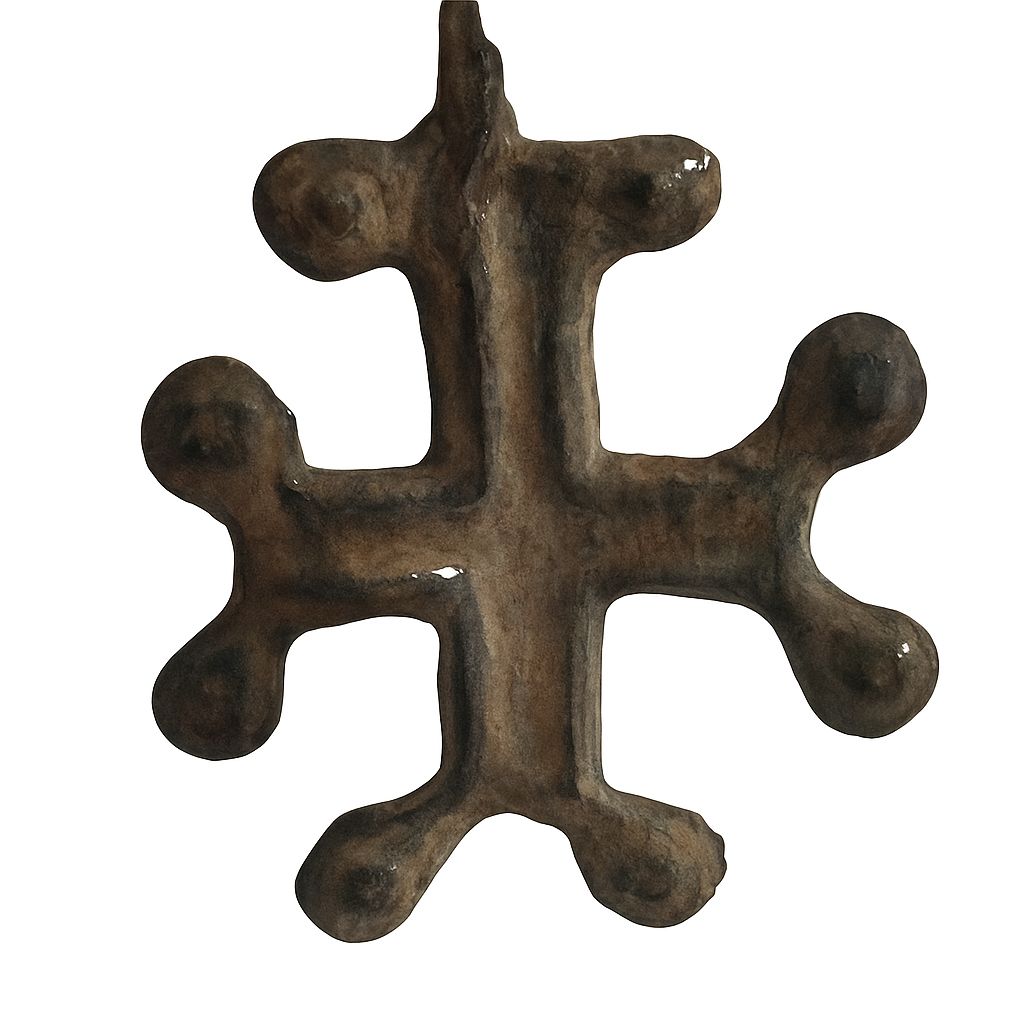
Pilgrim badges were purchased at places of pilgrimage. They served as proof of the journey or as a lasting reminder of the visit. They were often fastened visibly to the pilgrim’s hat or clothing and therefore did not remain inside the bag for long. In this way, others could immediately see where the pilgrim had travelled and at which holy places acts of devotion or penance had been performed.