

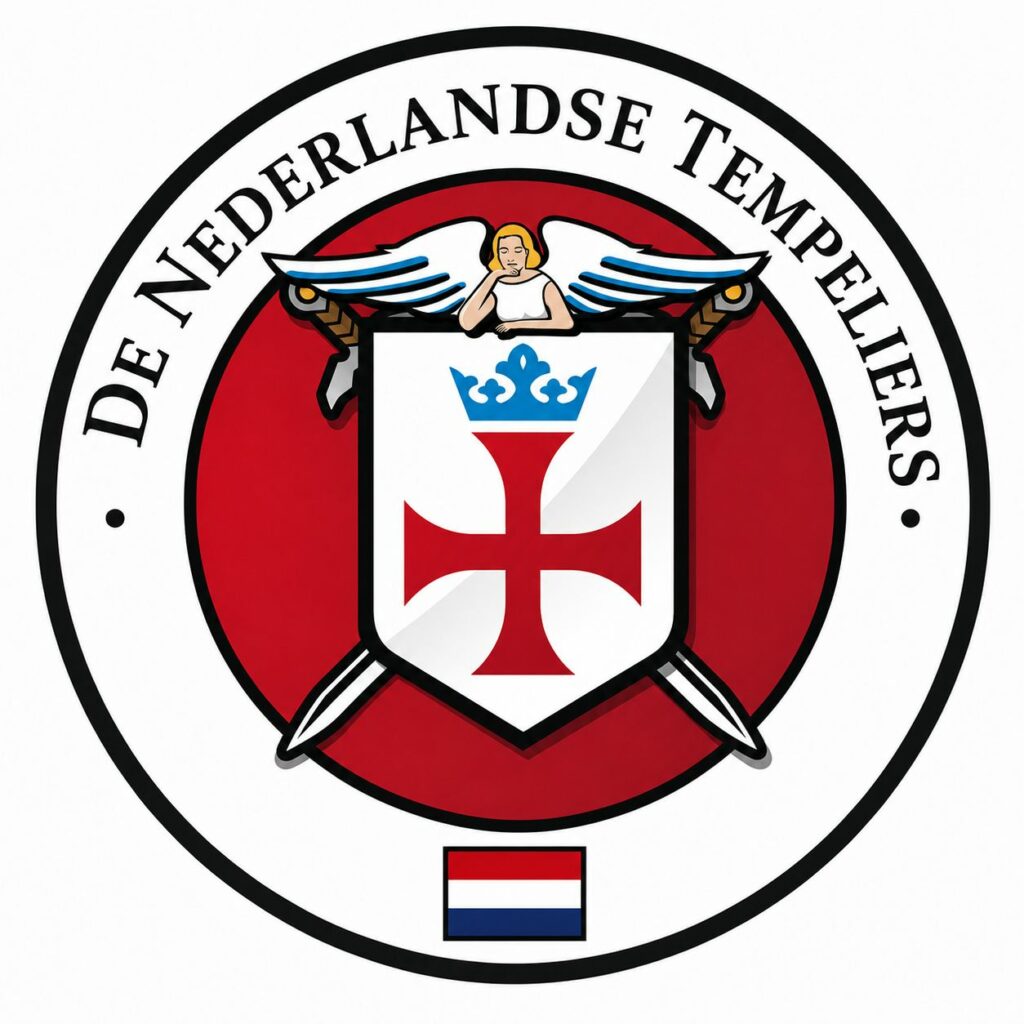
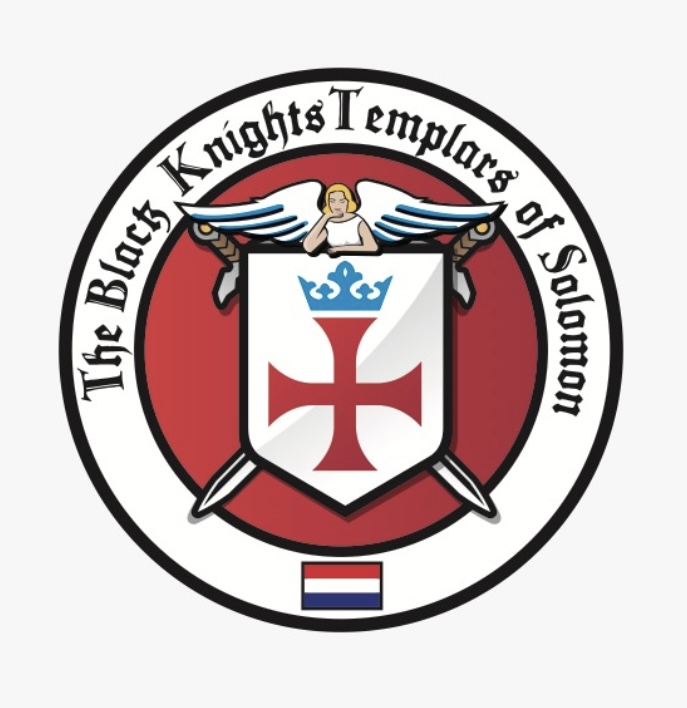
The Dutch Templars Logo
The Dutch branch already existed before April 2020. Not everything about its earliest history can be traced with certainty. From March 21, 2021, the leadership and further development of the Dutch branch have been documented.
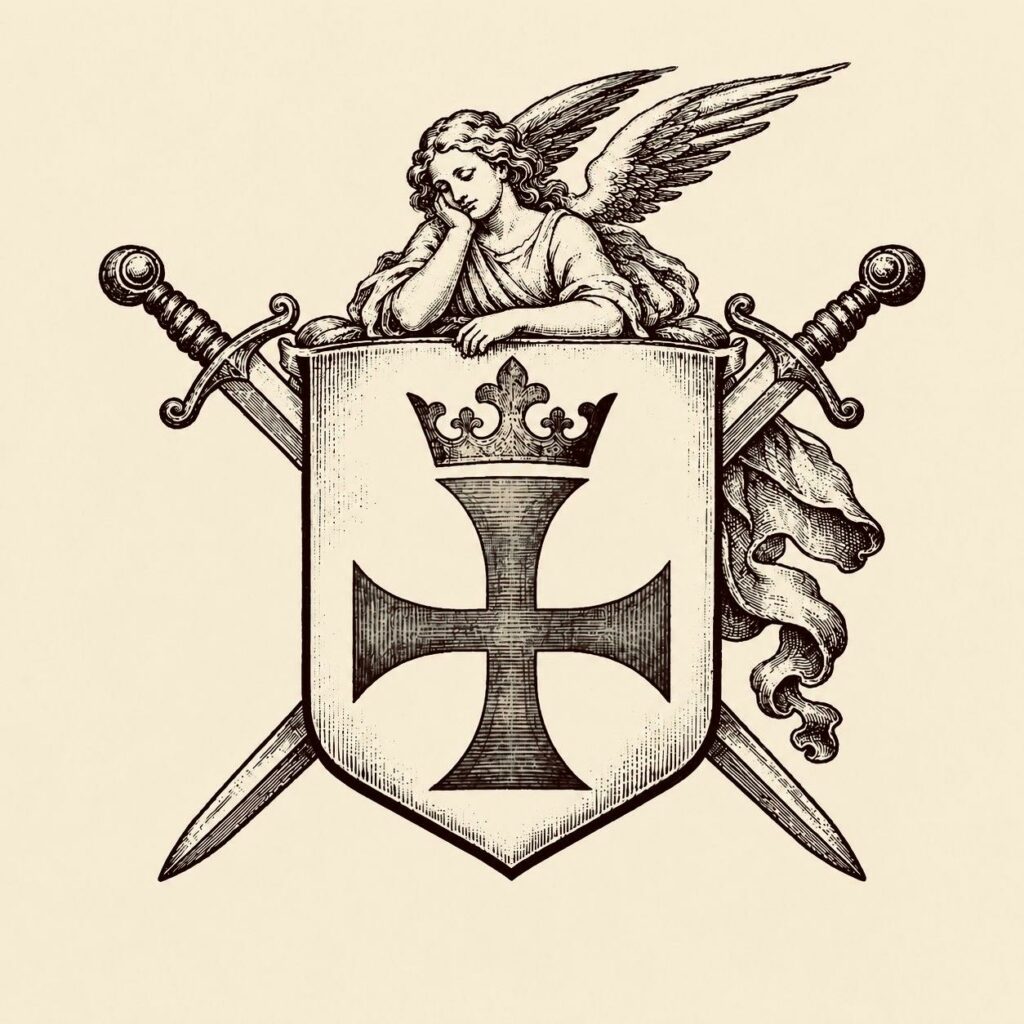
We use two logos: one when we act under the Main, our Scandinavian main order, and one when we operate from our own Dutch branch.
The Meaning of Our Logo
A logo is more than an image. It tells a story. Our logo is made up of symbols that together express our history, our mission, and our connection.
✠The Templar Cross
At the center of the shield is the red Templar cross.
The cross forms the heart of our emblem. Not power, not a title, and not a person stand at the center, but Christ. That is why the cross is literally placed at the center of our shield.
👑The Blue Crown
Above the cross is the blue crown of Skåne (Scania) in southern Sweden.
This crown refers to our origins within the Scandinavian Main. It reminds us where our journey began and of the brothers and sisters with whom we are connected. The crown is therefore not a sign of dominion, but of connection.
The Main remains the Main.
We are the Dutch branch and are always connected to our Scandinavian brothers and sisters.
⚔️ The Swords
The crossed
swords recall the original task of the Templars: protection.
For us, they do not stand
for a struggle for power, but for courage, responsibility and the willingness
to stand up for truth and justice.
🇳🇱 The Dutch Flag
At the bottom
of the logo is the Dutch flag. It makes clear that we carry out our mission
within the Netherlands. Therefore, we proudly bear the name:
The Dutch Templars
Not because we
wish to be a new or different Templar Order, but because in the Netherlands we
want to contribute to preserving and passing on the history, values and
heritage of the medieval Templars.
Not above the other, but beside the other
The symbols in our logo not only remind us of our history, but also of the attitude that comes with it. A cross, a shield, a sword or a title does not make anyone greater than another. True service instead calls for humility.
Bernard of Clairvaux expressed this beautifully:
“Show yourself as one among the others, only humbler than all.”
For us, these words touch upon the very heart of brotherhood. We do not serve to be seen, nor to elevate ourselves above another, nor to bear a title. We stand beside one another — as brothers and sisters — and place that which we serve above ourselves.
Equally striking is how Bernard describes the Templars in a letter to the Patriarch of Jerusalem: as “zealous defenders of the Church”, people willing to devote their lives to their brothers. Not to stand above one’s brother, but to serve beside him — and in that service ultimately to serve Christ.
Our mission
Ultimately, our logo tells one story.
The cross stands at the centre.
The angel protects.
The crown reminds us of our origin.
The flag shows where we serve.
Everything serves one simple motto that gives us direction anew each day:
Soli Deo Gloria
To God alone be the glory.
Heraldry
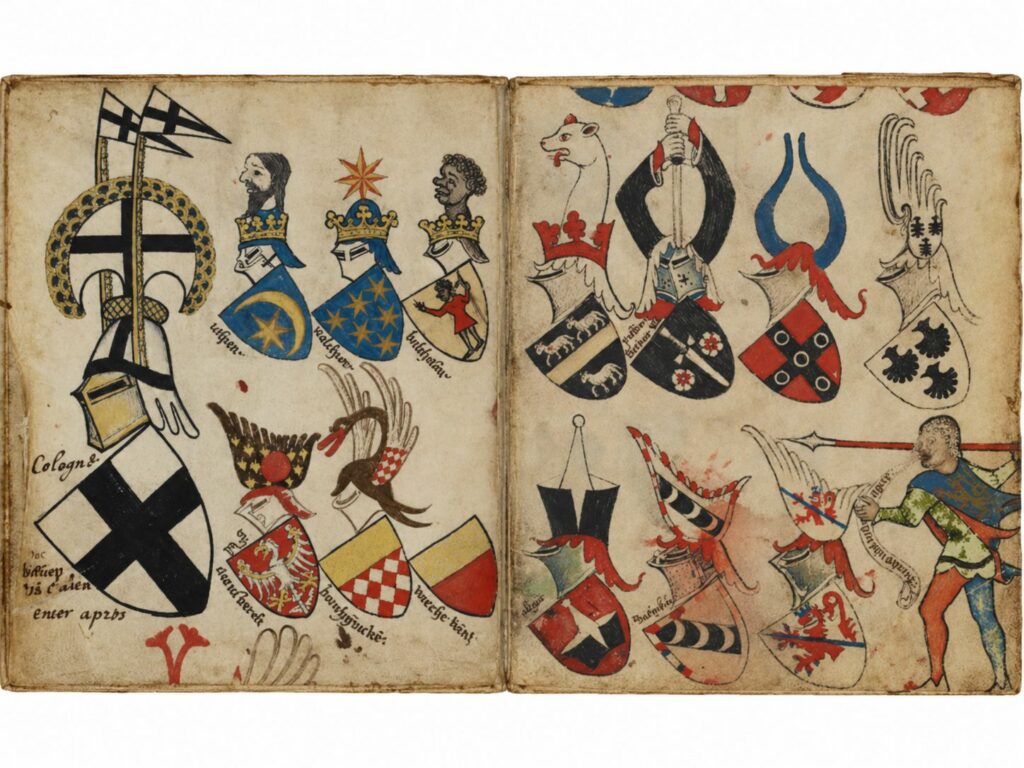
Heraldry in the Middle Ages was far more
than decoration. It was a visual language of origin, possession, authority and
connection. Whereas today we tend to think primarily in terms of countries with
clear national borders, the medieval world revolved much more around lordships,
counties, duchies, cities, families and feudal bonds. A territory did not
simply belong to “a country”, but stood under the authority of a lord, prince,
bishop, city or dynasty.
Coats of arms made that world visible. From colours, crosses, animals,
crowns, helmets and other signs, one could recognise who someone was, which
house he belonged to, which territory he represented, and which rights or bonds
were associated with it.
That is precisely why old weapons tell so much. They show not only how people wanted to present themselves, but also how power, family, faith and land ownership were intertwined. Heraldry is therefore full of symbolism: everything had to be represented in 1 image, or visual language. A language of colors, shapes, animals, signs, and rank signs — all loaded with meaning, but a visual story of recognition and identity, depicted with symbolism.
Originally, of course, a weapon also served very practically:
But almost everything in it acquires or carries meaning:
What is symbolic?
But this is also important:
Not every symbol always meant exactly the same thing
everywhere.
Sometimes something was
simply: