

The name “Templar” – where does it come from and what does it mean?
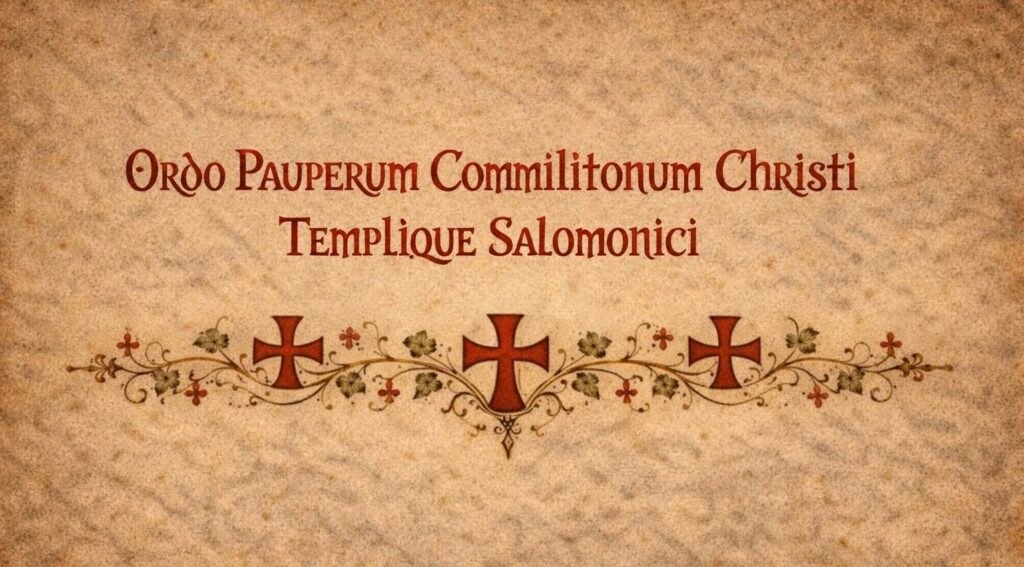
The literal translation is:
The Order of the Poor Fellow-Soldiers of Christ and of the Temple of Solomon.
This is shortened to Knights of the Temple of Solomon, which becomes Temple Knights, and ultimately: Templars.
Pauperum = poor
Poor? How so?
Knights were rich. They were nobles, of high birth, with castles, lands, and servants. So how are they “poor”?
Because upon entering, they had to give up everything. Land, title, weapons, wealth—even their seal. They took a vow of poverty. Not because they had to, but because they chose to.
They lived under a vow of poverty like monks.
Everything became common property of the Order, as in a monastery.
They were both warrior and monk. They lived with sword and prayer. They gave up their power to become servants.
At entry, this meant:
Renouncing personal possessions
Renouncing one’s own will
Living in obedience
Living in chastity
No private property, no private agenda
Not poverty as lack, but as a voluntary choice. Not poor because we had nothing, but because we chose to possess nothing.
Templars could be noble, wealthy, trained, and armed. Upon entry, everything was laid down. Everything that was “mine” ceased to exist.
Not only material things such as money, house, goods—but also: honor, fame, authority, future plans—your own will.
To modern eyes: incomprehensible.
This is more radical than material poverty.
A Templar does not decide where he goes.
Does not choose his task.
He does not even choose his death.
Pauperes is also a spiritual state
We are not powerful, even if we bear arms.
We are not free, even if we ride on horseback.
The paradox is this:
We Templars were militarily extremely efficient—financially highly organized and internationally very influential.
And yet: personally poorer than most monks.
This tension is the Order.
Without Pauperes, we would be a simple elite corps, or just another knightly brotherhood.
With Pauperes, we are a vowed community—an offering.
That is our calling.
Commilitonium = fellow-soldiers
The Latin reveals it: Pauperes Commilitones Christi.
Milites = soldiers
Commilitones = fellow-soldiers / brothers-in-arms
This means: not alone, not autonomous, not acting independently.
A commilito exists only in relation to others.
Who are they “with”?
1) With Christ Himself – this is the core
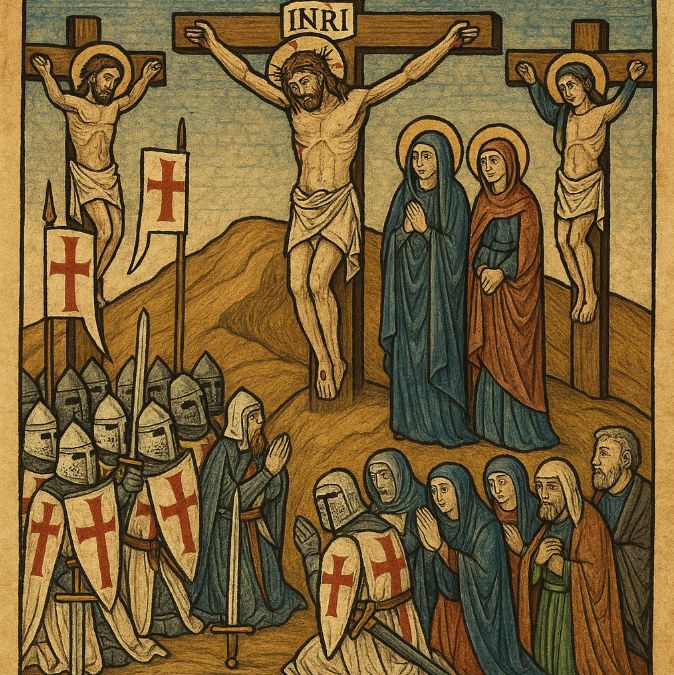
Templars are not soldiers for Christ, but with Christ.
Christ is not a spectator, but the first Warrior—the victorious Christ: Christus Victor.
We do not go ahead of Him.
We join Him.
2) With each other – as a community
No individual knights on personal quests for glory.
No private property, no personal honor, no individual mission.
Everything is shared, obedient, communal.
A fellow-soldier means: your sword is never yours alone.
3) With the Church
A layer often forgotten.
Templars are Commilitones Christi within the body of the Church.
Not above it, not beside it.
Therefore: obedience to the Rule, recognition by pope and council, and no independent theology.
We fight within the body of the Church, not outside it.
A battle that was already going on before them.
Without “with”, we would be independent mercenaries.
Heroes with crosses but without substance. Loose swords.
With “with”, we are:
links, guardians, protectors, bearers of a Holy line.
In one line:
Templars were not soldiers representing Christ, but fellow-soldiers who joined His struggle—together, within the Church, placed at the Temple.
Christi = Christ
Christ is for everyone. Above all. Eternal.
“Soldiers of Christ” tells you what you fight for.
Templique Salomonici = Temple of Solomon
Why “of Christ and of the Temple of Solomon”? Why not only of Christ?
Christ + Temple = incarnation.
Christ is the Word. The Temple is the Body.
Faith stands somewhere—and must be guarded.
Without the Temple, there is no anchor, no mission, no boundary.
The Temple is where Heaven and Earth meet.
Templars understood: we are not of the city—we are of the Temple.
The Temple was:
Biblically untouchable—older than Rome—older than the Latin Kingdom—older than any king.
Thus, the Temple of Solomon was not just a building.
It places us above every worldly power—directly under God.
3) Why not Jerisalem, Hierosolyma? Why the Temple of Soilomon ?
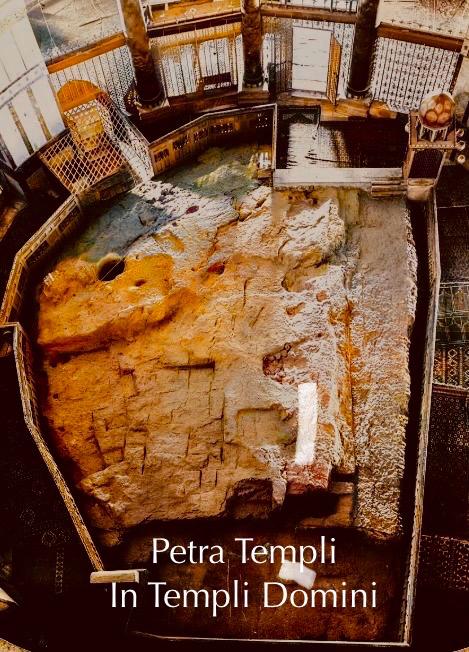
👆🏻 Petra Templi – the rock of the Temple Mount in Jerusalem, connected to Solomon’s Temple.
4) The Temple is more than stone
Not the First Temple (destroyed in 586 BC)
Not the Second Temple (destroyed in 70 AD)
There is no Temple—only stone.
This is not a mistake. It is a theological statement.
The Temple did not disappear when the building disappeared.
This is the moment that Christ Himself becomes the Temple.
“Destroy this temple, and in three days I will raise it up.”
(John 2:19)
Jesus did not refer to the physical temple in Jerusalem, but to the temple of His own body.
👉 The physical Temple dies
👉 The idea of the Temple lives on—transferred into Christ, the Church, the heart of the believer
The Temple moves, but does not vanish.
The Holy is not gone—it is simply no longer visible. Either: a testimony.
Christ IS the Temple—and whoever follows Him becomes that with Him.
Solomon is a concept—not a warrior, not a prophet, but the king of wisdom and order.
He stands for:
building instead of conquering
wisdom instead of power
order instead of chaos
David was not allowed to build—it was said he had too much blood on his hands.
These were the Templars. So how about the Teutonic Knights and the Hospitallers?
The Teutonic officially:
Ordo Domus Sanctae Mariae Teutonicorum Hierosolymitanorum
The Order of the House of Saint Mary of the Germans in Jerusalem
Key points:
Domus = house, not temple
Mary = protector
Teutonicorum = explicitly national (German)
Jerusalem as origin, not as theological anchor
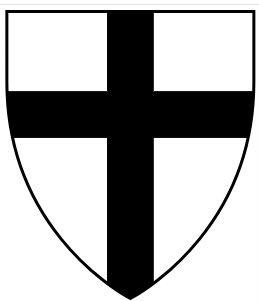
Their core:
care for German pilgrims
later: military and colonizing role in Eastern Europe
👉 They are stronger at:
national identity
governance
territorial structure
Still curious about the Teutons? Discover more here about this venerable Order, with deep roots in Germany. An imposing order of chivalry, shaped by faith and discipline.
✠
The Hospitalers officially
Orde Fratrum Hospitalis Sancti Ioannis Hierosolymitani
The Order of the Brothers of the Hospital of Saint John of Jerusalem
What is missing:
no “milites” (soldiers) in the original name
no temple
no Solomon
What is present:
brothers
hospital
care
Saint John (John the Baptist): mercy and preparation
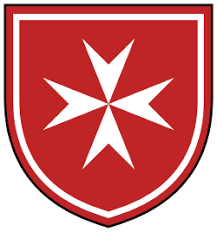
👉 They did not begin as warriors, but as caregivers of pilgrims
Later they became military—out of necessity
Their identity:
serving Christ through physical care for the vulnerable
You can read more about the Hospitalers here.
✠
All three side by side:
Templars → Temple / Solomon / guardians / order
Teutonic Order → House / Mary / people / structure
Hospitallers → Hospital / John / care / mercy
All three:
Religious
Recognized by the Church
(later) military
But their original calling is fundamentally different.