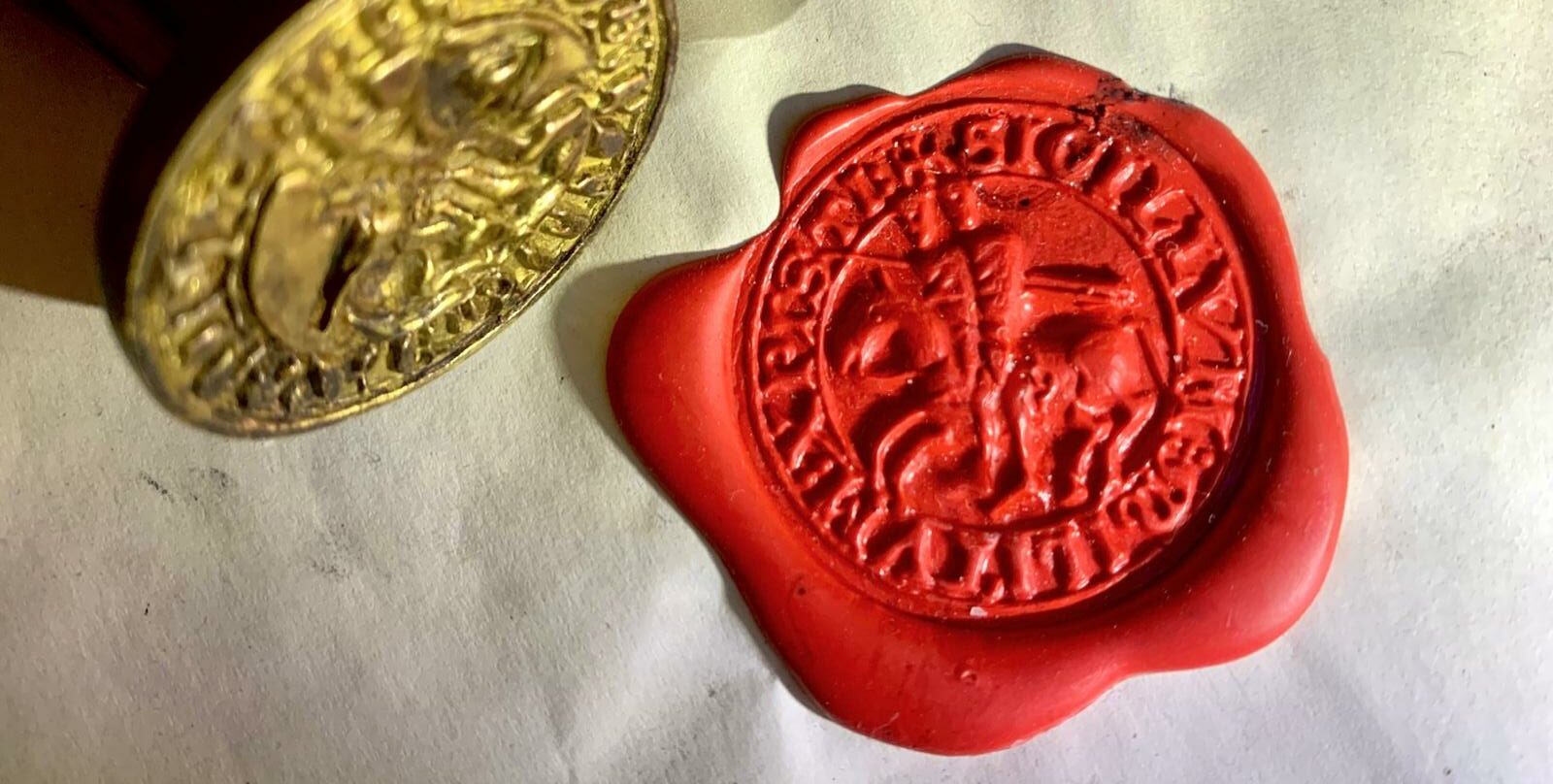
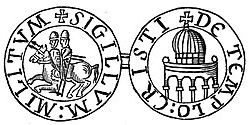
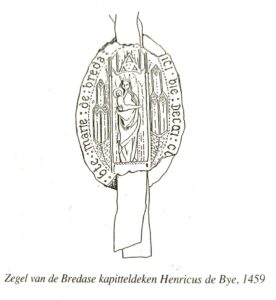
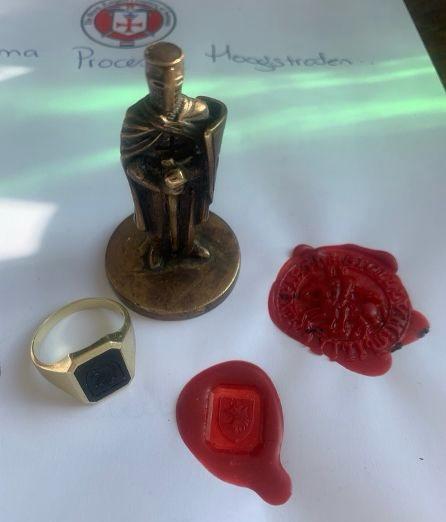
In the legend, the seal bears the Latin inscription:
This means: “Seal of the Knights of Christ.”
(XPISTI = a medieval abbreviation for Christi — comparable to the Christogram associated with Constantine the Great, IHSV)
The two knights on one horse
1️⃣ Poverty of the early Templars According to tradition, the first knights had so few resources that two brothers shared one horse.
2️⃣ Brotherhood It symbolizes that a knight never fights alone, but stands as a brother among brothers. Connected, carrying together, never standing alone. Two Templars, one strength.
3️⃣ Dual vocation Knight and monk. Martial and spiritual.
The seal as a declaration We do not carry ourselves. We are carried. We do not possess. We share. We do not stand alone. We are brothers.
The official seal of the Order emerged in the earliest phase of the Order, shortly after its foundation, around the years 1120–1140. The first known impressions date from this period. Hugues de Payens was the first to use it, followed by his successors.
The seal was an official instrument. A seal was not decoration, but: – a legal instrument – a sign of authority – a guarantee of authenticity
Responsibility for its use most likely lay with: – the leadership of the Order – possibly the Grand Master himself – or a small circle around him
👉Think of Hugues de Payens and his immediate circle.
The designer We have no record of the designer or maker. Not of the engraver, the creator of the matrix, or the one who conceived the image. In the Middle Ages, craftsmen worked “in service of” — in service to a monastery, a lord, or a ruler. The work belonged to the community, not to the individual. It is possible that Hugues, together with the other eight founders, contributed to its design. Bernard of Clairvaux may also have had influence. However, there is no direct evidence for this.
Godfrey of Bouillon There is a story that Godfrey of Bouillon sold his fortress to the bishop of Liège to finance the First Crusade. A crusade was extremely expensive — equipment, men, travel, everything had to be financed. According to the story, he arrived in the Holy Land so poor that he had to share a horse with another brother. This story is not accurate. Godfrey did sell possessions to fund his crusade, but the idea that he arrived so poor that he had to share a horse is a romanticized narrative. He remained a high noble with a retinue, including knights, soldiers, and resources.
Later developments Other Templar seals also appeared over time. Another well-known example is the seal depicting the Dome of the Rock.
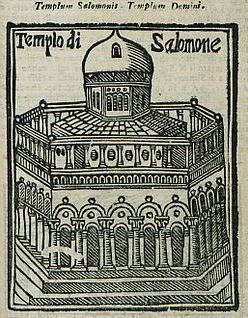
👆🏻 Medieval image of the Dome of the Rock in Jerusalem, labeled as Templum Salomonis.
👈🏻 Solomon’s Temple according to medieval representation
This is the Dome of the Rock in Jerusalem, referred to as Templum Domini — the Temple of the Lord. This seal expresses: we belong to this holy place.
There were more. Each Grand Master possessed a seal used for official documents — such as Hugues de Payens, Robert de Craon, and Jacques de Molay. Their seals could show small variations — sometimes different text or style — but generally remained within the same visual language. It was not the case that each Grand Master thought: “I will design my own logo.” The seals were part of the identity of the Order, not personal expression.
In addition, individual commanderies also used their own seals. Across Europe — in France, England, Spain and beyond — local variants developed. Sometimes simpler in form, sometimes with a cross or inscription, but always connected to the Order of the Temple.
There were also functional seals, used for administration and property. Less elaborate in imagery, but no less important in use.
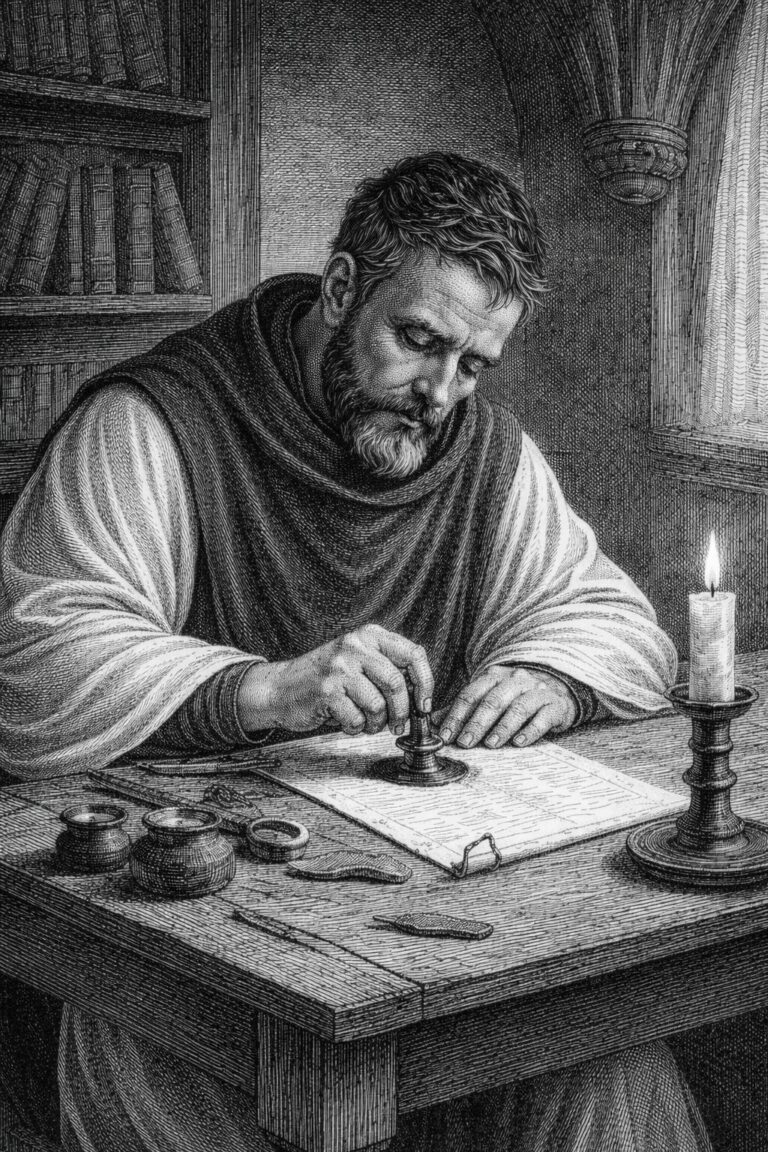
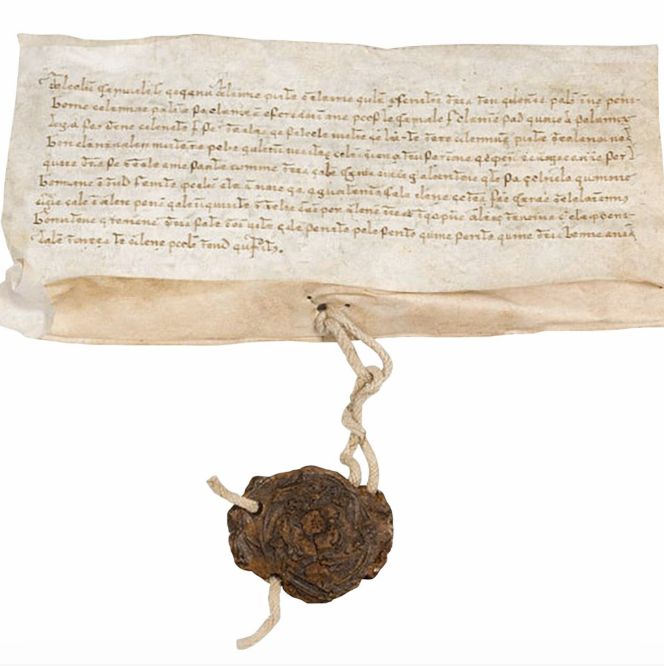
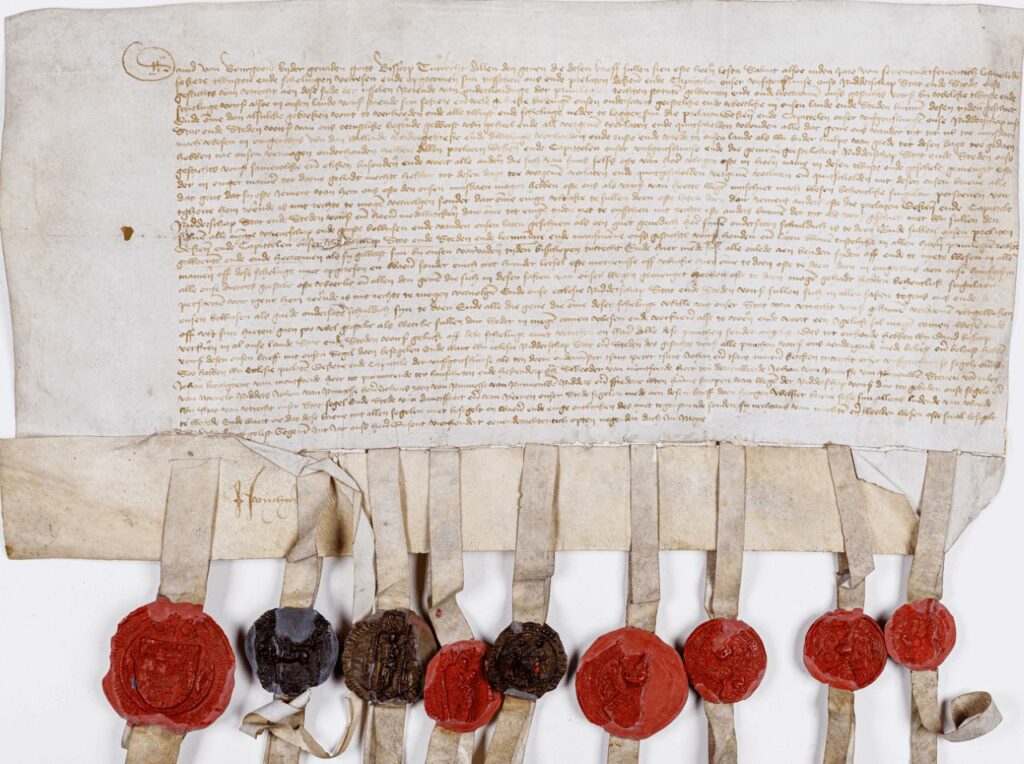
Cord attachment In the Middle Ages, a seal was not pressed onto paper as we know today. It was attached to it — a hanging seal. Medieval documents were written on parchment — strong, but costly material. At the bottom of the document, a strip was cut, or cords were drawn through. The seal was attached to these. A narrow strip was cut from the document itself and folded downward. The warm wax was pressed onto it. 👉 The seal was literally part of the document.
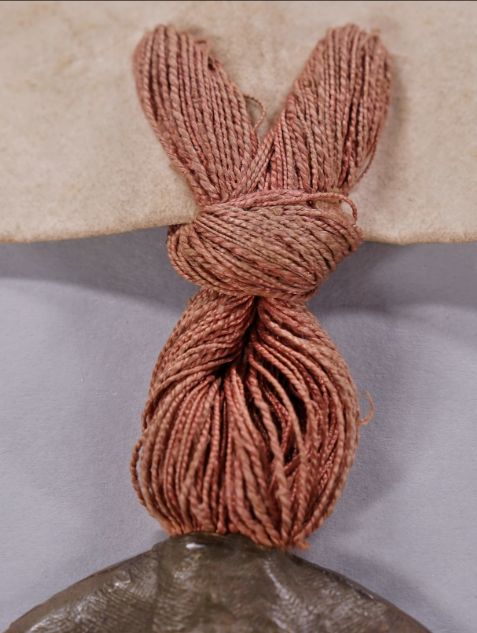
Small holes were made in the parchment, through which cords (of flax or silk) or flat ribbons were drawn. The seal was attached to these. 👉 This provided additional strength and status, especially for important documents.
A seal was not decoration, but: – a signature – a guarantee of authenticity – a legally binding mark If the seal broke or was removed, the document was often no longer valid.
Such a document did not lie flat and neat like modern paper.
It was: – heavy parchment – with a seal hanging beneath it – sometimes large and thick – sometimes damaged by time 👉 The seal quite literally “lived” beneath the document.
How it worked in practice First, the attachment was prepared. A strip of parchment or cords was added to the document. Then melted wax, or a wax mixture, was applied around the strip or cords — often mixed with resin, making it stronger than simple candle wax. Next, a seal matrix was used — sometimes even a counterseal for the reverse side. This created two hard surfaces, That was for the counter-pressure. And that could also have a relief or image. So you have 2 hard surfaces this way. The whole was then left to cool. The wax hardened, and the seal was fixed around the strip or cords — not on top of it, but clamped around it.
A wax seal was not a thin layer, but a thick disc — heavy, sometimes several centimeters thick. In some cases, both sides carried an image.