Ad Hugonem S

Those who are soldiers of the temple are of God.

Ad Hugonem S

Epistola S. Bernardi Claraevallensis
ad Hugonem de Paganis, Militiae Templi Praepositum.

Letter from Saint Bernard of Clairvaux to Hugh of Payns, Grand Master of the Knights Templar in 1131

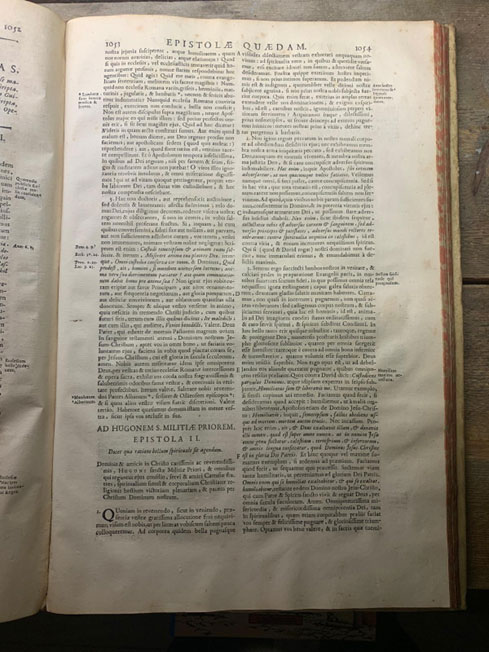
"Photograph of an old, open-laid Latin book page with classic two-column printing, title 'Epistolae Quaedam', visibly aged paper and historical typography, lying on a wooden table."

Original texts/letters/documentation about Knights Templar are extremely scarce.
The Knights Templar themselves left little in writing and from 1307 to 2007 they were publicly discredited.
All documentation has been destroyed, banned, banned and hidden as much as possible in 700 years. Everything had to be under the radar.

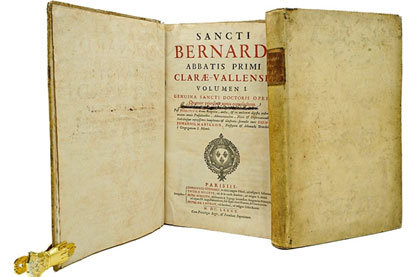
Fortunately, there were many who “knew better”, including Dom Jean Mabillon (1632 – 1707). A famous Benedictine, member of the Congregation of Saint Maur, founder of charter theory and palaeography (= the study of old manuscripts and archive documents)

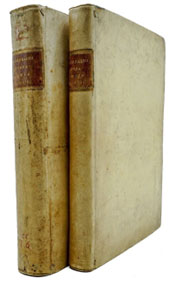
In 1690 he published a set of 2 books: the Opera Omni. It contains the complete works of Bernard de Claivaux. Church father who wrote “De laude novae militiae” (Hymn to a new order of chivalry) for the Knights Templar to founder Hugh of Payns

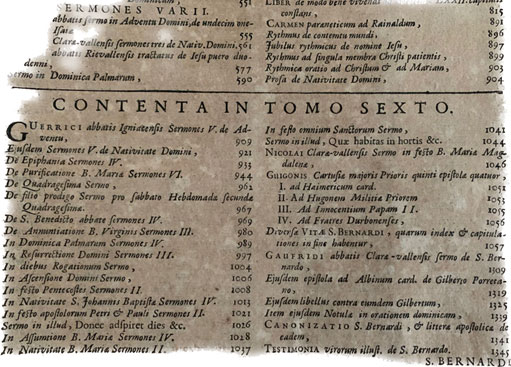
On page 1053 we find the authentic letter of Bernard de Claraevallensis addressed to Hugonem the Paganis.

It is more reasonable that this original letter is extremely rare and it is cherished in this document and is extensively analyzed here in 6 parts.

! the complete original text in Latin

II the complete Dutch translation

III the complete symbolic explanation

IIII abridged version symbolic explanation

V Explanation and Meaning of the Letter

VI Dating of the letter

I The complete original text in Latin

AD HUGONEM S. MILITIÆ PRIOREM.
EPISTOLA II.

Docet qua ratione bellum spirituale sit agendum.

Dominis & amicis in Christo carissimis ac reverendissimis, HUGONI sanctæ Militæ Priori, & omnibus that allow ejus consilio, servi & amici Cartusiæ fratres, spiritualium simul & corporalium Christianæ religionis hostium victoriam plenariam, & pacem per Christum Dominum nostrum.

  1. Quoniam in reverendo, seu in veniendo, præsentia vestræ gratissima allocutione frui nequivimus; Visum est nobis, ut per litteras vobiscum saltem pauca colloqueremur. Ad corporea quidem bella pugnasque

A visibiles dilectionem vestram exhortari nequaquam novimus: ad spiritualia vero, in quibus & quotidie versamur, etsi excitare idonei non sumus, admonere saltem desideramus. Frustra quippe exteriores hostes impetimus, si non prius intimos superamus. Et pudendum nimis est & indignum, quorumlibet velle ditioni nostrae subjecere agmina, si non prius nostra nobis subjecta fuerint corpora. What does it contain, exterior in amplly terrace extender skin of our dominance, & exiguis caespitibus, id est, carnibus nostris, ignominiosam perpeti vitiorum servitutem?

Acquiramus itaque, dilectissimi, prius nosmetipsos, ut secure deinceps ad exteriores pugnemus inimicos: mentes nostras prius a vitiis, dehinc terras purgemus a barbaris.

  1. Non igitur regnet peccatum in nostro mortali corpore ad obedienum desideriis ejus; nec exhibeamus membra nostra arma iniquitatis peccato, sed exhibeamus nos Deo, tamquam ex mortuis viventes, & membra nostra arma justitiae Deo, & si caro concupiscit adversus spiritum indomabiliter. Haec enim,inquit Apostolus, sibi invicem adversantur, ut non quaecumque vultis faciatis.

Vellemus namque omni, si fieri posset, carere concupiscentia. Sed si in hac vita, quae tota tentatio est, concupiscentia ad plenitudinem care non possumus, concupiscentiis saltem non serviamus.

Ad quod quia viribus nobis parum sufficientes sumus, confortemur in Domino, & in potentia virtutis ejus, & induamusque armaturam Dei, ut possimus stare adversus insidias diaboli. Non enim, sicut iditto sequitur, nobis colluctatio est adversus carnem & sanguinem, sed adversus principes & potestates, adversus mundi rectors tenebrarum, contra spiritualia nequitiae in caelestibus, id est contra vitia, & eorum incentores nequissimos spiritus.

Qui si (quod & David rogat) nostri dominiati non fuerint, tunc immaculati erimus, & emundabimur a delictis maximis.

  1. Stemus ergo succincti lumbos nostros in veritate, & calciati pedes in praeparatione Evangelii pacis, in omnibus sumentes scutum fidei, in quo possimus omnia tela nequissimi ignita exstinguere; Caput Galea Salutis Obtegamus, & Dexteram Gladio Salutis Munitam Habentes.

Curramus, non quasi in incertum; Pugnemus, Non Quasi Aërem Verberantes: Sed castigemus corpus nostrum, & subjiciamus servituti, quia hic est hominis, id est, animatis ad Dei imaginem conditi status ordinatissimus, cum & caro servit spiritui, & spiritus subditur Conditori.

In how bello tanto erit quisque robustior, tantoque, rain & protegene Deo, in numerosis prostratis hostibus triumpho gloriosior sublimior, quanto per omnia sæteget esse hilior: tantoque contra ad omnia bona infirmior & inconstantior, quanto voluerit esse superior. Deus enim resistit superbis.

Non ergo opus est, ut ad debellandos eos aliunde quaeratur pugnator, quibus omnipotens resistit præliator. Quos contra David dicit: Custodiens parvulos Dominus. atque ipsum expertus in seipso subjunxit, Humiliatus sum & liberavit me.

Utamur exemplo, si simili cupimus uti remedio. Faciamus quod fecit, si desideramus quod accepit: humiliemur, ut a malis omnibus liberemur. Apostolus etiam de Domino Jesu Christo: Humiliavit, inquit, semetipsum, factus obediens usque ad mortem, mortem autem crucis.

Nec incausum. Propter hoc enim, ait, & Deus exaltavit illum, & donavit illi nomen, quod est super omne nomen; ut in nomine Jesu omne genu flectatur, caelestium, terrestrium, & infernorum, & omnis lingua confiteatur, quod Dominus Jesus Christ is in gloria Dei Patris.

Et hinc quoque vel maxime sumamus exemplum, si ardemus ad praemium. Faciamus quod fecit, ut sequamur quo praecessit. Sectemur viam tantae humilitatis, ut perveniamus ad gloriam Dei Patris.

Omnis enim qui se humiliat exaltabitur, & qui se exaltat, humiliabitur, testante eodem Domino nostro Jesu Christo, qui cum Patre & Spiritu sancto vivit & regnat Deus, per omnia saecula saeculorum. Amen.

Omnipotssima misericordia, & misericordiosissima omnipotentia Dei, tam in spiritualibus, quam etiam corporalibus praliis faciat fox semper & felicissime pugnare, & gloriosissime triumphare. Optamus vos bene valere, & in sacris quae tuemini… … & in sacris quae tuemini locis, nostri, cum oratis, memoriam habere, carissimi & praestantissimi, & meritis insignissimi fratres. Has litteras per duos diversos nuntios transmisimus, ne quo impedimento (quod absit) non quierint pervenire: quas petimus, ut cunctis fratribus exponi faciatis.

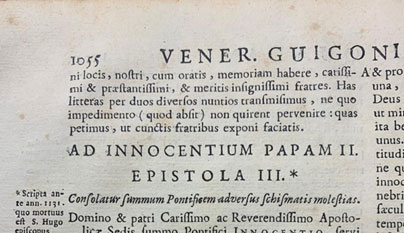
"Photo of historical Latin manuscript page about Guigoni and Pope Innocent II, shown in WordPress media management on computer screen."

II the complete Dutch translation

It teaches how to fight spiritual battles.

To our most beloved and venerable masters and friends in Christ, HUGO, prior of the Holy Militia, and to all those who are guided by his counsellors, servants and friends of the Carthusian brethren, complete victory over the spiritual and physical enemies of the Christian religion, and peace through Christ our Lord.

I. As we were not able to enjoy your most gracious speech in your presence or at your arrival, it seemed to us that we would speak to you at least a little by letter. We do not know how to incite your love of physical wars and battles; but for spiritual things, which we are daily engaged in, though we are not able to arouse them, we will at least admonish them. For we attack external enemies in vain if we do not first overcome our inner ones. And it is exceedingly shameful and unworthy to wish to subjugate the armies of any one to our dominion, unless our bodies are first subject to us. For who can bear that we should want to extend our dominion to vast countries, and endure with small tracts of land, that is, with our flesh, the shameful slavery of vices?

Let us, therefore, dearly beloved, first acquire ourselves, so that afterwards we may fight safely against our enemies from without: let us first cleanse our minds of vices, and then cleanse our countries from barbarians.

2. Therefore, do not let sin reign in our mortal bodies to satisfy its lusts; and let us not present our members as weapons of iniquity to sin, but let us present ourselves to God, as those living from the dead, and our members as weapons of righteousness to God, and as the flesh lusts irrepressibly against the spirit. For these, says the apostle, are opposed to each other, so that you cannot do what you want.

For we would like to be free from all desire, if possible. But if we cannot be completely free from desire in this life, which is full of temptation, let us at least not serve desire.

Therefore, because we are not strong enough in our own strength, we must be strengthened in the Lord and in the power of his might, and put on the armor of God, so that we can stand against the wiles of the devil. For, as follows, our struggle is not against flesh and blood, but against principalities and powers, against the rulers of the darkness of this world, against the spiritual wickedness in the heavenly places, that is, against vices and their most evil spirits that incite them.

Which, if (as David also prays) they have not dominated us, then we shall be immaculate and cleansed from the greatest sins. 3. Let us therefore stand, our loins girded with the truth and our feet shod with the readiness of the gospel of peace. In everything we take up the shield of faith, with which we will be able to quench all the fiery arrows of the evil one. Let us cover our heads with the helmet of salvation and arm our right hand with the sword of salvation.

Let us run, not as uncertain; let us fight, not as if beating in the air; but let us chastise our bodies and subject them to bondage, for this is the most ordered state of man, that is, of living beings created in the image of God, when both the flesh serves the spirit and the spirit is subject to the Creator.

In this struggle, everyone will be so much stronger, and so much, with God as ruler and protector, more glorious and exalted in triumph over countless defeated enemies, the more he strives to be humble in everything: and on the contrary, so much weaker and unstable in all good things, the more he wants to be the superior. For God resists the proud.

It is therefore not necessary to look elsewhere for a warrior to defeat those whom the Almighty resists like a warrior. To whom David says: The Lord protects the little ones. And after experiencing it himself, he added: I was humiliated and He saved me.

Let’s use an example if we want to use a similar means. Let us do what He did, if we desire what He received: let us humble ourselves so that we may be freed from all evil. The apostle also says about the Lord Jesus Christ: He humbled Himself and became obedient unto death, yes, to death on the cross.

And not without reason. Therefore, he says, God also exalted him and gave him the name that is above all name, that in the name of Jesus every knee of those who are in heaven and on earth and under the earth should bow, and every tongue should confess that Jesus Christ is Lord, to the glory of God the Father.

And let us also take our example from this, or rather, if we long for the price. Let’s do what he did so we can follow where he went before. Let us follow the path of such humility so that we can attain the glory of God the Father.

For everyone who humbles himself will be exalted, and whoever exalts himself will be humbled, as the same Lord Jesus Christ testifies, who lives and reigns with the Father and the Holy Spirit, God from everlasting to everlasting. Amen.

May the greatest mercy and the greatest omnipotence of God always and most happily make you fight and triumph most gloriously, both in spiritual and physical struggle. We hope that you are well, and that you remember us in the holy places that you protect… … and in the holy places that you protect, when you pray, dearly beloved and very excellent and very honorable brethren. We have sent these letters by two different messengers, that they may not reach us through any obstacle (which is far from it); And we ask you to have them explained to all the brethren.

III the complete symbolic explanation

✝️ Letter to Hugo – in the spirit of Bernard

My brother,
Hugo, knight of the Temple, called to a holy battle —

Many will urge you to raise your sword.
To guard boundaries. To ward off enemies.
But I call you to a battle that goes deeper:
the battle within yourself.

What is the use of conquering others,
If your heart is still slave to pride, anger or desire?

What does it profit the world,
if you are heroic in battles,
but don’t guard your inner walls?

🌾
So first turn to the Lord,
and submit your flesh to the spirit.
Don’t arm yourself with iron alone,
but with truth, faith, meekness and obedience.

Let your belt be the truth,
you shield the faith,
your helmet salvation,
your sword the Word of God.

Don’t be a warrior who strikes air —
but a servant who counts his blows.

For our enemy is not of flesh and blood,
but dwells in pride, pride, lies, self-exaltation.
That enemy also lives within ourselves.
And he is only driven away by surrender.

🌿
Do you want to be elevated? Then bow.
Do you want to be big? Get small.
Do you want to win? Be humble —
like Christ himself,
who preferred the way of the cross to the way of honor.

For He, the Son of the Living God,
took off his armor,
and became like a lamb to us.

📜
I’m not writing this to shame you—
but to encourage you.
Because you are on your way to something great:
a warrior’s soul formed after God’s heart.

I pray that His grace carries you,
in visible and invisible struggle.
And I ask you, brother:
Pray for me too.
For we, too, in the monastery, are warriors —
albeit with different weapons.

Convey these words to your brothers.
Don’t let them be forgotten.

For he who conquers himself,
is stronger than whoever takes a city.

In Christ,
your servant and brother,
Bernard of Clairvaux


Two books from 1690 by Benedictine Dom Jean Mabillon ('Opera Omnia'), with the complete works of Bernard of Clairvaux, author of De laude novae militiae for Hugh of Payns.
Two books from 1690 by Benedictine Dom Jean Mabillon ('Opera Omnia'), with the complete works of Bernard of Clairvaux, author of De laude novae militiae for Hugh of Payns

IIII abridged version symbolic version

✝️ The core of Bernard’s letter to Hugo – abridged version

Templar,
your sword is powerful —
but the real battle does not begin on the battlefield,
but in the heart.

Bernard of Clairvaux does not call Hugh of Payns to war,
but to inner purification.

“What good is it to defeat enemies,
if you have already lost within through pride or desire?”

Therefore, don’t just wear a helmet made of steel,
but a helmet of salvation.
Not only a sword of iron,
but the sword of the Spirit.
Your enemy isn’t always visible —
Sometimes he lives within yourself.

Bernard learns:

  • Sacrifice is greater than honor.
  • Humility stronger than power.
  • Christ overcame… by making themselves small.

“Do you want to be big? Then become small.”
“Do you want to be a hero? Become a servant.”
“Do you want to fight for God? Then start praying.”

So fight with spiritual weapons.
For truth. For justice. For God.

And don’t forget:
He who conquers himself,
has already won its first victory.

🕯️

Fragment of a Latin text page from the 12th century, with the table of contents of works by Bernard of Clairvaux, including the letter to Hugh of Payns (1131).

V Explanation and Meaning of the Letter

Introduction:
The monks are writing this letter because they could not meet Hugo in person. That is why they send him their words in writing, in order to show their spiritual connection. They address him as prior of the holy order of knights (the Knights Templar), and wish him — and all those under his leadership — victory over enemies both visible and invisible, through Christ.

  1. The true battle begins within yourself

They say: we don’t want to encourage you to physical battle, because others already do that enough.
But we want to remind you of the spiritual struggle in which we monks find ourselves every day.

Because:

“There is no point in defeating outer enemies if we do not first overcome our inner enemies.”

In other words:
What good is it to subjugate countries if you are not even master of your own desires?

  1. First conquer yourself, then the other

“Let us first conquer ourselves — only then can we fight safely against enemies outside ourselves.”
“First cleanse your mind of vices — only then the world of barbarians.”

And:
Do not let sin rule your mortal body. Do not give your members to sin as instruments of iniquity, but to God as instruments of righteousness.

When the flesh rebels against the spirit—know that fight is normal. But don’t be subject to it.

  1. Weapons of God

Because we are too weak to do so alone, the letter says:

“Let us strengthen ourselves in the Lord, and put on his heavenly armor.”

Not fighting against people, but against powers, forces, darkness, temptation. Against evil in the invisible world.

The letter then quotes the spiritual armor from the letter to the Ephesians:

  • Belt of truth
  • Footwear of peace
  • Shield of Faith
  • Helmet of salvation
  • Sword of the Spirit

And says:

“Let’s not just hit the air, but fight purposefully. Not on strength, but on discipline. Not in pride, but in obedience.”

  1. The humble is the true hero

A common thread: humility.

Those who think they are strong are in danger.
Those who know themselves to be small are made powerful.

“God resists the proud, but He protects the little ones.”

David is the example: he was humble and was saved.
Jesus himself is the great example:

“He humbled himself —even to death on the cross.”
And so He was lifted up, so that every knee bows before Him.

So:
Do you want to share in the glory? Then follow the way of humility.

  1. Final wish and assignment

They wish for Hugo (and his brothers) that God’s mighty mercy will help them in every battle—spiritual and physical—and that they may triumph in Christ.
They ask for prayer—that the monks may also be remembered, especially in the holy places that the Knights Templar protect.

They even sent this letter through two messengers, to make sure it arrives. And they ask Hugo:

“Read this to all your brethren.”

🌾 Essence of the letter

The letter is a holy wake-up call:

“Templar, focus not only on the battle with the sword, but also on the battle in your heart.
Do you really want to be free? Then first submit your meat.
Do you want power? Choose humility.
Do you want to serve God? Then become like Christ—obedient, simple, unbroken in faithfulness.”

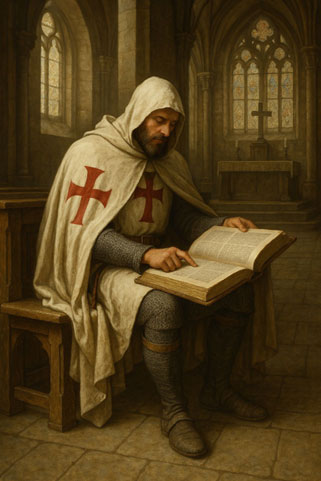
Illustration of a Knight Templar sitting in a chapel reading a large open Bible, with altar and cross in the background.

VI Dating of the letter

The letter from Bernard of Clairvaux to Hugh of Payns — also known as the “Liber ad milites Templi” or “De laude novae militiae” (On the Praise of the New Order of Knights) — is historically dated to about 1130 to 1132.

📜 What do we know about the dating?

  • Bernard wrote the lettershortly after the recognition of the Order of the Knights Templar at the Council of Troyes (January 1129).
  • He knew Hugh of Payns personally and admired his spiritual courage.
  • The letter is intended as spiritual encouragement and moral anchoring for the young Order.
  • In the style and content you can clearly see that Bernard alreadyhas a lot of influence, but that the Knights Templar are still in their start-up phase — so before the great success in the second half of the 12th century.

🕯️ In other words:

Date: most likely around 1131.
Written in Bernard’s monastery at Clairvaux,
and addressed to Hugh of Payns in the Holy Land (Jerusalem or its surroundings).

We know that between 1129 (Council of Troyes) and his death in 1136, Hugh returned to the Holy Land to further establish and lead the Order.

The Epistola ad Hugonem is therefore a real letter from a distance —
A long-distance spiritual encouragement:
from a monastery in Europe to a knighthood in the Holy Land.

Bernardus knew Hugo personally, they met in France. This letter was written when Hugh had already returned to his brothers in Jerusalem.

“I am far from you in body, but close to you in spirit.”

That’s not just poetry.
That’s literally how it was.

🌍✉️
A monastic monk in Clairvaux
sends a spiritual life guide
to the knights in the holy city.
A spiritual bridge.

Feel free to call it a sacred document.
Not just because of the date — but because it’s timeless .

White quill from the Middle Ages.