


Those who are soldiers of the temple are of God.

Our search for a deeper understanding often leads through the Bible itself. Even in our attempt to fully understand the Bible, we must dare to look outside the book. When we come across references to social, cultural practices and even other writings mentioned in the Strips, we are called to consult our knowledge. To expand this with a knowledge base of cultural significance, in order to fully appreciate this. Thus, in order to fully understand the Bible, we are necessarily drawn to sources outside the Bible. These sources contribute to the historical, social or theological understanding of biblical times. As our vision expands, we see the panoramic surroundings and better understand the full truth in the scriptures. Yet in the case of Enoch, we do not ignore the Bible. We simply ignore OUR Bible. The book of Enoch is in the Bible of the Ethiopian Christian Church. In other words: where the Primordial Bible comes from.
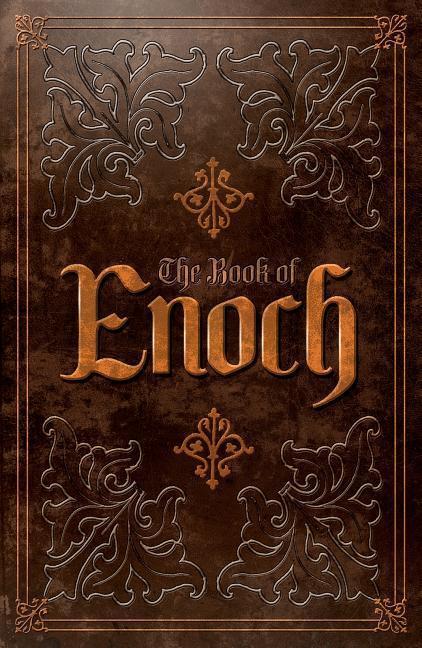
To lead us to information outside of our Protestant and Catholic Bibles, we need to know which books we were popular and important at the time the Bible was written. These are several books that are mentioned in the Bible and that do not appear in our Bible. They are not a spiritual canon, either because they were not available at the time the canon was originally adopted, or because they were not considered “inspired” at the time. Read: within the values and norms of that time. In case the inspiration was questioned, one could argue that any book quoted or mentioned by a prophet or an apostle should be considered a spiritual canon. Unfortunately, this position would prove to be too simplistic. Books and writings can fall under different categories, such as civil status and laws. Historical documents or spiritual writings. A city or state position is not inspired, but it can provide insight into certain areas of life. Spiritual writings quoted directly in the Bible serve as insight into the writer’s beliefs or what was considered acceptable by society at the time. As with a new discovery, invention, or belief, the new is interpreted based on the structure of what preceded it. This was the way of life in the first-century Christian church, as beliefs were based on the ancient Jewish understanding. However, one must realize that Peganist beliefs were also added to the church when non-Jewish populations converted. They brought with them the foundations of their beliefs on which they interpreted Christianity. In the case of Judas, James, Paul, and others, the Jewish past gave way to the Christian present, but their understanding and teachings were still influenced by what they had previously learned and experienced. It becomes clear that in order to understand the Bible, one must try to examine the books and doctrines that have most influenced the writers of the Bible.
The Dead Sea Scrolls, which were found in the caves of Qumran, are of great importance in elucidating the history and doctrine of existence between biblical times and the establishment of the canon. The scrolls were written in the second century BC. These were at least in use until the destruction of the second Temple; in 70 AD. Similar scrolls to those found in cave 4 in the 11 caves of Qumran, where also found at the Masada stronghold that fell in 73 AD.
Fragments of every book of the Old Testament except Easter were found in the caves of Qumran, but so were many other books. Some of these books are considered to have been of equal importance and influence to the people of Qumran as they were to the writers of the New Testament.
Knowing this, one might wonder which of the dozens of non-canonical books influenced the writers of the New Testament the most. It is possible to determine the existence of certain influences within the biblical context by using the Bible itself. The Bible can lead us to other works in three ways. The work can be mentioned by name, as the Book of Jasher. The work can be quoted within the biblical text, as is the case with the Book of Enoch. The existence of the work can be alluded to, as is the case with the apostle Paul’s missing letter to the Corinthians.
Books mentioned in the Bible. In the case of the books mentioned in the Bible, one can draw up a list as the titles are called. The list is longer than you might suspect at first glance. Most of these works have not been found. Some have been excavated, but their authenticity is questioned. More have been found, and the connection between Scripture and the scroll is generally accepted. The following is a list of books mentioned in the Bible:
1 Book Jasher
“He also commanded them to teach the children of Judah the use of the bow: behold, it is written in the book of Jasher”. (2 Samuel 1:18) ‘Isn’t it written in the book of Jasher? And the sun was in the middle of the sky and did not hasten to set for a whole day”. (Joshua 10:13)
2 The Lord’s Book of Wars.
“That is why it says in the Book of the Lord’s wars”. (Num. 21:14)
3 Jehu’s yearbooks
“Now the rest of the deeds of Jehoshaphat, from the first to the last, behold, they were written in the annals of Jehu the son of Hanani, which are recorded in the Book of the Kings of Israel.” (2 Chronicles 20:34)
4 The Book of Kings
“As for his sons and the many oracles against him, the rebuilding of the house of God, behold, which are written in the treatise of the Book of Kings. Then his son Amaziah became king in his place”. (2 Chronicles 24:27)
5 The Book of the Chronicles of Ahasuerus
“When the plot was investigated and it turned out that it was so, they were both hanged on a gallows; and it was written in the Book of Chronicles in the presence of the king”… “Dujring could not sleep that night, so he ordered the Book of Chronicles, the chronicles, to be read, and they were read to the king”. (Esther 2:23, 6:1)
6 The Acts of Solomon
“The rest of the Acts of Solomon and whatever he did, and his wisdom, are not they written in the book of the Acts of Solomon?” (1 Kings 11:41)
7 Hozai’s sayings
“Also his prayer and how God was tempted by him, and all his sin, his unfaithfulness, and the sides on which he built high places and erected the Asherim and the carved images before he humbled himself, behold, they are written in the archives of Hozai”. (2 Chronicles 33:19)
8 The Chronicles of King David
“Joab the son of Zqerujah had begun to count them, but did not finish it; and by this came the anger upon Israel, and the number was not included in the record of the chronicles of King David.” (1 Chronicles 27:24)
9 The Chronicles of Samuel, Nathan, Gad
“Now the history of King David, from the beginning to the end, is written in the chronicles of the seer Samuel, in the chronicles of the prophet Nathan, and in the chronicles of the seer Gad.” (1 Chronicles 29:29)
10 Samuel’s Book
“Then Samuel told the people the ordinances of the kingdom, wrote them in the book, and laid them before the Lord.” (1 Samuel 10:25)
11 The Chronicles of the Prophet Nathan
“The rest of Solomon’s deeds, from the first to the last, are not written in the chronicles of the prophet Nathan, and in the prophecy of Ahijah the Shilonite, and in the visions of Iddo, the seer. concerning Jeroboam the son of Nabat?” (2 Chronicles 9:29)
12 The Prophecy of Ahijah the Shilonite
“The rest of Solomon’s deeds, from the first to the last, are not written in the chronicles of the Prophet Nathan, and in the Prophecy of Ahijah the Shilonite, and in the visions of Ido the Shilonite. seer over Jeroboam the son of Nabat? (2 Chronicles 9:29)
13 The Treatise of the Prophet Iddo
“The rest of the Acts of Abijah, and his ways and his words are written in the treatise of the prophet Iddo”. (2 Chronicles 13:22)
Several books have been published with the title “Book of Jasher”.
One is an ethical treatise from the Middle Ages. It begins with a part of the Mystery of the Creation of the World: it is clearly separate from the Bible book of Jasher.
He was thought to be a priest. If we compare the “p” contribution of Genesis with the book of Enoch, parallels stand out.
Enoch
Corrupt Earth
Eating animals
Bloodshed
364 days-year
(12 months 30 x 4)
Enoch goes to Heaven
P
Human way of being corrupt on Earth (Gen 6)
Eating animals (Gen 9)
Bloodshed (Gen 9)
30 days months (Gen 7)
365 days-year (Gen 5)
Enoch goes to Heaven (gen 5)
There are other connections. The name “Äzazel” occurs in Leviticus. The scapegoat is sent into the wilderness “to Azazal”, and through the ceremony of laying on of hands by the priest and the people, the goat is sent away, bearing the sins of the people. This reference only makes sense if the writer believed that Azazel was responsible for all human sins and would bear the penalty for them. as the book of Enoch explains.
In Genesis it is Cain who carries the sins into the desert. However, we will see that there are connections between the fallen corners and the descendants of Cain.
The problem with such a connection between Enoch and Genesis is that it does not point to the direction of transmission. We can now be reasonably sure that Enoch and Genesis are connected, but we cannot be sure which one was recorded first. The best evidence we have for the undisputed authenticity of Enoch is not the connection to Genesis, but the faith that Jesus and the apostles had in the Book of Enoch, demonstrated by various references and quotations.
How Jesus and His followers used Enoch
It is difficult to evade the evidence that Jesus not only studied the book, but also respected it highly enough to allude to its doctrine and contents. Enoch is full of mentions of the coming kingdom and other sacred themes.
It was not just Jesus who used expressions or ideas of Enoch; there are more than 100 commentaries in the New Testament that take precedence in the Book of Enoch. If we look for connections between the words of or about Jesus and those of Enoch, we cannot look for exact similarities. It is possible that what was originally spoken by these men was very close in terms of wording or exact meaning, but after divergent paths of transmission and translations through different languages and cultures, they come here in the 21st century with many variations. As with the children’s game ‘the telephone’, the exact wording has been slightly changed. Let’s look at general ideas within passages.
Blessed are the meek, for they will inherit the earth. (Mat 5:5)
And all the elect will rejoice, and there will be forgiveness of sins, and mercy, peace, forbearance, and joy. There will be salvation for him. (such as/and) a good light. (Enoch 5:7)
The Father judges no one, but has entrusted the whole judgment to the son (John 5:22). And he sat on the throne of his glory, and the sum of judgment was given to the Son of Man. (Enoch 69:27)
Matt 19:16 Now a man came to Jesus and asked, “Teacher, what good must I do to obtain eternal life?” Jesus said, “And everyone who has left houses or brothers or sisters or father or mother or children or fields for your sake will receive a hundred times as much and inherit eternal life…….
who is appointed over repentance and those who hope to inherit eternal life… (Enoch 40:9)
“Woe to you who are rich! For you have received your comfort.” (Luke 6:24)
Woe to you, you rich people, for you have trusted in your riches, and you will depart from your riches, because you did not remember the Most High in the days of your riches (Enoch 94:8)
You too will sit on twelve thrones and judge the twelve tribes as Israel. (Mat 19:28)
And I bring forth in shining light those who have loved My holy name, and I will put each one on the throne of his glory. (Enoch 108:12)
Woe to the man through whom the Son of Man has betrayed! It would have been good for that man if he hadn’t been born. (Mt 26:24)
Where will he dwell there for sinners, and where will there be a resting place for those who have denied the Lord of spirits? It would have been good for him if they hadn’t been born. (Enoch 38:2)