


Those who are soldiers of the temple are of God.

More than seventy years ago, several Gnostic texts were discovered in Nag Hammadi, Egypt. This gallery delves into the history of these ancient books and the controversy that surrounds them.
Could these really be the missing books of the Bible?
The Gnostic Gospels consist of 52 texts that were discovered in Egypt in 1945.These texts were written on papyrus and collected in 13 ancient books called codices. They were exhumed in December 1945 by Muhammad ‘Ali al-Samman, an Arab farmer, in a buried pot.
The books were later sold illegally in Cairo. Despite the Egyptian government’s seizure of most of the books, a single codex was discreetly transported out of Egypt and eventually made its way to Europe.
The original texts are currently housed in the Coptic Museum in Cairo under the identification NHC (Nag Hammadi Codices).
The term “gnostic” is derived from the Greek word “gnosis,” which means “knowledge.” Gnostics held on to the belief that they possessed hidden knowledge about God and the divine, hence their name. They had different perspectives on Jesus and his teachings. Unfortunately, many of their texts were eradicated, as they were labeled as heretical by the early church.
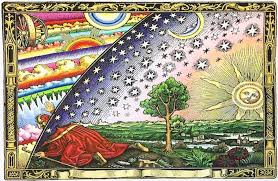
The Gnostics were not an organized separate religion, but instead consisted of various religious and philosophical currents that flourished from the 2nd to the 4th century AD.
Gnostics believed that the material world was evil and the spiritual world was virtuous. Explore God explains that Gnostics saw humans as “good spirits imprisoned in evil material bodies.”
Gnostics held on to their belief in a Supreme God, transcendent and incomprehensible. Moreover, they believed that a lesser God, known as Demiurge, and not the Supreme God, was responsible for the creation of the universe.
According to the Gnostics, Jesus was considered the “Savior” whose purpose was to reveal the truth to mankind. While some considered Jesus to be utterly divine and devoid of human nature (viewing the physical body as inherently evil), others believed in his humanity.
Gnostics believed that salvation did not depend on sacraments or forgiveness of sins. They believed that people had to acquire ‘gnosis’, secret knowledge, in order to achieve salvation.
The belief of the Gnostics was that one could gain knowledge of God by understanding oneself. An excerpt from the book “The Gnostic Bible,” published on gnosis.org, explains that Gnostics did not accept the intermediary role of priests, rabbis, or other religious figures.
The word “Gospel” comes from the Greek term “euaggelion,” which conveys the concept of “good news.” Early Christians embraced this term to convey Jesus’ message and report on his life.
The texts known in Gnosticism as gospels reveal the Gnostics’ perspective on Jesus. Well-known examples include Thomas, Mary and Judas.
Opus Dei states that the Gospel of Thomas contains 114 quotes from Jesus, but there is no story.
Mary tells about her revelation about the ascension of Christ in the Gospel of Mary.
According to this controversial text, Judas was actually a good apostle, as The New York Times argues. It is believed that the Gospel says that Judas carried out his betrayal of Jesus at the behest of Jesus himself.
The reliability of the texts has been discussed extensively. A Clear Lens emphasizes three important counterarguments: data, consistency, and historical context.
Although it took many years to compile the Bible, the canonical gospels were circulated well before the Gnostic ones.
Given the numerous stories about Judas in the canonical texts of other apostles, it is logical that the gnostic interpretation of Judas can arouse suspicion.
The canonical accounts portray Jesus’ message as universally applicable, while the Gnostics’ rendition suggests that he shared his wisdom exclusively with a chosen few.
The misconception revolves around the Gnostics’ use of myths to convey their beliefs, meaning that the texts may not provide factual details about Jesus’ life.
Professor Francis Watson of the University of Durham goes even further and claims that some of the writings are fake.
Mark Goodacre, a professor of New Testament and Christian origins at Duke University, has a similar perspective.
According to the International Bible Society, the Bible underwent a lengthy compilation process, with several books being omitted from the final version.
The four Gospels chosen for the New Testament were written by Matthew, Mark, Luke, and John, known as the officially accepted canonical Gospels.
Biblica, the International Bible Society, defines the canon as the books that are recognized as divinely inspired and authoritative for faith and life.
According to biblical scholar Darrell L. Bock during an interview with Beliefnet, “at the root of these (canonical) gospels is either an apostolic figure or someone who is closely associated with an apostolic figure.” And that: “The gospels that ended up in the Bible all date from the first century. Not a single gospel from that [gnostic] list that I know of actually dates from the first century.”
According to National Geographic, Dan Brown’s popular book was inspired by the Gnostic Gospels, but scholars disagree with Brown’s point of view.
The Gnostic Gospels provide valuable insight into Gnosticism and early Christianity and shed light on various ideas discussed and their interpretation by the early church.
The Bible contains fascinating stories, some of which have been scientifically verified as accurate. While there are familiar characters and storylines that most of us are familiar with, there are also obscure characters that suddenly appear and disappear just as quickly as we flip to the next page of the Bible.
Click through the gallery to learn about some of these enigmatic storylines.
The story of Abel and Cain is well known in the Bible. God prefers Abel’s sacrifice, which makes Cain jealous and so he kills his brother
Cain is then sent by God to the Land of Nod, where he starts a family and builds a city. However, this enigmatic country is not mentioned after that.
Certain scholars theorize that the term “Nod” may be a metaphor, as its origin means “wandering” or “exile.” It was a way for God to send Cain into exile. But again, this is just a theory.
Who exactly was Melchizedek, the priest and king of Salem, to whom even Abraham tithed? The true identity of this important figure remains a mystery.
In Hebrews 7, Melchizedek is portrayed as a man “without father or mother… without beginning of days or end of life, who is like the son of God.” Is it possible that Melchizedek was an early version of Jesus?
In Psalm 110, God says to Jesus, “You are a priest forever, according to the order of Melchizedek.” However, the reason for Melchizedek’s subsequent disappearance from the holy book remains a mystery.
In Numbers 22:21-39 there is a story about Balaam, who traveled on his donkey. The animal stops when he sees an angel on the road. Balaam hits the donkey twice to get it to move, but it doesn’t work.
After the third battle of Balaam, the donkey miraculously gains the ability to speak through God. They have a conversation, and remarkably, the Bible does not mention that the donkey loses this ability afterwards.
According to Genesis 6, the Nephilim were born from the union of the “sons of God” and “daughters of men,” to form a new being. Some suggest that the “sons of God” were angels. These creatures were often characterized as giants in some Bible versions. But what happened to them?
The story of the great flood and Noah’s ark is well known. It is believed that only those who were inside the ark would have survived the apocalyptic event. Except maybe the Nephilim.
Numbers 13:32-33 speaks of a land where the Israelites did explorations, and it seems that these beings lived there. ‘All the people we saw there were of great size. We saw the Nephilim there (the descendants of Anak come from the Nephilim). In our own eyes, we looked like locusts, and to them we looked the same.’
Some experts think that Ezekiel 32:27 again references them, but it is only an interpretation. That’s how far the story goes in the Bible.
In Biblical terms, witches are considered evil, right? Leviticus 19:31 warns: “Do not turn to mediums or seek spiritualists, for you will be defiled by them. I am the Lord your God.” This is a pretty simple rule!
Unless you are Saul, the king of Israel, for whom God has made an exception. Saul consulted a witch, who summoned the spirit of Judge-Prophet Samuel, who gave an accurate prophecy. Later in Galatians 5:19-21, however, witchcraft is condemned again. What does it all mean?
Genesis 9:20-27 says that Noah once lay drunk and naked in his tent. In response, his son Ham warned his brothers and proceeded to cover their father’s body.
When he wakes up, Noah curses Canaan’s lineage into slavery. Who is Canaan? The son of Ham, the grandson of Noah. The reason for the curse remains a mystery.
The sad repercussion of this curse is that it is invoked by various cultures to justify slavery.
Genesis 32:22-32 gives a detailed account of an intense wrestling match between Jacob and a man (who is later revealed to be God himself). The fight lasts “until daybreak” and results in a permanent injury to Jacobs’ hip, causing him to limp.
Another interesting entry in this passage of the Bible is: “Therefore, to this day, the Israelites do not eat the tendon that is attached to the hip socket, because the socket of Jacob’s hip was touched near the tendon.” How entertaining would it be to have more wrestling stories in the Bible, right?
The Old Testament tells of cases in which people were raised from the dead. But in the New Testament, only Jesus Christ possesses this ability. However, Acts 20:7-12 describes another person accomplishing this.
During a long sermon by Paul, one of Jesus’ apostles, a young man named Eutychus, falls asleep. Then “he fell to the ground from the third floor and was arrested dead.”
Fortunately, Paul is present and brings him back to life. Just like that.
Zipporah, the wife of Moses, is mentioned four times in the Bible. But we still don’t really know much about her, except that she may have been a Cushite (i.e. an African).
Cush was a vast region in Africa that included present-day Sudan and Ethiopia, and interracial marriage would have been a rarity at the time. Some scholars suggest that Zippora was called a Cushite because of her appearance and beauty.
Bartholomew was one of the twelve apostles of Jesus. Although he was part of the Messiah’s inner circle, there is no mention of him in the Bible.
Gog, an individual, and Magog, a land, are mentioned only twice in the Bible. But they seem pretty important. In Ezekiel 38 we come across “Gog, of the land of Magog, the chief prince of Meshek and Tubal”. Gog later attacks Israel.
Chapters 19:11–21:8 of the book of Revelation mention Gog and Magog, who say: “When the thousand years are up, Satan will be released from his prison and will go out to deceive the nations in the four corners of the earth. —Gog and Magog—and to gather them together for battle.”
in Job 40:14-24, Behemoth is described by God as a strong, large creature with “limbs like iron rods” who “feeds on grass like an ox.”
Then, in Job 41, God brags about another similar creation: Leviathan, a fire-breathing sea monster. Could these both be dinosaurs?