

The Festival of Light, also known as Holywins, is the positive counterpart to Halloween and is (also) celebrated on 31 October. Holywins means: Holiness wins. It originated in Paris in 2002 and then quickly spread to countries across Europe and Latin America. Where Halloween focuses on scares, monsters and death, Holywins celebrates life and light. In this way, the original meaning of All Saints’ Day on 1 November (All Hallows’ Eve) is restored.
Children, and sometimes their parents too, dress up as saints or biblical figures. For example Saint Francis, Saint Christopher, knights or angels. During the festivities there are games and craft activities. Alongside the festive part, there is also time for communal prayer and the celebration of the Eucharist.
Just as at Halloween, the children also receive treats, often together with a positive message about light or a card with a Bible quote.
The idea is actually very beautiful: while Halloween often plays with darkness, fear, death and frightening imagery, a festival of light places the emphasis on light, hope, the saints and Christ as the Light of the World.
Halloween as we know it today has travelled a path of around 2,000 years. From sweets shaped like loose eyeballs and bloody fingers to the outward display of mass-produced costumes, Halloween has become so thoroughly Americanised and commercialised that we often forget the festival has much older roots far beyond America.
The oldest layer is Samhain — pronounced approximately sow-in — an ancient Gaelic/Celtic festival marking the end of summer, around the end of the harvest and the beginning of the dark half of the year. It was celebrated mainly in Ireland, Scotland and other Celtic regions. Samhain marked the beginning of the new year, which on our calendar falls on 1 November. People believed that around this transition the boundary between the world of the living and that of spirits or other
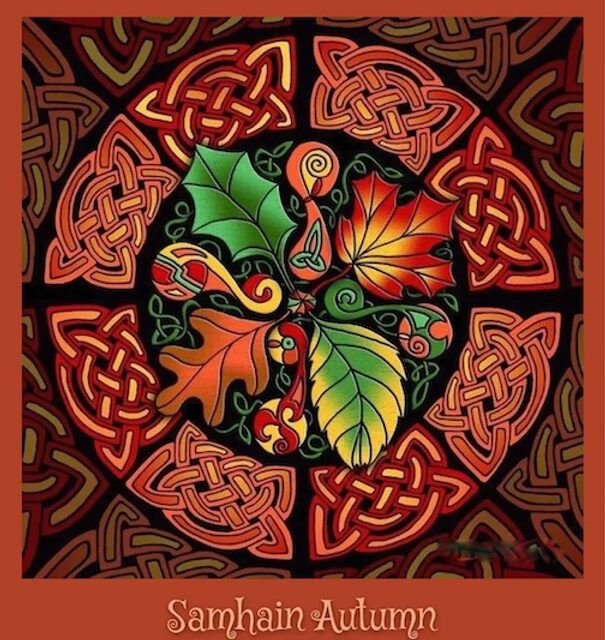
supernatural beings became thinner. Many supernatural beings were believed to appear and wander the earth during a ghostly night. To appease these demons, fairies and other frightening creatures, food offerings were left behind. To avoid being caught themselves, people also dressed like them, so they would not stand out. Fires were also lit to drive away the darkness.
Then comes the Christian layer. From the early Middle Ages, 1 November increasingly took on the meaning of All Saints’ Day — All Hallows’ Day — and the evening before became known as All Hallows’ Eve, later contracted to Halloween.
This change probably took place when Pope Gregory III moved the Church’s celebration of the saints from 13 May to 1 November;
In the Middle Ages, Christian customs such as souling also developed: poor people or children went from house to house for “soul cakes” in exchange for prayers for the dead. That already bears a striking resemblance to a precursor of trick-or-treating.
And then comes America. In the 19th century, Irish and Scottish immigrants in particular brought their customs with them to the United States. There they were mixed, simplified, expanded and eventually heavily commercialised. The modern combination of costumes, sweets, pumpkins and large-scale decorations is therefore, to a large extent, an American packaging of older European traditions.
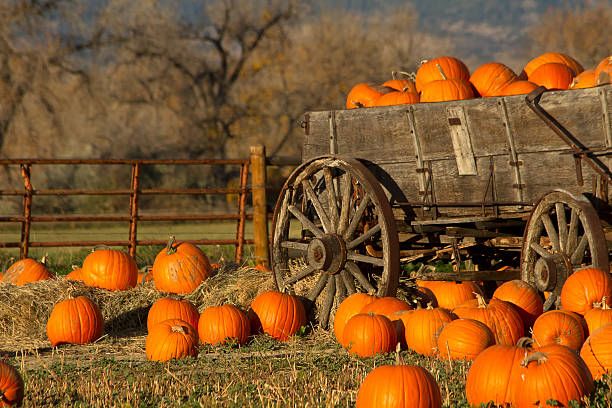
The jack-o’-lantern is also beautifully Irish in origin: originally, faces were carved into turnips or other root vegetables. In America, people switched to pumpkins simply because they were plentiful there and much easier to hollow out.
Celebrating Halloween is worshipping the devil.
That statement is too sweeping and is not what the Bible says. The Bible never mentions Halloween. What the Bible does very clearly reject are specific occult practices: divination, incantations, mediums, consulting spirits and calling up the dead. Deuteronomy 18:10–12:

In terms of meaning, this says:
The reason: These acts are an “abomination” (something God deeply rejects). The surrounding land was judged by God because of these practices and its peoples were driven out.
Call to integrity: Israel is called to be sincere and pure before the Lord and to trust in His Word rather than in pagan practices.
So, if someone uses Halloween to actually summon spirits, practise magic or seek contact with the dead, that clearly conflicts with the Bible.
But a child dressed as a skeleton going from door to door for sweets, someone hollowing out a pumpkin, or a house decorated with cobwebs does not automatically worship the devil. There is no biblical basis for saying so. Intention and the specific action matter.
Historically, “Halloween = Satan’s festival” is also too simplistic. The name means All Hallows’ Eve, the evening before All Saints’ Day. The present-day festival is a mixture of Christian, European folk and Celtic traditions, later strongly shaped by America. The Smithsonian describes Halloween simply as All Hallows’ Eve with a rich folkloric history, not as an originally satanic festival.
In summary: the Bible does not condemn Halloween — the word and the festival do not appear in it. The Bible does, however, warn very strongly against divination, incantations and summoning or consulting spirits. So it also depends on what someone means by ‘celebrating Halloween’. A pumpkin, a costume party or an evening of sweets is something very different from deliberately taking part in occult practices.
31 October stands literally on the threshold of All Saints’ Day, 1 November
That is why you can also view that evening very differently from merely a festival of darkness, ghosts and fear. The very next day, the Church celebrates the saints: people who lived in faith and whose lives bear witness that darkness does not have the final word.
From a Christian perspective, 31 October therefore takes on something almost symbolic: the night is there, but afterwards comes the light.
Death is there, but it does not have the final word.