Mary Magdalene, Mary (the mother of James), and Salome buy fragrant spices after the Sabbath. Myrrh, aloe, precious ointments — not to heal… but to lovingly care for His body. To honour what they believe they have lost. Still in mourning. They gather to go to the tomb together. And they ask one another: “Who will roll the stone away for us?” For even in their love… there lies an obstacle they cannot carry themselves. To give what can still be given — reverence, gentleness, love… to the very end.
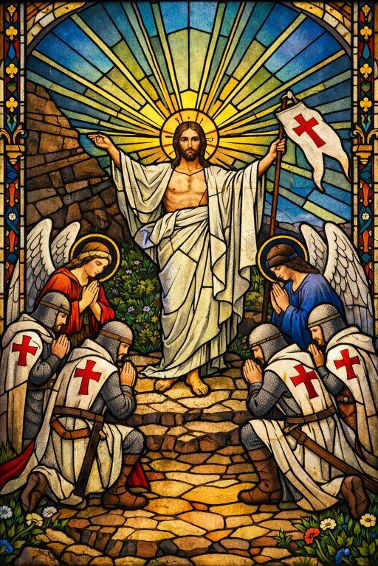
But the earth has already spoken. For while the night slowly fades and the world still holds its breath… Jesus has already left the tomb. No longer as man, but in glorification. A different state of being — between heaven and earth. No longer bound by stone or time, not held back by what is closed… yet still visible, still near.
Before His crucifixion, His apostles fled — scattered, no longer together. Peter denied Him three times. They believe it is over. Hope has collapsed. So what is broken must be restored. Relationships must be healed. Trust must be rebuilt. He does not do this en masse, but personally. He calls them by name: “Mary”, “Peter”, “come.” He calls them back into relationship, back into life, back into their calling.
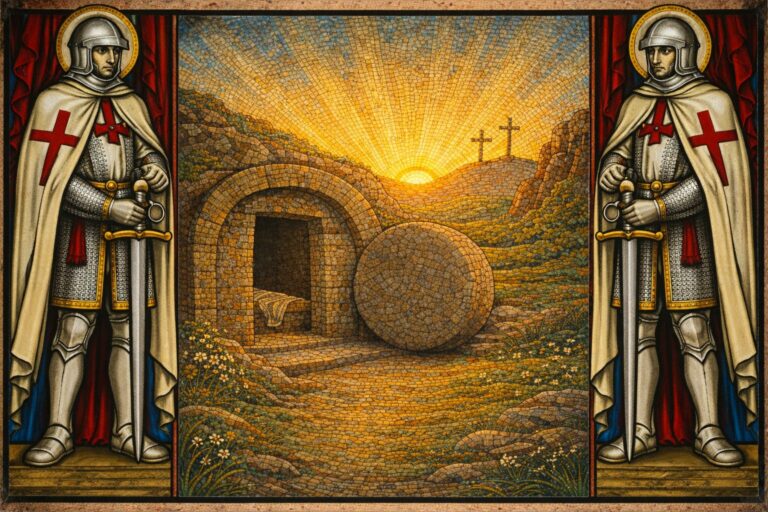
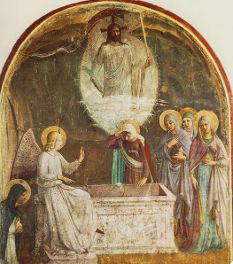
At the tomb, the earth trembles. Two angels descend, and the stone is rolled away. They sit upon it. The Roman guards are seized with fear and flee in terror — powerless before what they cannot understand. Where man guards, heaven opens. The angels remain, not to free Him… but to show the people: He is already free. He has risen from the dead.
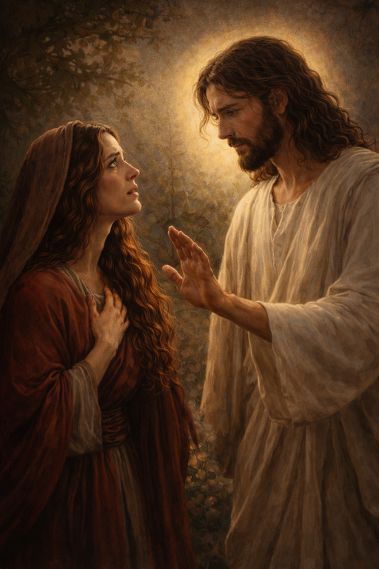
In the dim light of early morning, while darkness still lingers, Mary Magdalene arrives first at the tomb. She sees that it is empty. Confused and shaken, she runs to the disciples — Peter and John: “They have taken the Lord away…” They too see the empty tomb, and do not understand. Overcome with grief, Mary remains. She sees two angels. Then she notices someone — a gardener. The “gardener” speaks a single word: “Mary.” And everything changes. It is HIM. He lives ! “Rabboni.” (Aramaic for my Master) And here — precisely here — Easter begins.
He says: “Noli me tangere.” Latin for: Do not hold on to Me. The tension between what was and what is now. Love — closeness — and then suddenly… distance. She loves Him. 👉 She remains 👉 She weeps 👉 She recognizes Him And then… “Do not hold Me.”
This is not a flaw in the story. This is the story. For what she wants to hold on to… is what has been. But He now lives beyond that.
We see here that Mary Magdalene is the first to witness the Resurrection. This is not by chance. She goes first. She remains when others leave. She seeks, even without understanding. She is the apostle to the apostles. Then she goes to the apostles as the first messenger of the Resurrection.
The Road to Emmaus
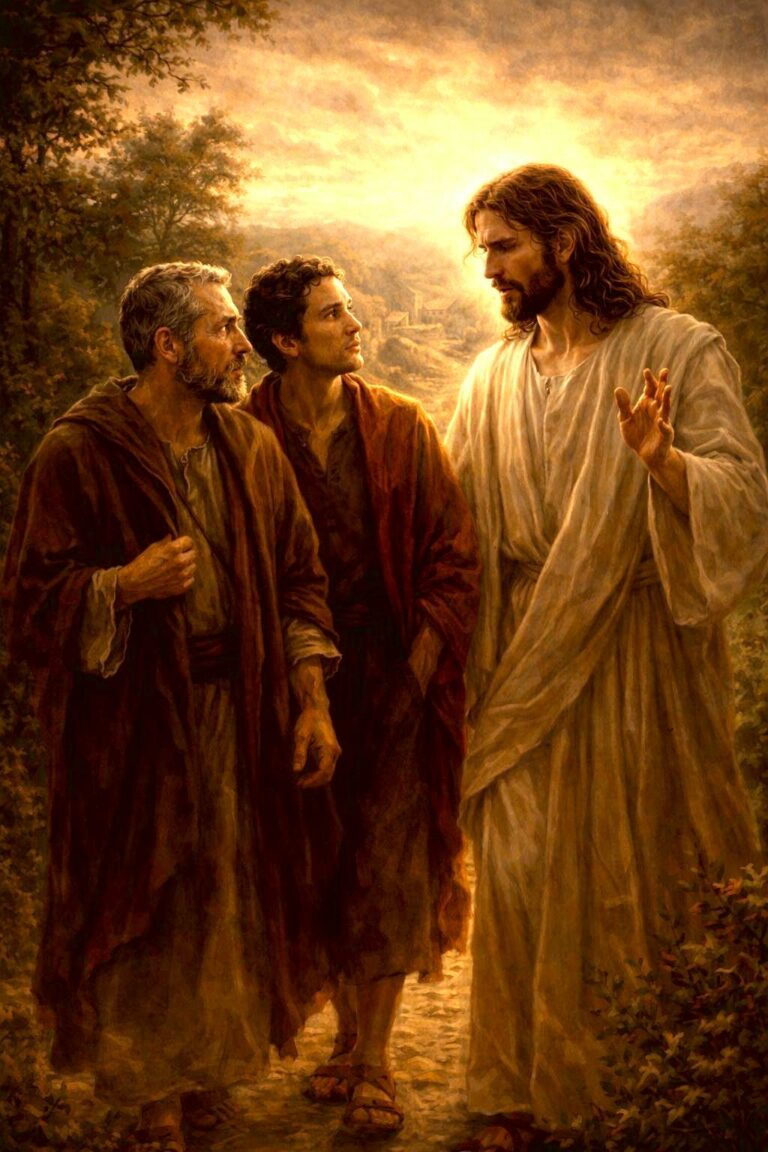
Later that day — not in the Temple, not among the apostles, but on a road — two disciples of Jesus walk away from Jerusalem, heading toward Emmaus. They are defeated, disheartened. One of them is Cleopas; the name of the other is unknown. Perhaps it is you. Everything they had hoped for seems lost.
Then a stranger joins them. He walks beside them. They do not recognize Him. He listens… and begins to explain the Scriptures — the sacred texts of the Tanakh. He reveals how everything that has happened had to happen. Slowly, something begins to burn within their hearts, yet recognition still does not come. After a long day, they arrive in Emmaus. They invite the stranger: “Stay with us, for it is nearly evening.” At the table, He takes the bread, speaks the blessing, breaks it, and gives it to them — just as at the Last Supper. Then their eyes are opened.
It is the Lord! He was with them all along.
And in that very moment… He disappears.
A small yet profound detail in this moment: it points to the Eucharist — but also beyond that: God becomes visible in the act of sharing.
Jesus appears to others — to women, to disciples — again and again, to those who seek Him.
In the forty days that follow, He appears, speaks, eats, teaches, and restores trust. And what began in silence… becomes visible to the world.
Not in a single moment, but step by step, heart to heart.
Easter is not only that He lives — but that He teaches us to live again.