Holy Monday, Tuesday and Silent Wednesday (or Spy Wednesday)
The silence before the betrayal.
After the solemn entry on Palm Sunday, the atmosphere quickly shifts. Jesus goes to the temple in Jerusalem.
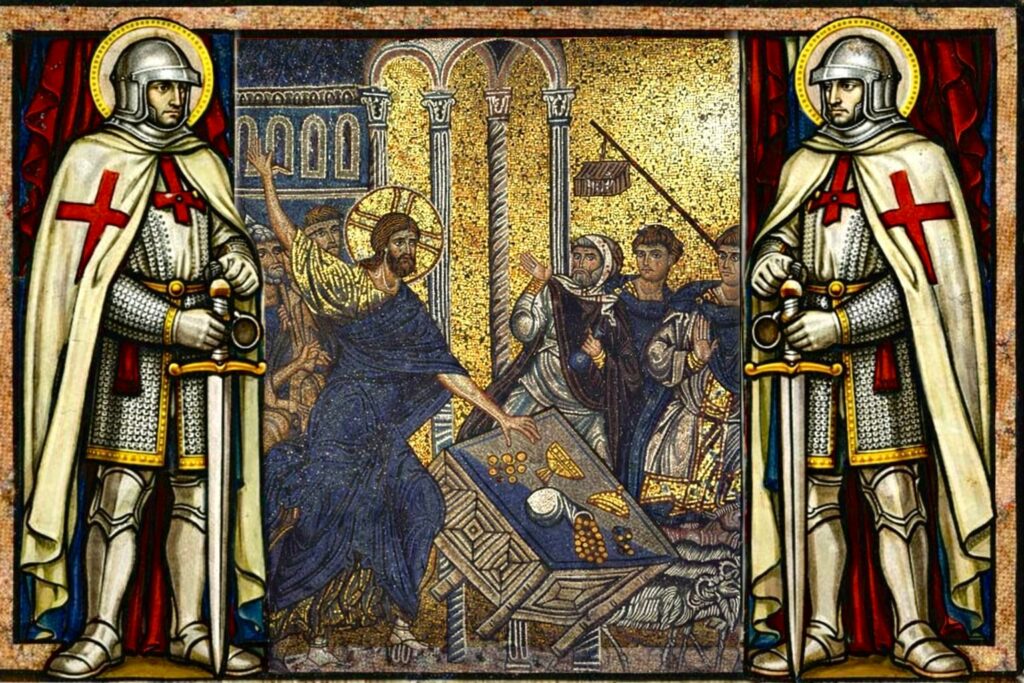
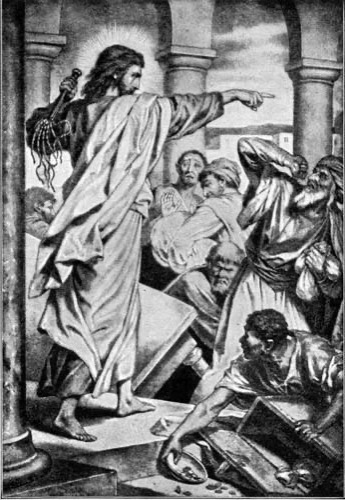
There He finds not a house of prayer… but trade. He drives out the merchants and money changers and says:
“It is written: My house shall be called a house of prayer…
but you have made it a den of robbers.”
He saw that something sacred was losing its meaning — and He could not allow that to happen. Not out of anger… but out of love for what is holy.
Through His action, He reveals something that had long been stirring beneath the surface.
The hostility of the chief priests, scribes and leaders of the people was already there — but had remained hidden until then.
Now they have a reason. A cause. An excuse.
What they use as a pretext brings to the surface what had already been growing underground.
In the days that follow, Jesus speaks daily in the temple. He teaches the people — but also addresses the religious leaders sharply.
He calls them hypocrites. People who know the law… but do not live it. Who speak of God… but do not serve Him in their hearts.
Their authority is challenged. Their position begins to waver. And the tension rises.
On Wednesday — a day outwardly quiet — a decision is made behind the scenes. The Sanhedrin, the highest religious court, gathers. They decide that Jesus must die.
But not openly. Not during Passover — the great Jewish feast when Jerusalem fills with people.
Too many eyes. Too much tension. Too great a risk of unrest.
It must happen in silence. Without a crowd. Without resistance.
And precisely there lies the revelation: those who do good do not need to act in the darkness.
Then the unexpected happens. Judas — one of the twelve, one of the closest — goes himself to the chief priests. Judas was not an outsider. He was one of them. It is not the money that explains his choice —
but something within him that shifts and is not taken back.
“What will you give me if I deliver Him to you?”
And they pay him thirty pieces of silver — at that time the price of a slave. What they sought… comes to them.
From that moment on,
Judas looks for an opportunity.
Not in public.
Not among the people.
But in a place where no one sees.
And so everything falls into place.
What began as an undercurrent of tension becomes a decision. What was hidden finds its way outward.
Here the betrayal begins.
The silence of Wednesday is not emptiness — but a turning point.
The day on which sound slowly fades — even before true silence begins.
That is why this day is also called Silent Wednesday: the day on which sound is suspended.
🌿 And while the plans are being forged in the darkness… Jesus withdraws with His disciples.
The night is drawing near.
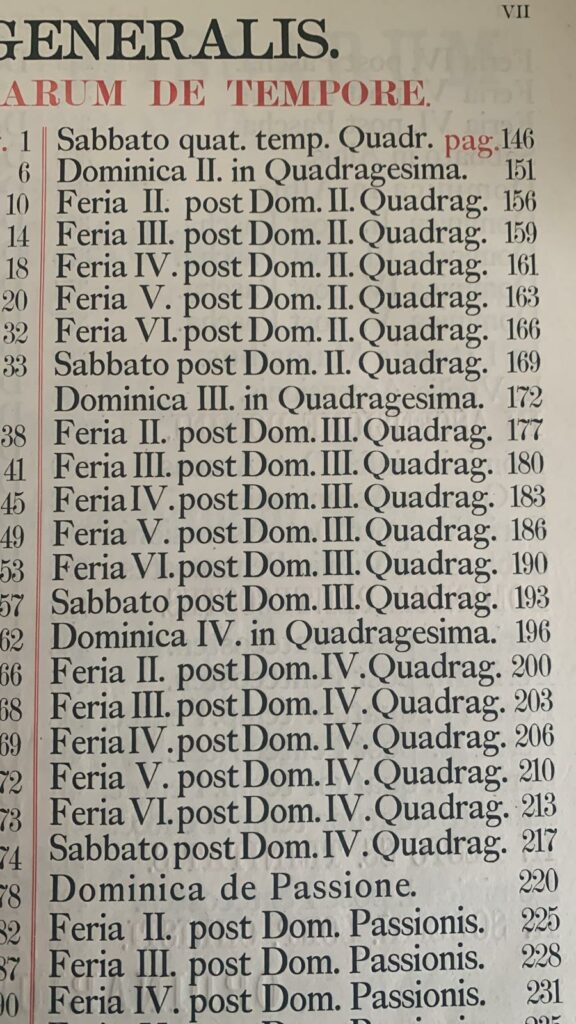
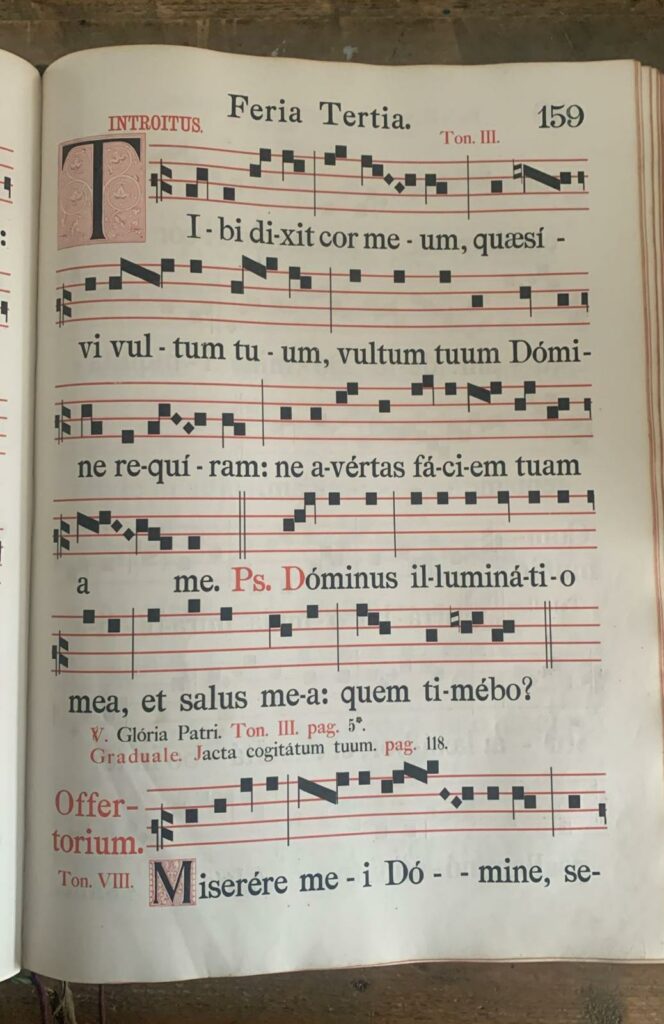
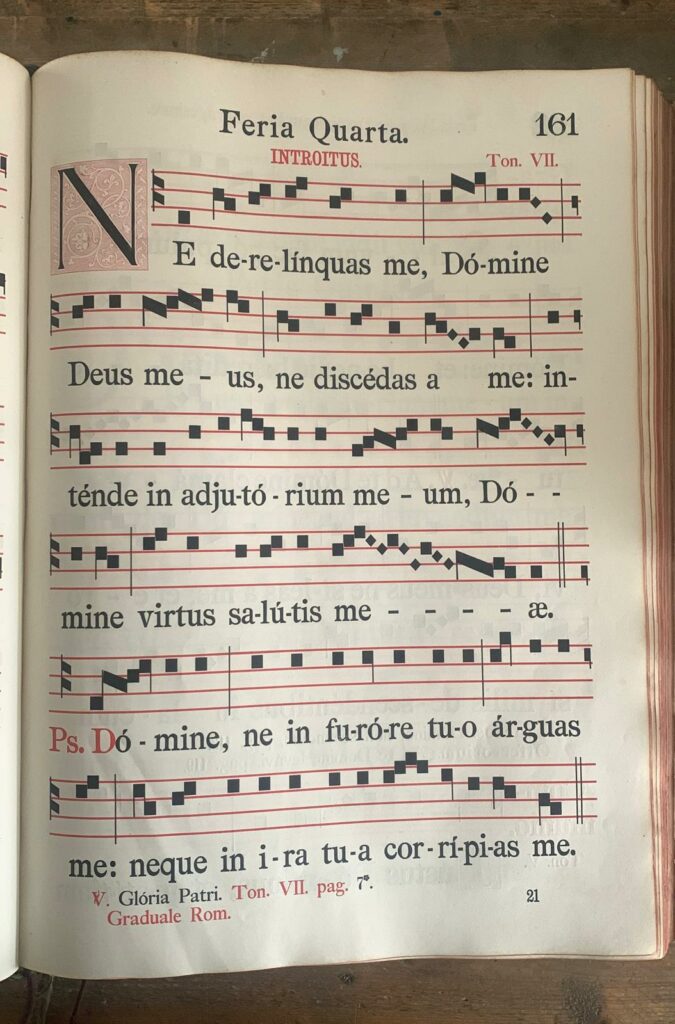
Feria II + III + IV
These texts were not only sung, but lived.
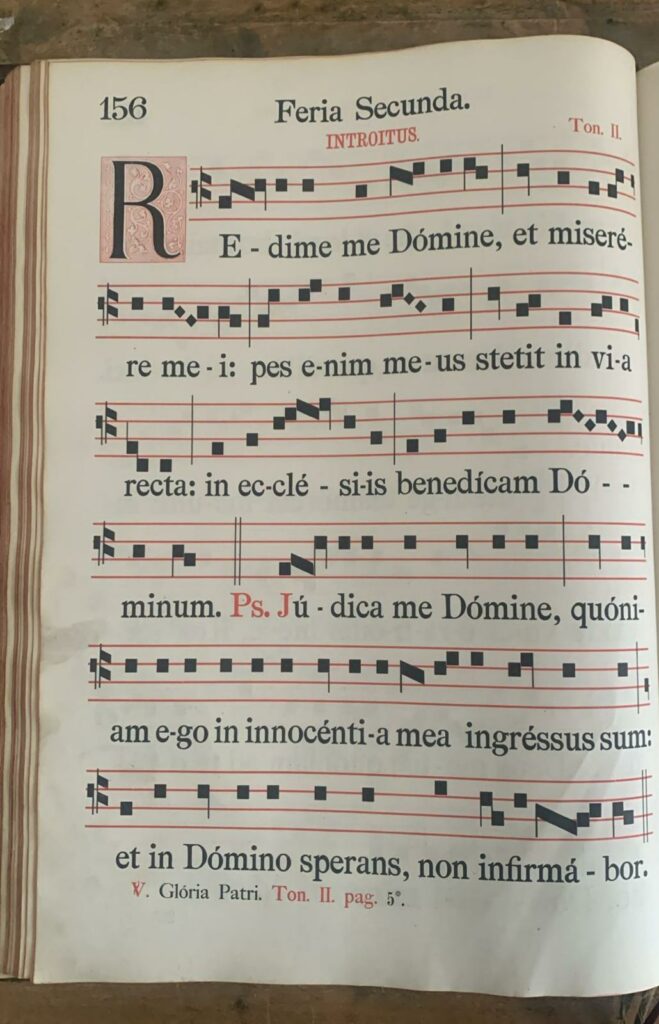
They come from a Gradual book.
A Graduale is not a small book. They are large, heavy chant books (up to 16 kg!), often placed on a stand in the middle of the choir. The letters are written large, so that several singers could read together — standing, at a distance. Not a personal book, but a book for the community.
Around the page, the singers would gather, and together the chant would sound.
Not each on their own, but as one voice.
In monasteries and churches, they were sung during the Mass, carried by Gregorian chant. Monks, canons and singers stood in the choir and let these words resound, not as explanation, but as prayer.
The Templars did not sing them, but recited them as prayer. Not at Matins or Vespers, but at the moment when the Brothers gather: at the Mass itself.
Each day had its own chant.
On Monday, “Redime me, Dómine” — “Redeem me, Lord…” the first cry for salvation.
On Tuesday, “Ibi dixit cor meum” — “My heart has spoken to You…” the heart that seeks the face of God.
And on Wednesday, “Ne derelínquas me” — “Do not forsake me…” a prayer that sounds in the approaching silence.
These are not random texts. They follow the path of the soul.
Not as a story from the outside, but as an inner movement — from calling, to seeking, to holding fast.