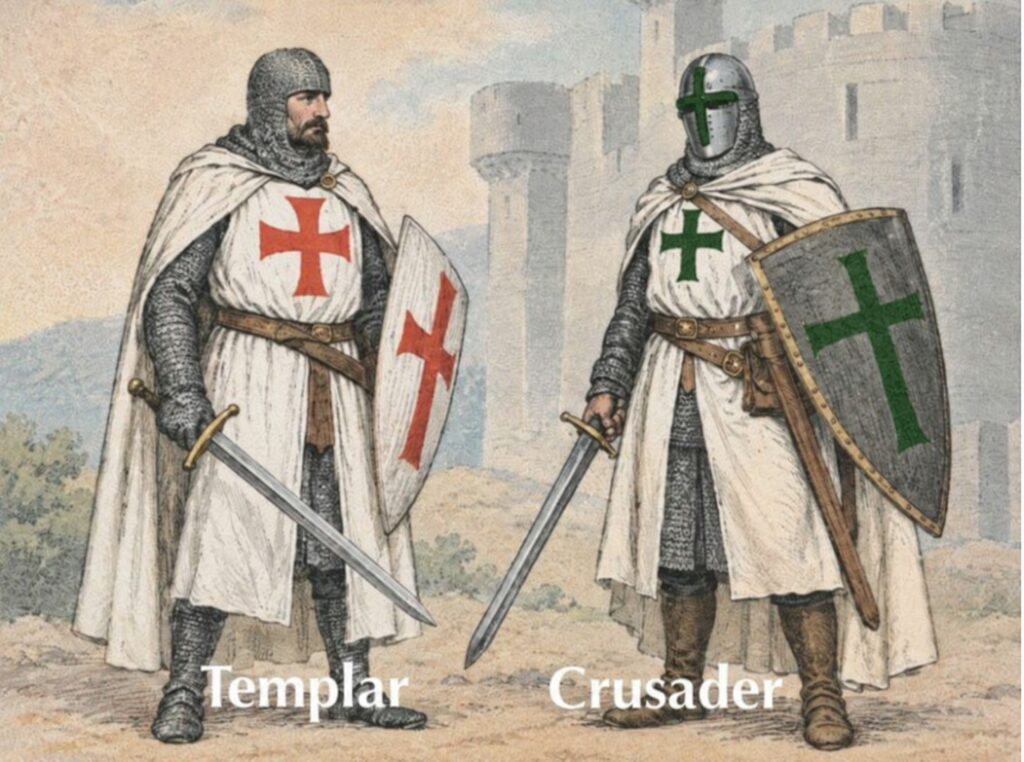
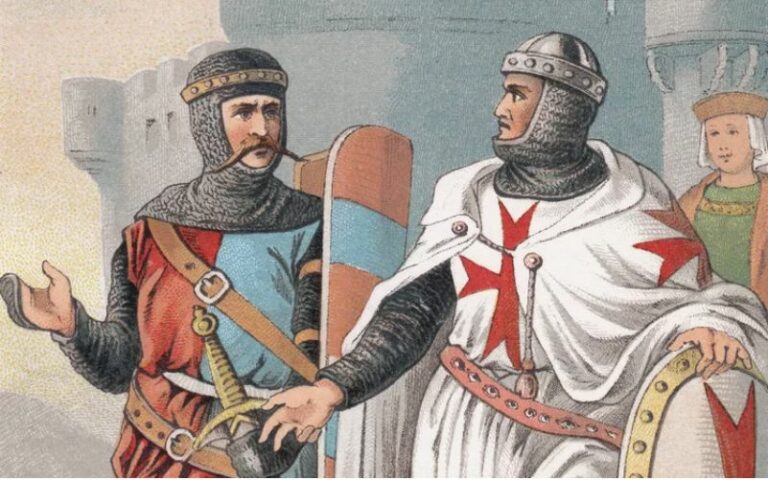
Templar, Crusader, and pilgrim.

Templar, Crusader and Pilgrim

What is the difference?

Pilgrim
A pilgrim is a believer who undertakes a journey to a holy place, often on foot and out of devotion or penance. Well-known destinations include Santiago de Compostela, Lourdes, Rome, and Jerusalem.

It is often said that a pilgrim does not merely walk a road… but that the road shapes him.

In the Middle Ages, a pilgrim often departed without certainty.
He left behind his home, his land, sometimes even his name.
What he carried was little: a staff, a cloak, a small pouch —
and something you could not see, yet heavier than all the rest combined:

an inner calling

Some went out of gratitude. Others out of penance. Still others because they felt they had come to a standstill in life — and needed to move again.
Along the way, there was no certainty. No guarantee of food, no safe place to sleep, no promise that one would ever arrive.

And yet… they went.
That may well be the essence of the pilgrim:
not that he arrives… but that he dares to go.

Santiago de Compostela cathedral with pilgrimage route and scallop shell wayfinding sign
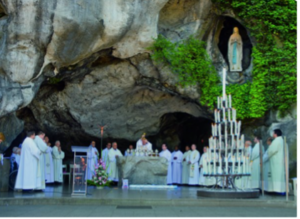
Holy Mass at the Lourdes grotto with pilgrims gathered before the statue of the Virgin Mary
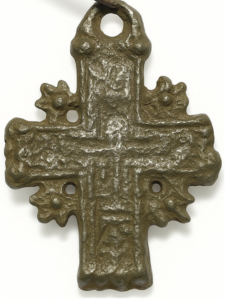
Medieval pilgrim cross badge made of cast metal with suspension loop and mounting holes

Crusader
In the time of the Crusades, some pilgrims took a further step: they made a crusading vow and set out for the Holy Land to defend it. These became known as Crusaders.

👉 In short: the pilgrim travels with staff and shell, the Crusader with armor and sword —
yet he too began his journey as a pilgrim, with staff and pouch, before receiving the cross.

A Crusader was, in essence, a temporary pilgrim with a sword.
He took part in a crusade and usually returned home afterward.

His motivation was a combination of faith, honor, adventure, and the promise of the remission of sins. It was an individual and temporary commitment: one could choose to join another crusade at a later time.

Sometimes the term “crusade father” is heard, but this is incorrect — such a term does not exist. The correct term is Crusader, referring to anyone who takes part in a crusade, both knights and non-knights.

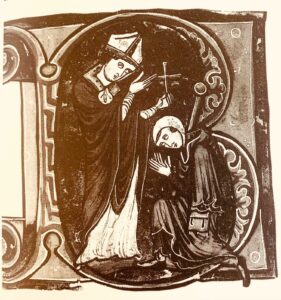
Medieval miniature showing a bishop giving the cross to a kneeling crusader during the crusader vow

Taking the cross:

A Crusader receives his cross from a bishop. In an earlier, separate ceremony, he had already received the scrip (a small pouch containing food and alms) and the staff — the symbols of pilgrimage.

These two ceremonies were merged in the late 12th century.

Templar
The Templar went a step further.
He was a member of a monastic knightly order: the Order of the Temple (founded around 1119).

A Templar did not, like a Crusader, take a crusading vow, but instead took lifelong vows:
poverty
chastity
obedience

Like a monk, he renounced personal possessions. His life was entirely devoted to God: prayer, obedience, and the protection of pilgrims.
The first brothers were primarily engaged in:
escorting pilgrims between Jaffa and Jerusalem
protecting pilgrimage routes
guarding roads and mountain passes

A Templar was not a temporary participant, but someone who dedicated his life to the Order. The Order had a strict hierarchy, fixed rules (the Rule of the Order), and an international structure.
✝️ The Templar served until death.

Templar - crusader

The difference between a Templar and a Crusader

It is often assumed that a Crusader and a Templar were the same thing. But that is not entirely true. A Crusader was someone who took part in the Crusades. In principle, anyone who participated in an official Crusade was a Crusader.

A Templar was a member of the Order of the Knights Templar. The Knights Templar were one of the military orders that fought during the Crusades and in the Holy Land.

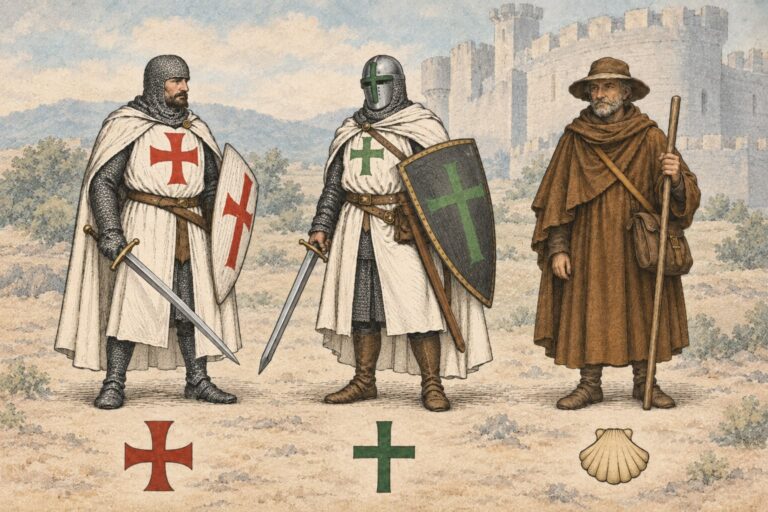
Being a Crusader was not membership of an order, but a status: someone who temporarily took the cross. The cross could differ depending on region, lord or vow.

The colours arose from heraldic conventions, fabric, availability and symbolism — there was no single uniform system.

Yellow/gold was associated with light, promise, calling and royalty. (Think of the yellow Jerusalem Cross of Godfrey of Bouillon!) Yellow and gold were also permitted in heraldry only in exceptional circumstances.

They appeared on banners, shields and crosses, but were rarely depicted so explicitly “beside” the red of the Templars. The Templars were also the only ones permitted to wear the red cross on their clothing.

You were a Crusader when you went on a Crusade or Crusades. The Templars devoted themselves to protecting Christendom as a whole.

The difference in one sentence: two men, one faith — but a different path.

One goes into battle and returns… the other remains and dedicates his life.

Where the Crusader departs… the Templar remains.

Illustratie van een kruisridder en een Tempelier naast elkaar, beiden in maliënkolder, waarbij de Tempelier een witte mantel met rood kruis draagt

Voices of visitors