Niervaert Breda
Around the year 1300, in the now vanished village of Niervaert (near present-day Klundert), a farmer named Jan Bautoen discovered a host in the ground while cutting peat. When he tried to pick it up, it began to bleed in five places upon being touched. He brought the host to the parish priest, where the miracle was also confirmed. The news spread quickly, and each time the host was examined, the miracle repeated itself. Soon, Niervaert attracted many pilgrims from near and far, who came for prayer and healing.
In 1449, the host was brought to Breda, where John IV of Nassau gave it a place in the Church of Our Lady.
Within the church, the host received its own chapel: the Niervaert Chapel. The vault, with its five keystones, refers to the five bleeding wounds — a direct reference to the wounds of Christ.
In 1463, the Guild of the Holy Sacrament of Niervaert was founded, responsible among other things for organizing the processions. Despite periods of decline, this tradition continues to this day.
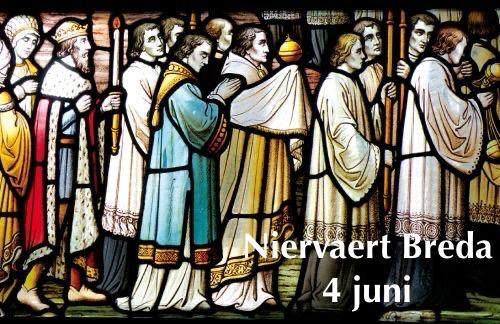
The Niervaert procession is connected to Corpus Christi, as it revolves around the veneration of the Holy Host. On this day, the Blessed Sacrament stands at the center — not only in the Mass, but also in adoration and procession. The host is displayed, carried, and venerated — made visible to the faithful.
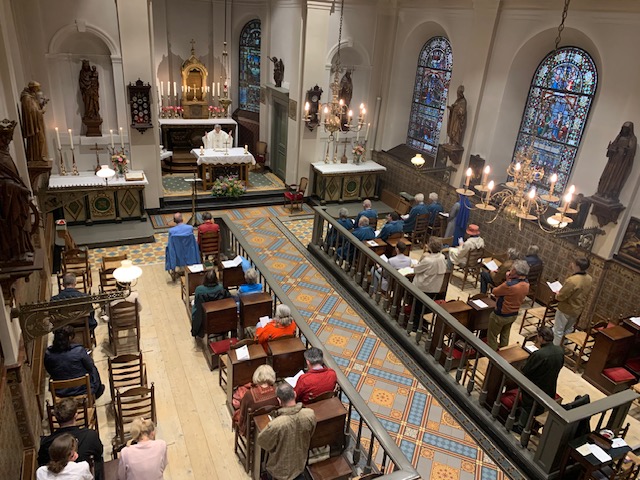
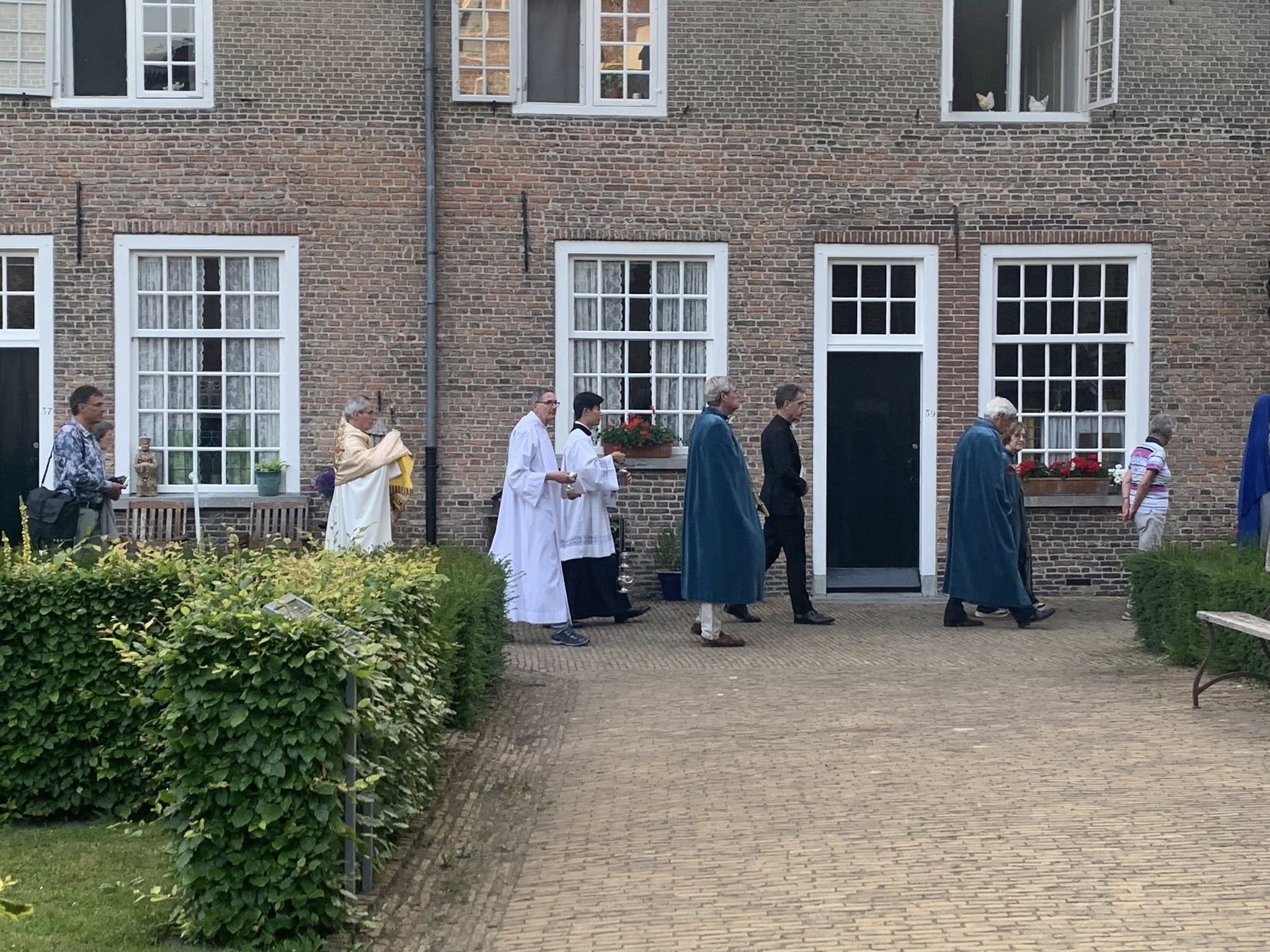
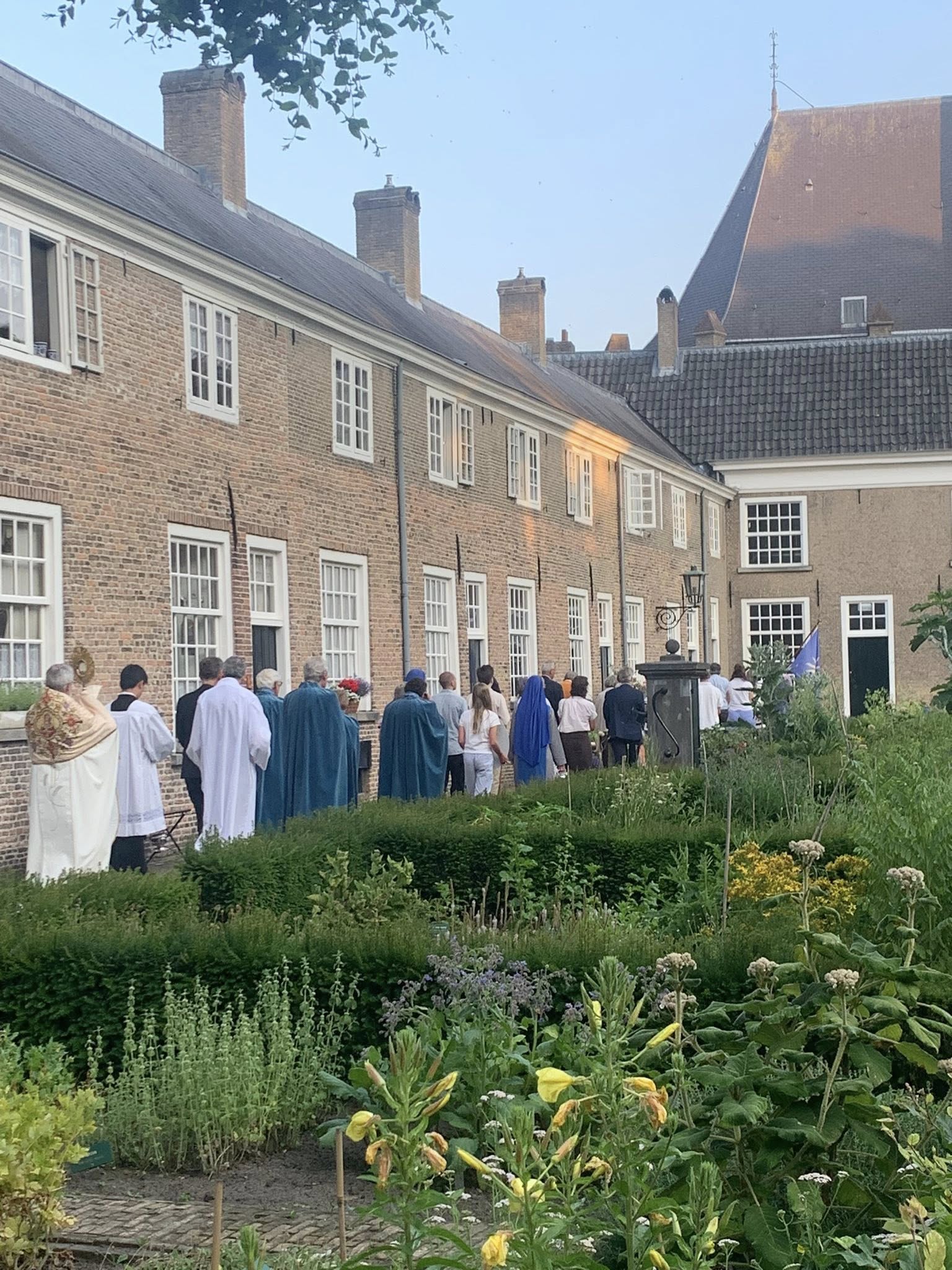
Today, the procession takes place at the Beguinage, where hymns such as Pange Lingua and Tantum Ergo are sung.
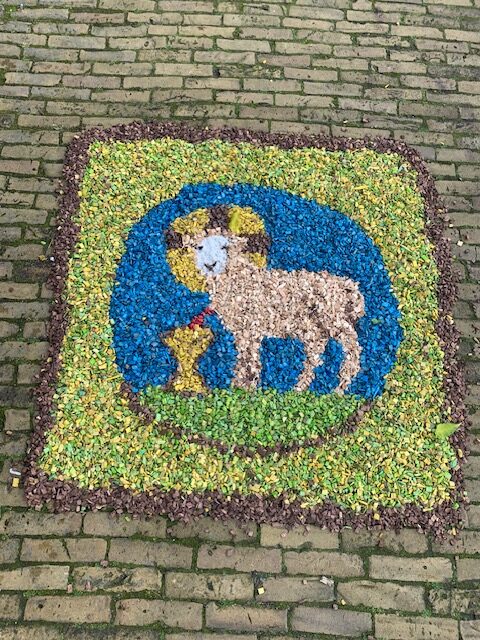
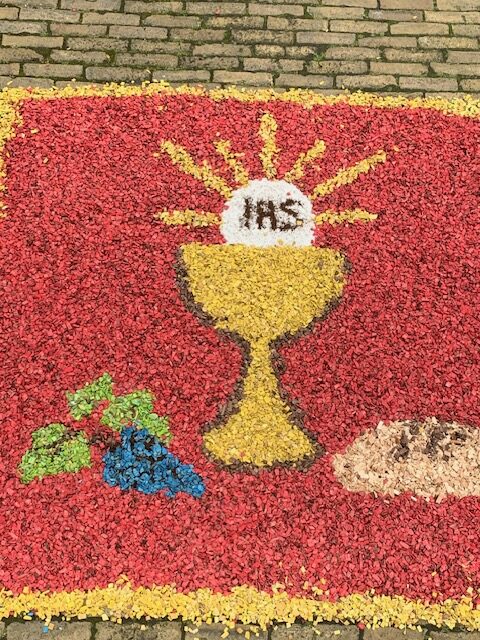
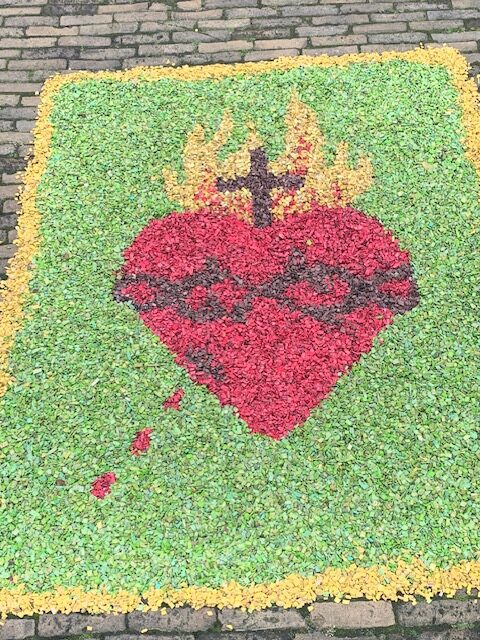
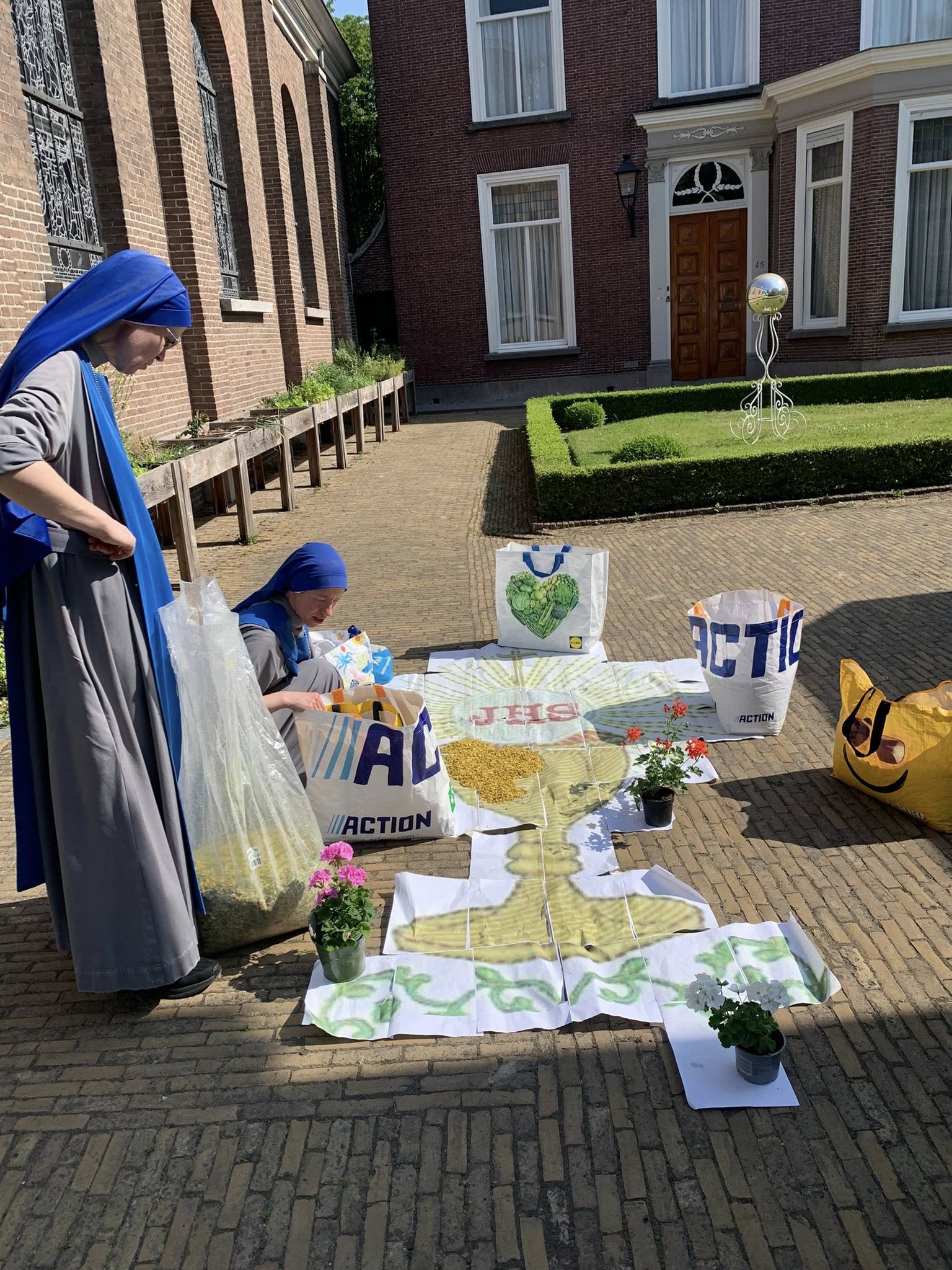
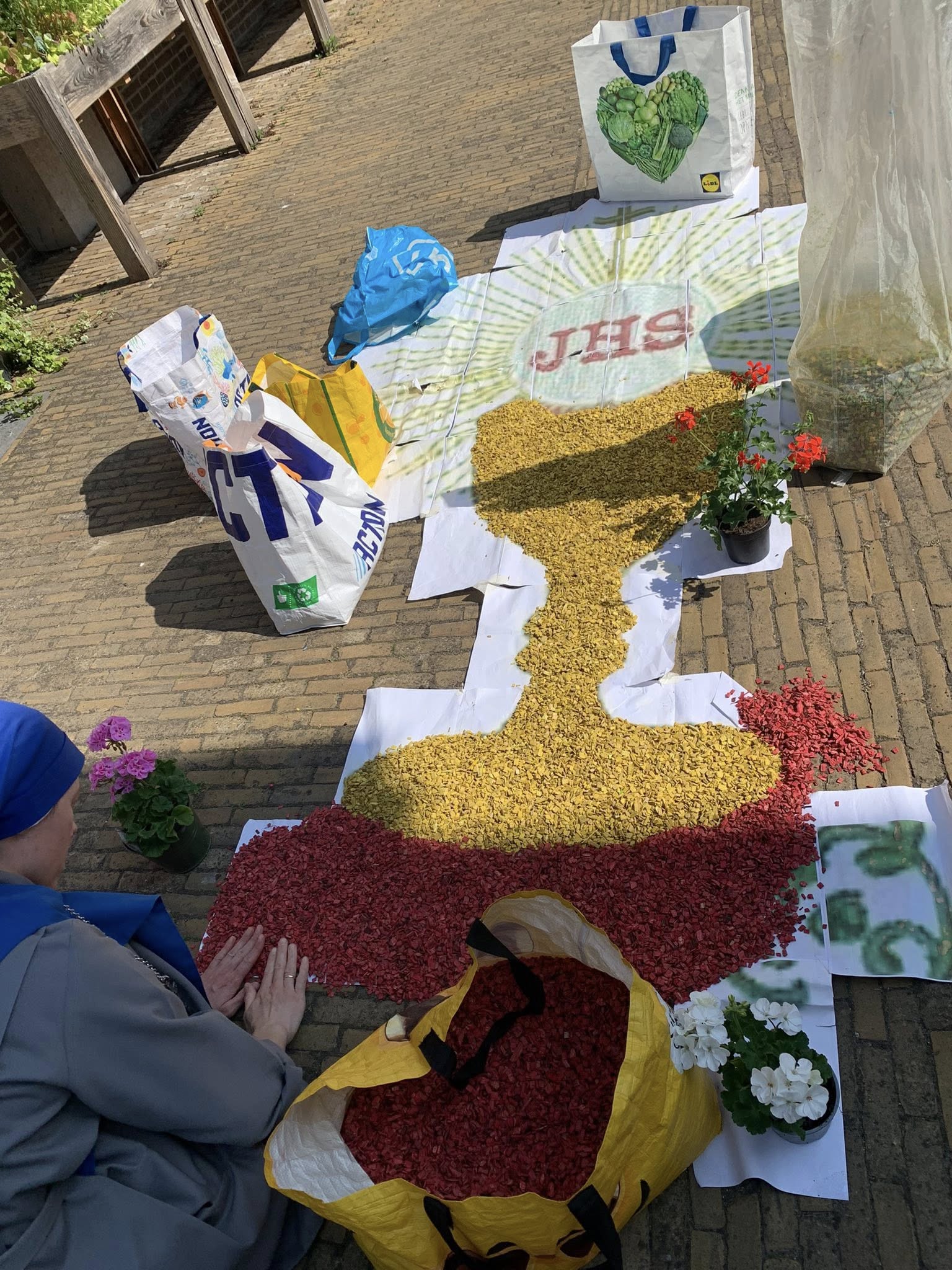
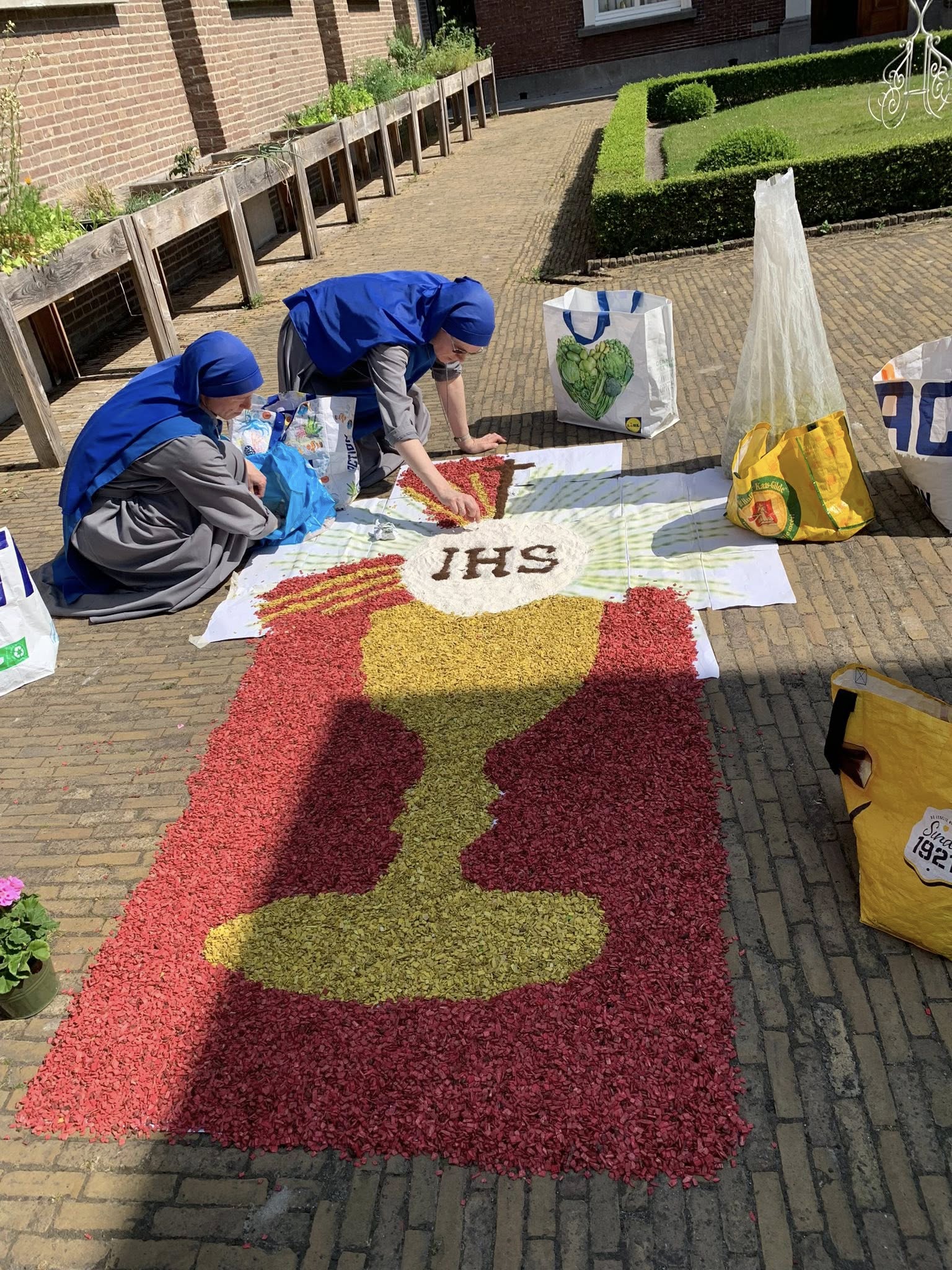
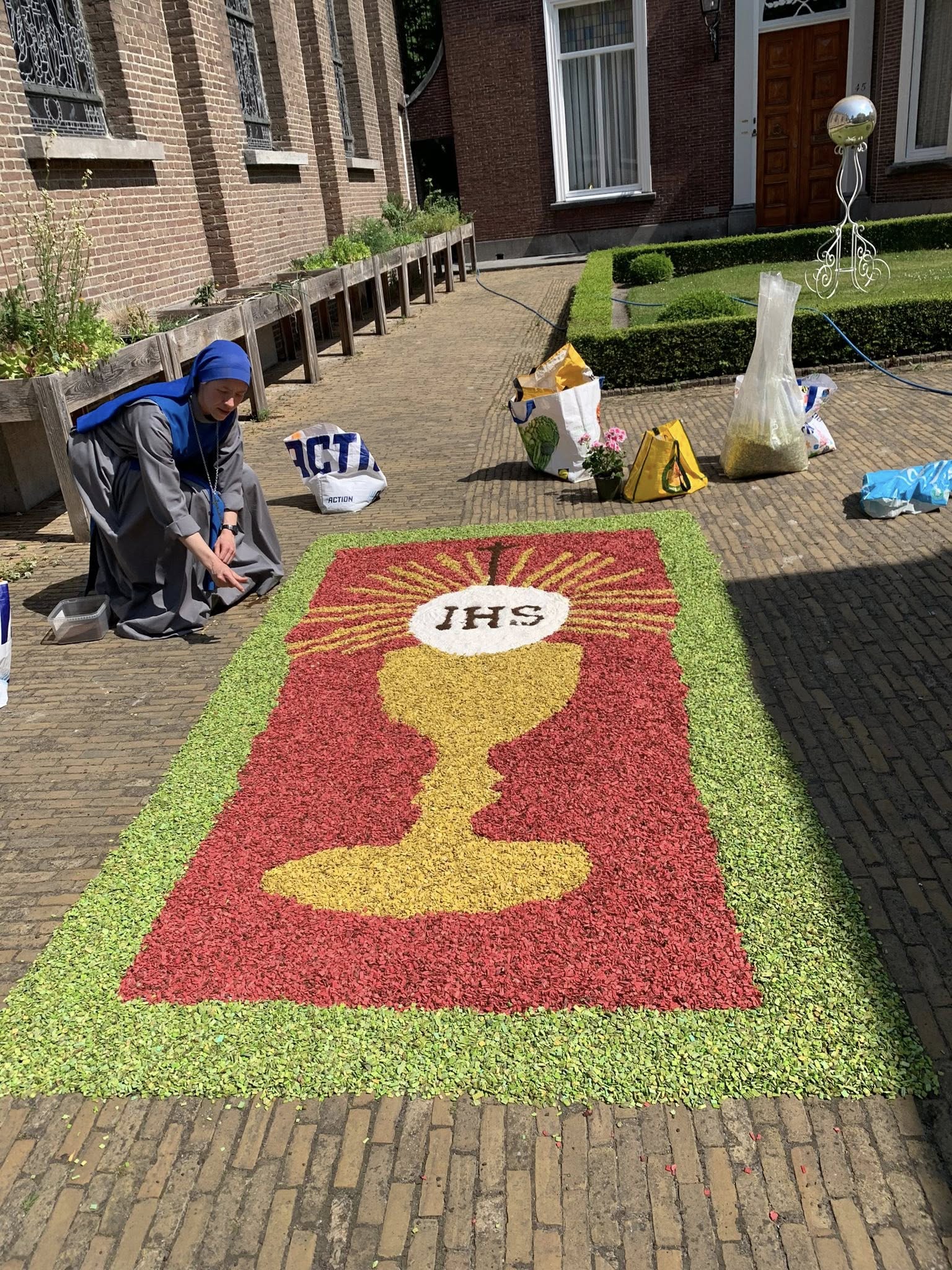
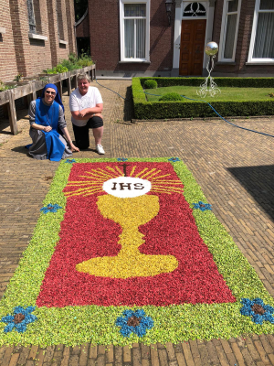
The Blue Sisters create floral carpets that refer to the mystery of the Sacrament.