Dispositio is Latin and essentially means something like ordering, division, arrangement or structure. In the Dispositio cards, we explain how the sectio’s (sections/chapters) are structured. Here, the subject is the Grand Masters.
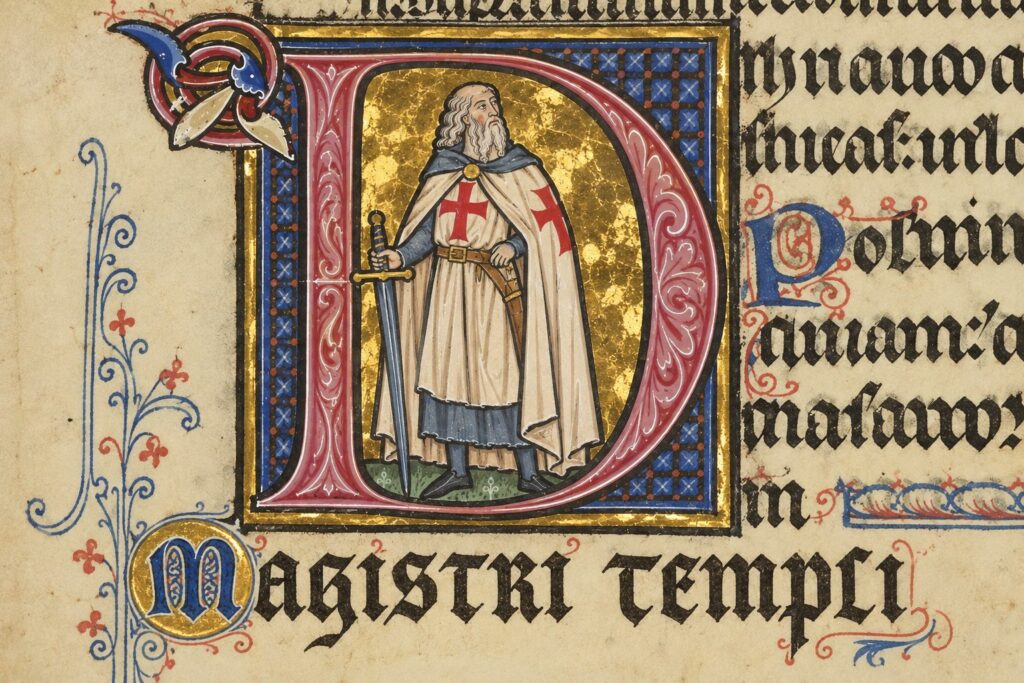
GM Grand Master From the outside, a Grand Master was not easily recognised by any special garment, sign or fixed mark of rank. Like the other knight-brothers, he wore the clothing of the Order. His position was shown mainly by his office, his place within the hierarchy and by official acts. The Grand Master stood at the head of the Order, but he was not a prince. He wore no crown and had no royal or other symbols of power. His authority came from his office within the Order, not from outward display.
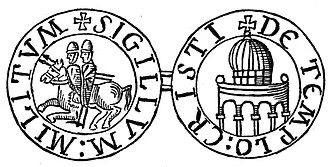
The office did, however, have one important official sign: the seal of the Grand Master. It was used on documents and decisions and confirmed the authority with which actions were taken on behalf of the Order. His position could sometimes also be seen in the people around him. Sources describe, for example, that when a Grand Master was wounded, his standard-bearer and members of his retinue went with him. It was not a crown or a golden mantle that made him recognisable, but his place within the Order and the way others moved around him.
👈🏻 Seal of the Grand Master / Master of the Order of the Temple
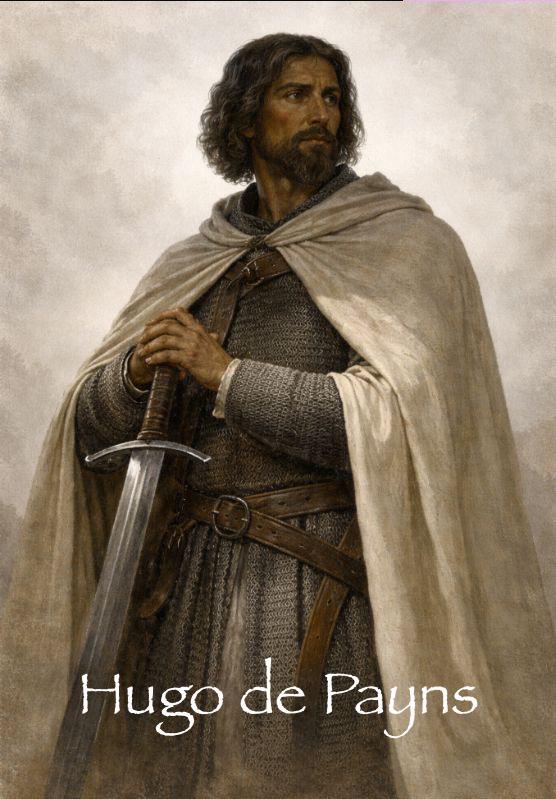
Hugo de Payns We begin with Hugo de Payns. Hugo occupies a special place in the history of the Order. He was one of the founders of the Templars and also became their first Grand Master. In him, origin and leadership therefore come together: founder of the Order and the first to lead it as Grand Master.
List of Grand Masters By far the best-known lists of Grand Masters count 23 Grand Masters. Because we try to stay as close to the truth as possible, we use a different list. Academic research and studies by several major names in the field of medieval Templar research (including Professor Malcolm Barber of England) show that the list of 23 Grand Masters is not correct.
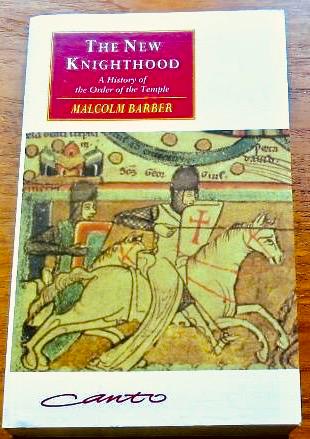
Not every Grand Master and every transition between them is equally well documented, and for some it is even disputed whether they were Grand Masters at all. To avoid getting entangled in every detail and to maintain consistency, we use the list from The New Knighthood: A History of the Order of the Temple, published by Cambridge University Press and written by Professor Malcolm Barber. He compiled it from research in primary sources.
Professor Malcolm Barber (✷1943) received his doctorate from the University of Nottingham in 1968. He is internationally recognised as a leading expert on the Templars. From 1966 until his retirement in 2004, he taught at the University of Reading, where he remains affiliated as Professor Emeritus.
These are his 22 Grand Masters, in chronological order:
Hugh of Payns — 1119–ca. 1136
Robert of Craon — ca. 1136–1149
Everard des Barres — 1149–1152
Bernard of Tremelay — 1153
Andrew of Montbard — 1154–1156
Bertrand of Blancfort — 1156–1169
Philip of Nablus — 1169–1171
Odo of Saint-Amand — ca. 1171–1179
Arnold of Torroja — 1181–1184
Gerard of Ridefort — 1185–1189
Robert of Sablé — 1191–1192/93
Gilbert Erail — 1194–1200
Philip of Plessis — 1201–1209
William of Chartres — 1210–1218/19
Peter of Montaigu — 1219–1230/32
Armand of Périgord — ca. 1232–1244/46
William of Sonnac — ca. 1247–1250
Reginald of Vichiers — 1250–1256
Thomas Bérard — 1256–1273
William of Beaujeu — 1273–1291
Theobald Gaudin — 1291–1292/93
Jacques de Molay — ca. 1293–1314
The name missing from this list, but found in most lists on the internet, is Richard de Bures, who is often listed as the 17th Grand Master from 1244 to 1247. This is because his official status as Grand Master is uncertain. After the Battle of La Forbie in 1244, the fate of Grand Master Armand de Périgord was unclear: he may have been killed, or he may have been taken prisoner. Richard de Bures temporarily took over the leadership during this uncertain period. It is not certain, however, that he was officially elected Grand Master.
Discover who these remarkable men were and what place they held within the Order. We wish you an engaging journey through the history of the Grand Masters.