

Halo – Nimbus
A halo or nimbus is a form of visual symbolism. It indicates that someone is holy, heavenly, or connected with God.
The term comes from the Latin aureola, from aureus, meaning “golden”. Aureola roughly means “golden radiance” or “golden wreath”.
It represents light: the person lives in God’s presence and, as it were, reflects God’s divine radiance.
That is why it is usually depicted as a golden disc, circle, or ring of light behind or around the head. Gold refers to something imperishable: heavenly light, glory, and eternity.
A saint is therefore often (almost always) portrayed with a halo or nimbus. This symbol indicates that the person is holy and lives in God’s glory.
How does someone become a saint?
Canonisation
The process of canonisation, or the formal declaration of sainthood. The word canon comes from the Greek kanōn, originally meaning a measuring rod or guideline. Later it came to mean something accepted as a standard or officially recognised.
The path to canonisation has four stages:
1. Servant of God – the formal investigation into the person’s life and virtues begins.
2. Venerable – the Church recognises that the person lived the Christian virtues to a heroic degree.
3. Blessed – usually after one miracle attributed to that person’s intercession has been recognised; public veneration is then officially permitted, often only in a region or particular communities.
4. Saint – canonisation; ordinarily a second recognised miracle after beatification is required.
From Servant of God to Saint
1. Servant of God
Once the official investigation into a person’s life and reputation for holiness has been opened, that person receives the title Servant of God. This is the beginning of the process; the Church has not yet given a final judgement about the person’s holiness.
2. Venerable
When the Church, after investigation, recognises that someone lived the Christian virtues heroically, that person receives the title Venerable.
3. Blessed
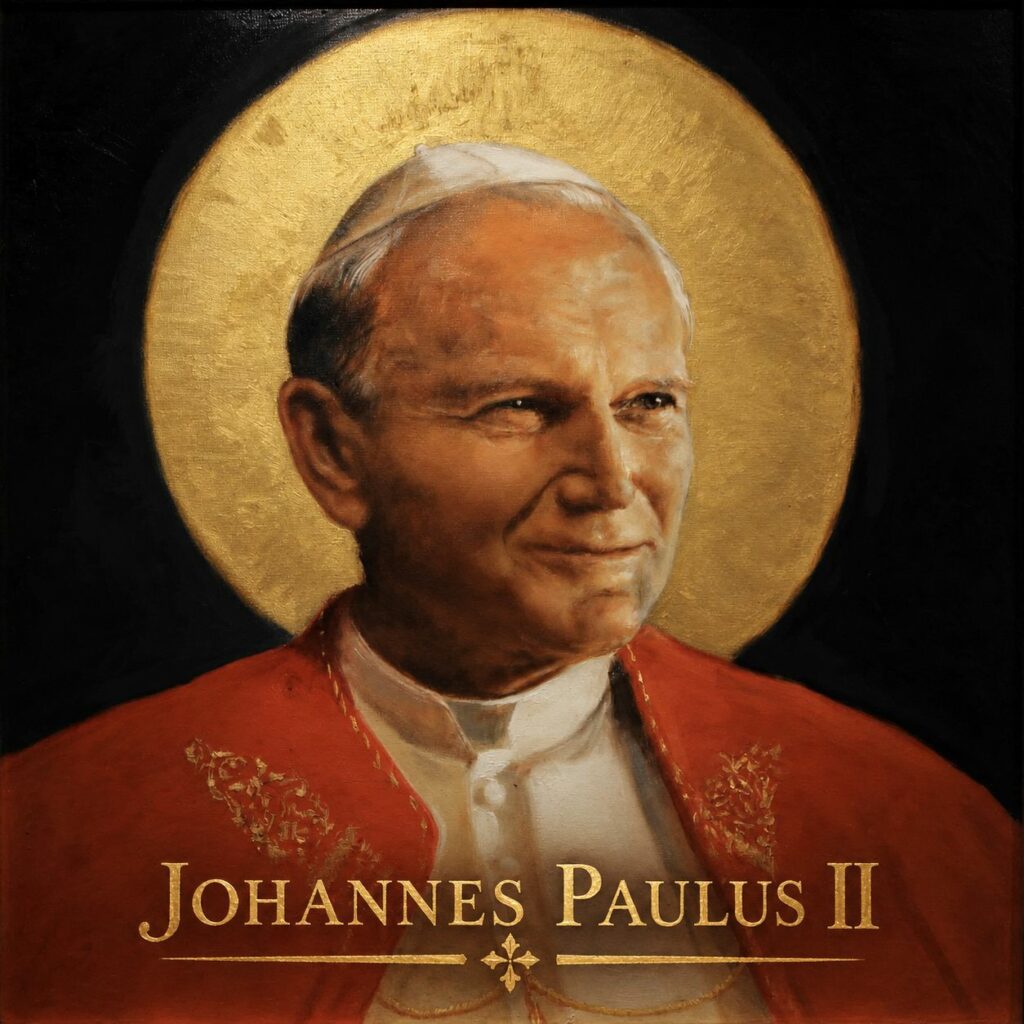
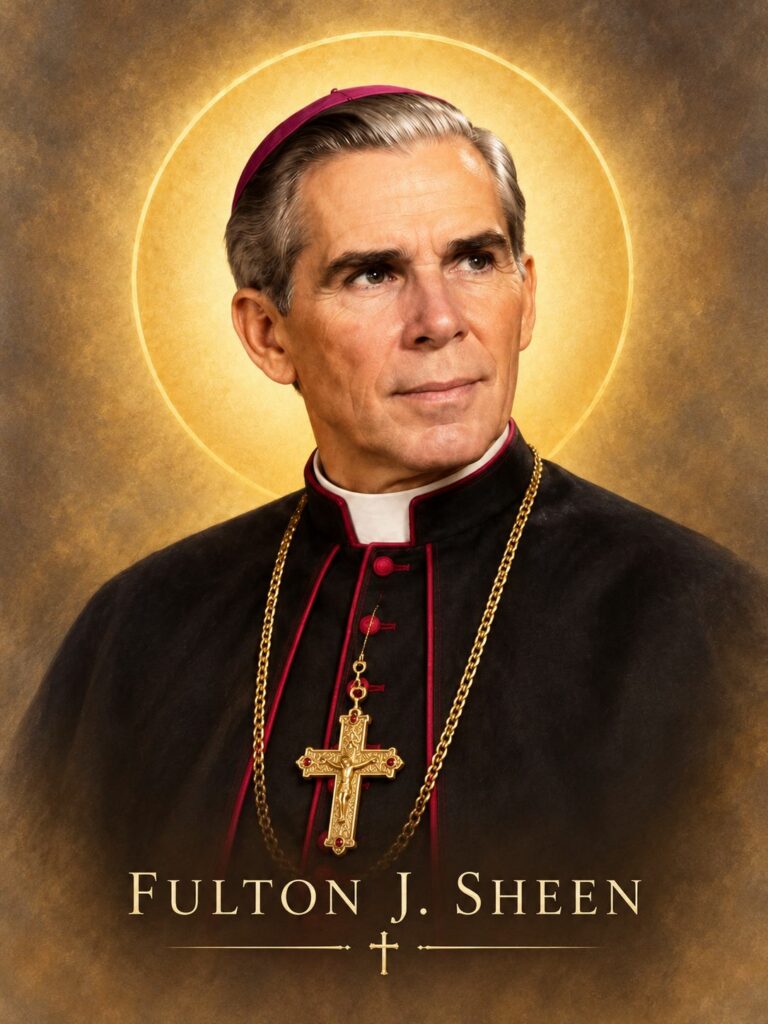
From now on you may be depicted with a halo.
Beatification ordinarily requires one recognised miracle attributed to the person’s intercession. This requirement usually does not apply to martyrs. After beatification the person may officially be venerated, usually within a particular region, religious order, or community.
4. Saint
For canonisation a second recognised miracle after beatification is normally required. At canonisation the person is recognised as a saint for the whole Catholic Church and may be publicly venerated everywhere.
In short:
Servant of God → Venerable → Blessed → Saint.
Equipollent canonisation
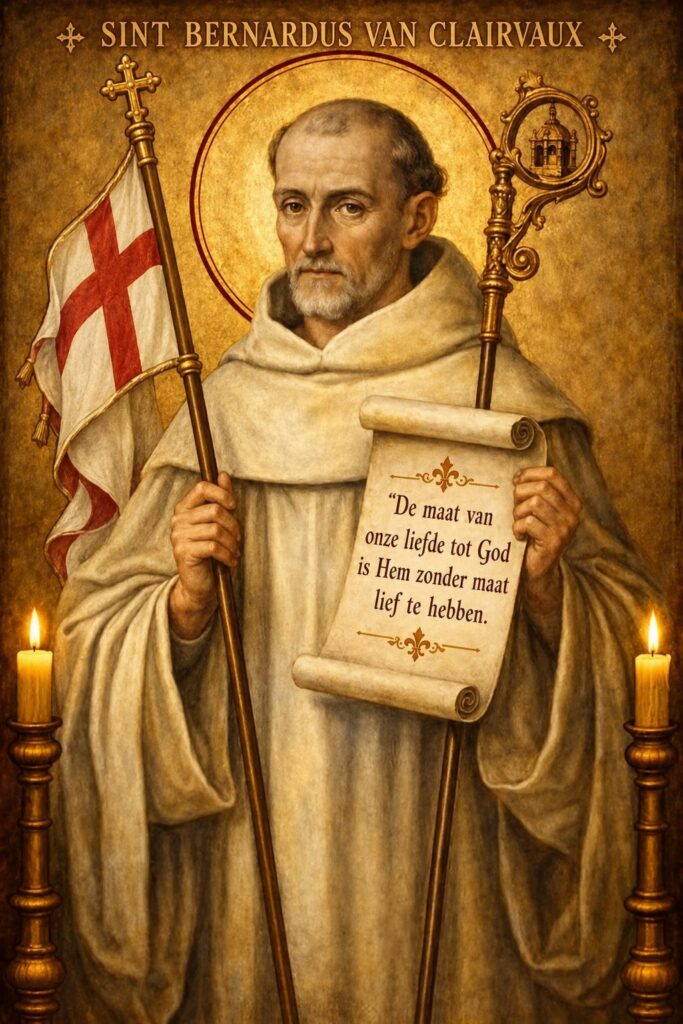
This involved recognising or confirming an ancient, long-established cult of veneration. In the Orthodox Church this is called glorification or canonisation. A person was first venerated locally as a saint. It developed from the grassroots: people visited a grave, asked for intercession, celebrated a feast day, and a diocese or religious order included that person in its own calendar. Saint Magnhild of Sweden is a classic example of this local tradition.
Later, Rome could extend the recognition of a local saint to the entire Church. This is called equipollent or equivalent canonisation. In effect, Rome confirms an existing cult of veneration and extends it to the universal Church. The Holy See acknowledges that such local episcopally approved cults existed in earlier times and could subsequently be recognised by Rome.
Biblical saints
There are also saints who have never undergone canonisation. They have been venerated as holy since the earliest days of the Church, long before a formal canonisation procedure existed. They include, for example, the apostles, angels, many prophets, and other people from Scripture.
The Most Holy
When we think of God, Jesus, and the Holy Spirit, they are, of course, holy in themselves. They are the source of holiness. Their holiness is inherent in who they are and does not need to be established or bestowed by the Church.
Holy
The word holy is not used only for people. Objects, texts, places, and actions may also be called holy when they are specially dedicated to God or connected with the divine.
For example:
There are also expressions such as Holy Mass, holy sacraments, holy liturgy, holy place, and holy time..
Types of halos
The word nimbus is sometimes used instead of halo or aureole. Strictly speaking, however, there is a distinction. A nimbus is the ring of light around the head. Halo is a more general word. An aureole may also refer to a larger radiance surrounding the whole body.
1) halo = general term (also a natural phenomenon)
2) nimbus = a halo specifically around the head
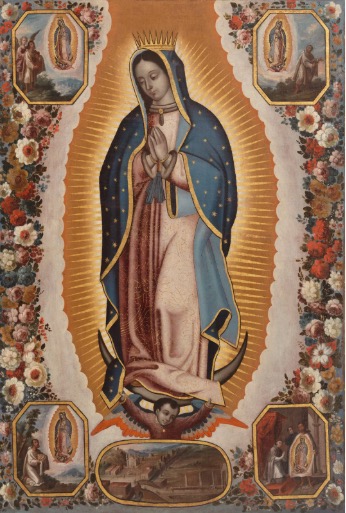
3) aureole = a broader glow of light, sometimes surrounding the entire body
4) mandorla = an almond-shaped aureole around the whole body
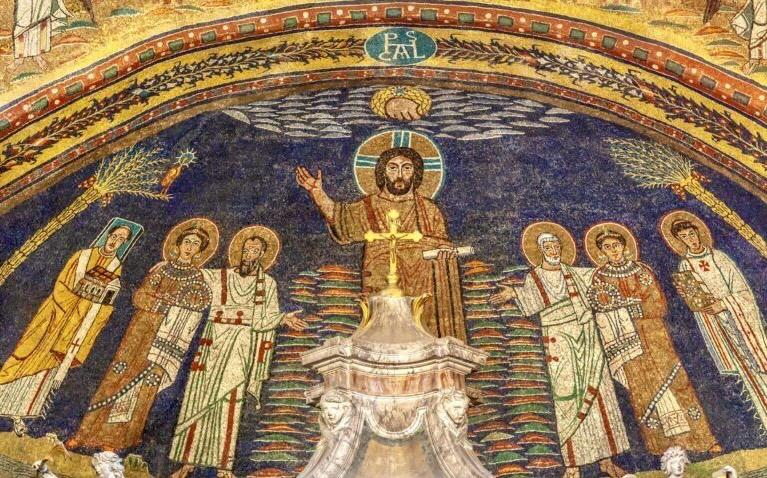
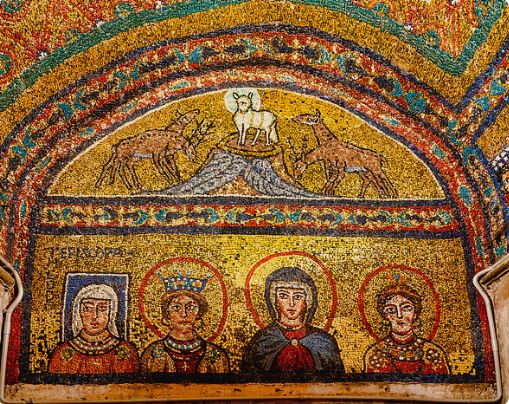
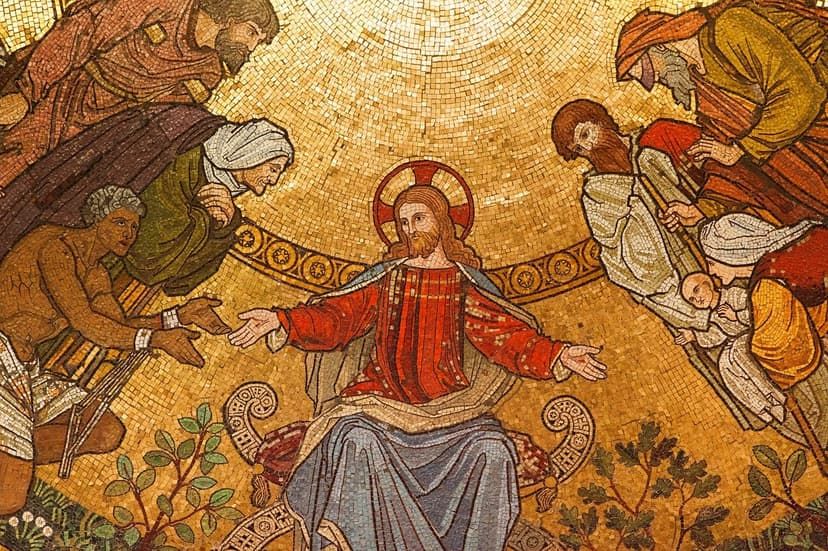
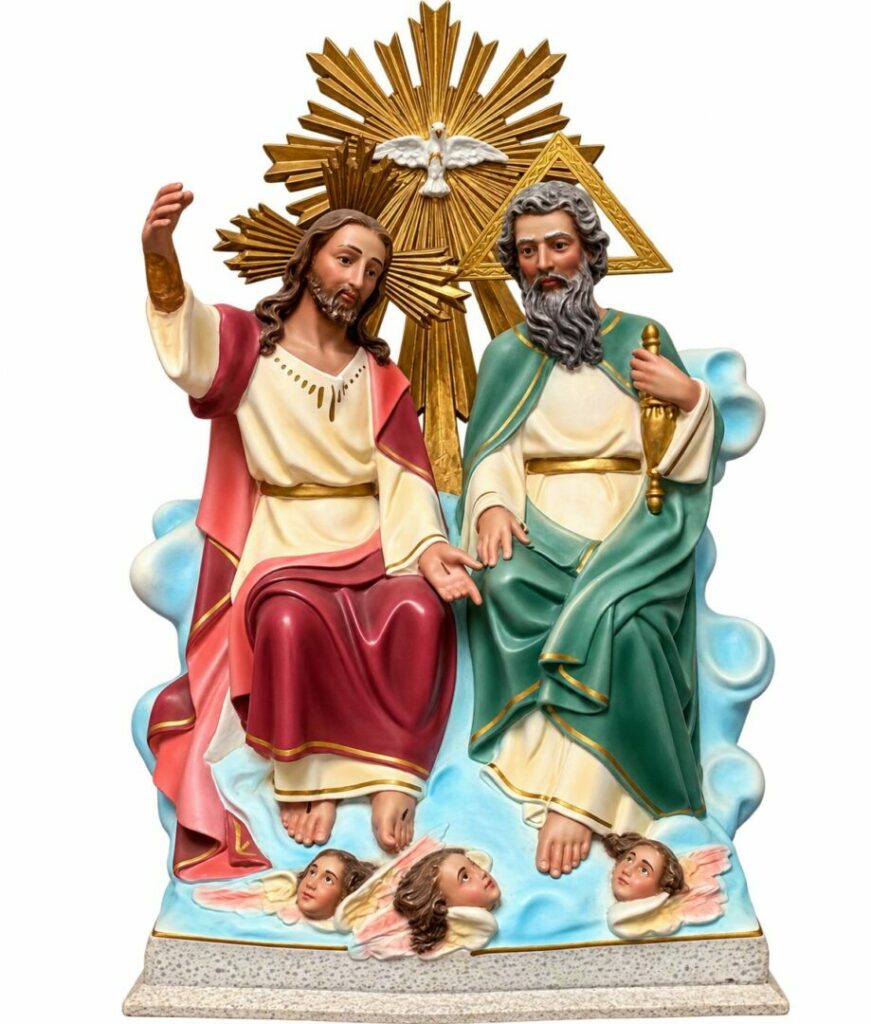
There are also different shapes of aureoles and nimbi. Christ has His own cruciform halo — a halo incorporating a cross. God the Father is sometimes shown with a triangular halo. Saints usually have an ordinary round halo. In medieval art you can even find square halos. A square halo was especially used for a living person who had a particular sacred or ecclesiastical significance within a religious scene: for example, a pope, bishop, abbot, founder, or donor depicted beside saints or Christ. The square shape effectively said: “This person belongs in this sacred scene, but is still alive.” It did not mean that the person was already a saint. Rather, it was a visual distinction between holy figures and a living, respected participant or patron.
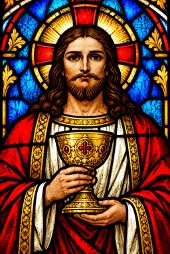
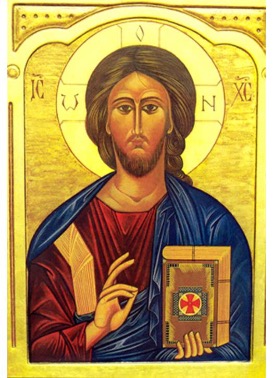
👈🏻👈🏻👈🏻 Radiant nimbus
👈🏻 In many Byzantine and Orthodox images, Christ bears a cruciform nimbus containing letters. In the three visible sections of the cross one often sees the Greek letters Ο Ω Ν. Together they mean approximately “He Who Is”, referring to God’s words to Moses at the burning bush.
Beside Christ’s head are often the letters IC XC, a Greek abbreviation for Jesus Christ.
Forms of the nimbus
Ordinary round nimbus
The classic nimbus of saints and angels, usually a round golden or luminous disc behind the head. This is rightly described as the standard form for saints.
Cruciform nimbus
A round nimbus incorporating a cross. This form is primarily reserved for Christ. In medieval images, three visible arms of the cross often appear within the golden disc behind His head. The National Gallery, for instance, describes a golden halo with a red cross in an image of Christ.
Square nimbus
Especially known from early medieval Italian and Byzantine art. A square nimbus could indicate that the person depicted was still alive when the image was created. It often identifies a pope, bishop, abbot, donor, or founder included in a sacred scene. Therefore, it did not mean the person was already a saint.
Triangular nimbus
Appears in depictions of God the Father and refers to the Trinity. It is far rarer than the round nimbus and is found mainly in later Western art.
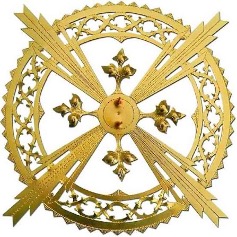
Radiant nimbus / crown of rays
Instead of a flat disc, the sacred glow consists of rays extending outwards from the head. Sometimes these are fine, straight rays; sometimes they are strong, triangular beams of light. The Metropolitan Museum, for example, describes Christ with a halo of triangular rays in Ethiopian art.
Ornamental nimbus
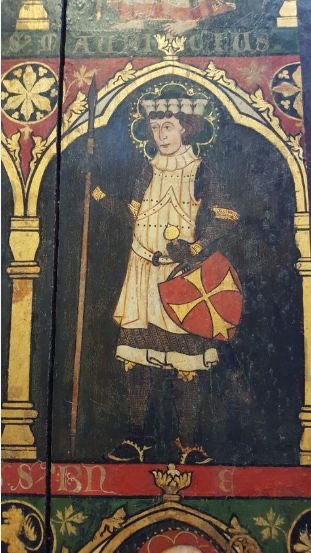
As in the image of Saint Maurice. The basic form remains an ordinary round saint’s nimbus, but its edge or interior may be richly decorated with pearls, patterns, geometric designs, or ornaments.
Golden disc nimbus
In Byzantine and medieval Italian art, one often sees an almost solid golden disc behind the head. Technically, it is simply a round nimbus, but its visual appearance is so distinctive that it can be listed as a recognisable form on your card. The National Gallery of Art describes such “gold, disk-like halos” on apostles and saints.
Outline nimbus / ring nimbus
Sometimes there is no filled golden disc, but only a circle or thin ring around or behind the head. The meaning remains the same: holiness or heavenly glory. This is especially common where artists wanted to use less solid gold.
Nimbus with inscription or decoration
In some medieval artworks, letters, names, ornaments, or symbols appear inside the nimbus. The basic meaning remains the same; these additions help identify the person or enrich the decoration.
Mandorla
Strictly speaking, this is not a halo around the head but an almond-shaped radiance surrounding the whole body. You already have an example in your document. It is used especially for Christ in Majesty, the Transfiguration, the Ascension, and sometimes Mary. Festival of Light / Halloween
Full-body aureole
A broader radiance surrounding the entire body, without necessarily having the pronounced almond shape of a mandorla. This is why the distinction between a nimbus around the head and an aureole as a larger bodily radiance is useful. Festival of Light / Halloween
The shape of a nimbus can tell us much about who is depicted, but its form and meaning were not fixed identically in every region or period. Always consider the person, the date, the location, and the rest of the image.
👉🏻 Our Lady of Guadalupe


👈🏻 👇🏻 Saint Maurice does not have an ordinary round nimbus here, but a scalloped one with a richly decorated, pearl-like border.
This particular painting comes from a medieval reliquary (dated around 1300–1325), known among other places from Løgumkloster Church in Denmark
.

.
Bonus
A halo also occurs in nature, sometimes appearing as a circular “disc”. Of course, this has nothing to do with holiness.
A natural halo is formed by ice crystals in the atmosphere. They must be sufficiently transparent and shaped like hexagonal prisms. Just as a rainbow forms when sunlight is refracted through raindrops, a halo forms when sunlight is refracted through ice crystals.
A natural halo may appear around either the Sun or the Moon. Sometimes you can also see sundogs, as in photograph 2.
A halo often precedes changes in the weather. The high, thin cloud that produces it can be associated with an approaching low-pressure system or warm front, which may bring wetter weather later.