

Battle of Nicaea, May to June 1097
It is actually better to call this a siege rather than a battle.
The difference between a siege and a battle is:
A battle is a large-scale fight between two armies or military forces, usually on or around a particular piece of terrain. Think of Dorylaeum: two armies meet and try to defeat one another militarily.
A siege is something different: an army surrounds a fortified place — a town, castle or fortress — with the aim of forcing it to surrender or taking it by force. This can be done by cutting off food supplies, damaging walls, launching attacks, digging tunnels, and so on. Nicaea is a good example of this.
In other words: Dorylaeum, on 1 July 1097, was actually the first major open-field battle. All in all, Nicaea was the first major military operation and also a major victory.
A little aside: May + June Nicaea – 1 July Dorylaeum… 145 km – full kit = not exactly a wellness week either…..
Back to the siege of Nicaea.
Nicaea, present-day İznik in Turkey, was the capital of the Seljuk Sultanate of Rûm in 1097 and lay in Bithynia, in Asia Minor. The city had formerly been Byzantine territory and was therefore of great importance to Emperor Alexius I of Byzantium. For him, the recapture of Nicaea was not only strategically important, but also meant the restoration of lost Byzantine territory.
When the armies of the First Crusade reached Constantinople, a difficult cooperation developed between the crusaders and Emperor Alexius. The crusader leaders had to promise that territories which had formerly belonged to Byzantium and were reconquered during the crusade would once again come under Byzantine rule.
Nicaea then became the first major joint objective.
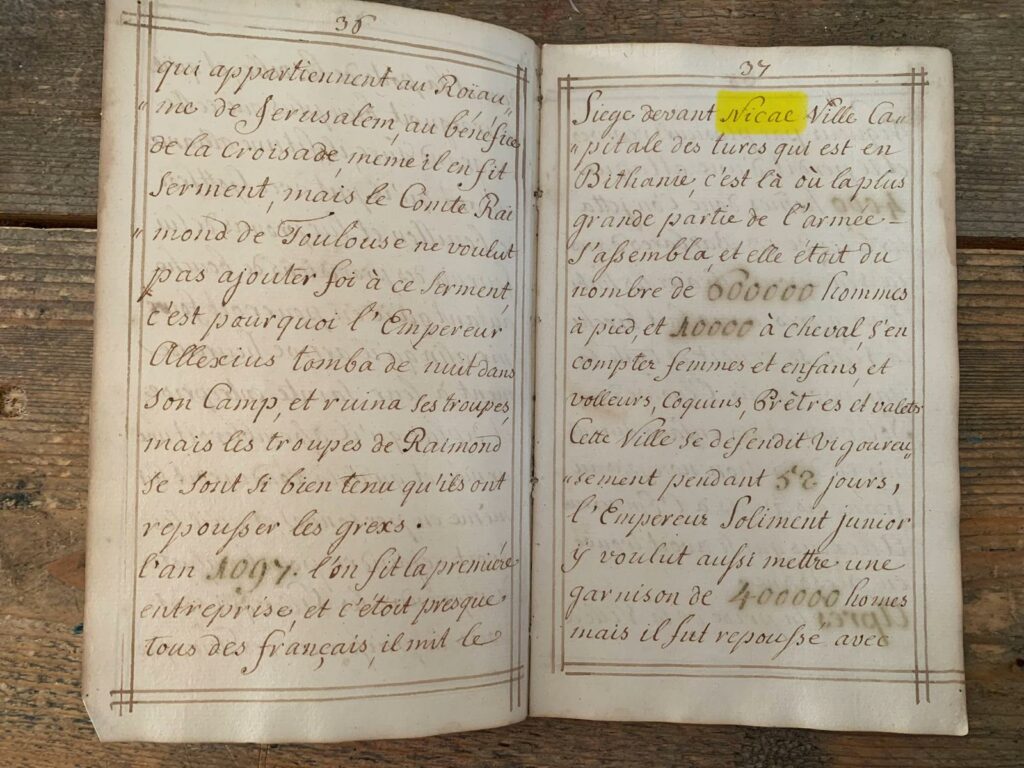
Most of the crusader army gathered before the city. According to the old source used in the serial, the army consisted of about 60,000 men on foot and 10,000 horsemen, not counting women, children, priests, servants and other followers.
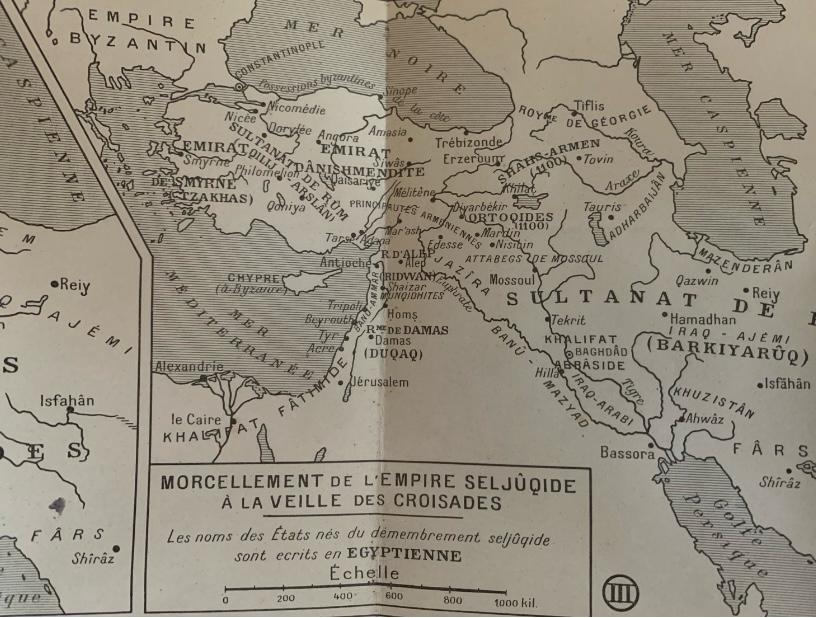
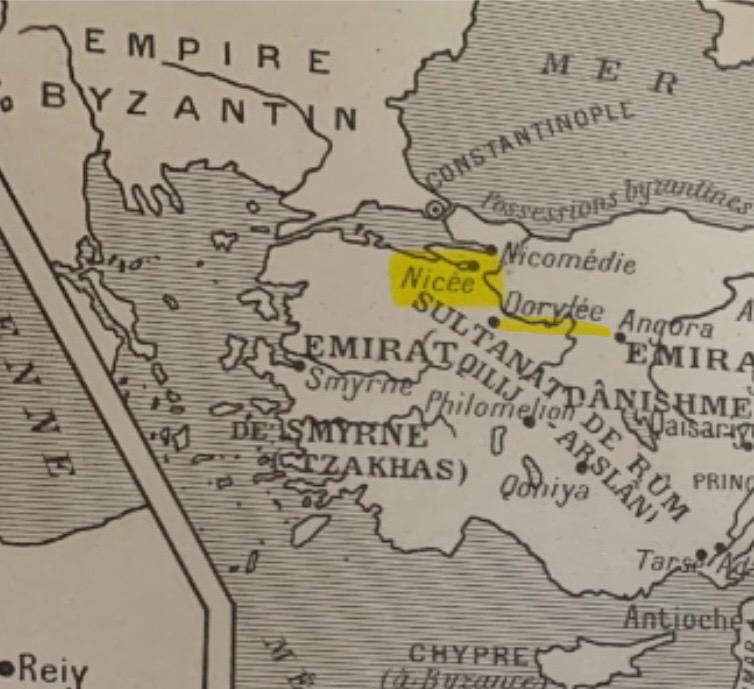
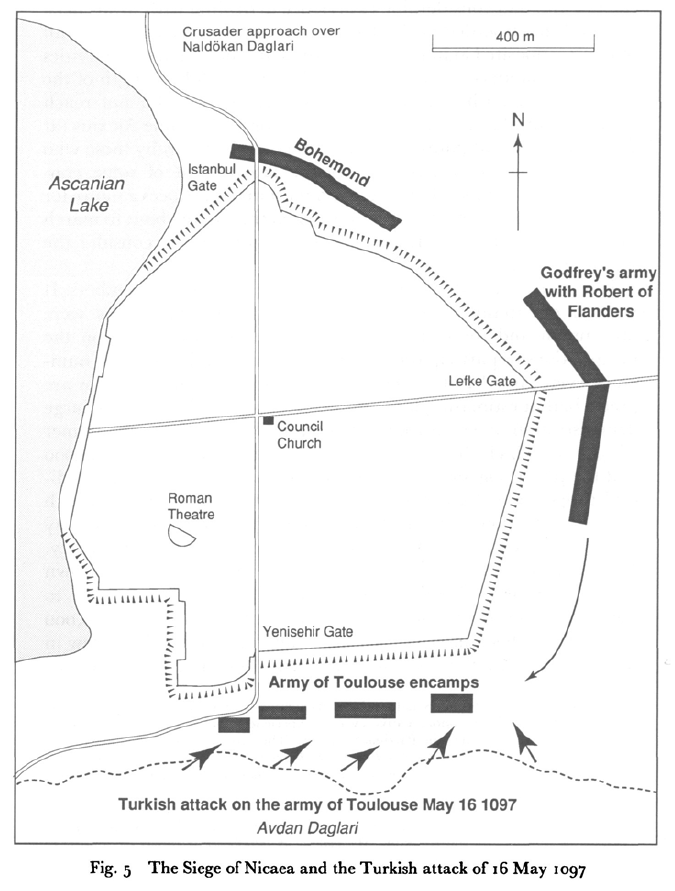
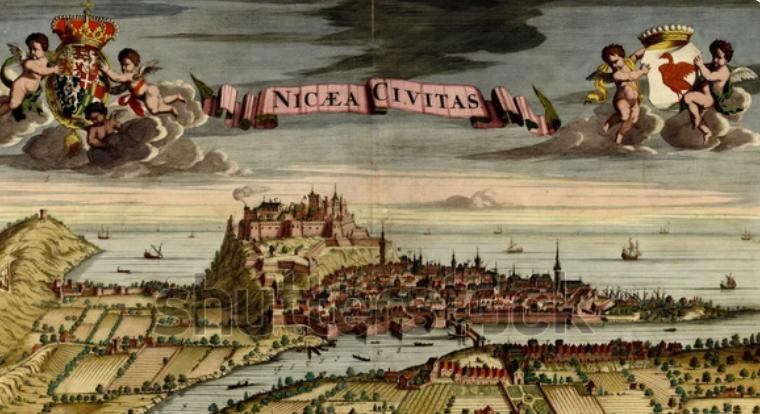
The siege lasted 52 days, from May to June 1097.
Nicaea was difficult to capture. The city had strong defensive walls and lay beside a lake. It could still be supplied by water, allowing the defenders to hold out for a long time.
Sultan Kilij Arslan attempted to relieve Nicaea. He marched towards the city with his troops and fought the crusaders outside the walls. His attempt failed and he was driven back.
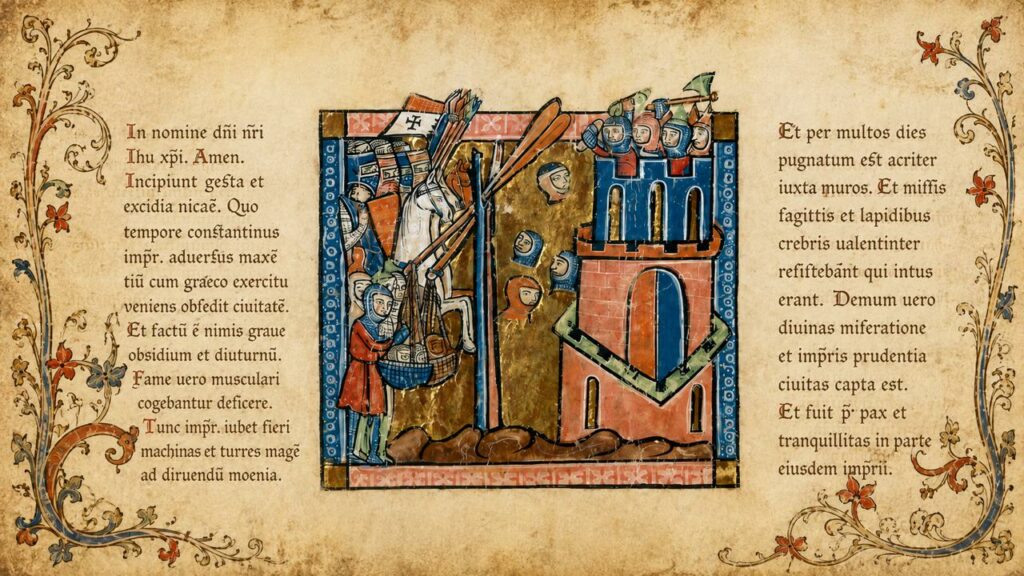
After this, the severed heads of dead Turkish fighters were publicly displayed and, according to crusade sources, were also thrown over the walls of Nicaea. In this way, the crusaders wanted to show the defenders that the relief army had been defeated and to frighten them.
(see title image and explanation below)

The city is taken from under the crusaders’ noses
👈🏻 Meanwhile, Emperor Alexius was playing his own selfish game.
The crusaders besieged Nicaea from the land, but the city could still be supplied across the lake. Alexius therefore had Byzantine ships transported overland to the lake. When these ships appeared on the water, the last supply route was cut off as well.
At the same time, Alexius secretly had negotiations conducted with the Turkish defenders of Nicaea.
His representative, Manuel Boutoumites, offered them favourable terms if they surrendered the city not to the crusaders, but directly to the Byzantines. They were given protection and promises were made concerning their treatment.
For the defenders, this was attractive. If the crusaders took the city by force, plundering and bloodshed could follow. Surrendering to Byzantium offered a much safer way out.
The Byzantines and the defenders therefore reached a separate agreement.
On the morning when the crusaders launched another attack on the walls, it suddenly became clear that Byzantine troops had already taken control of the city. Imperial Byzantine banners appeared on the walls.
Nicaea had fallen — but not into the hands of the crusaders.
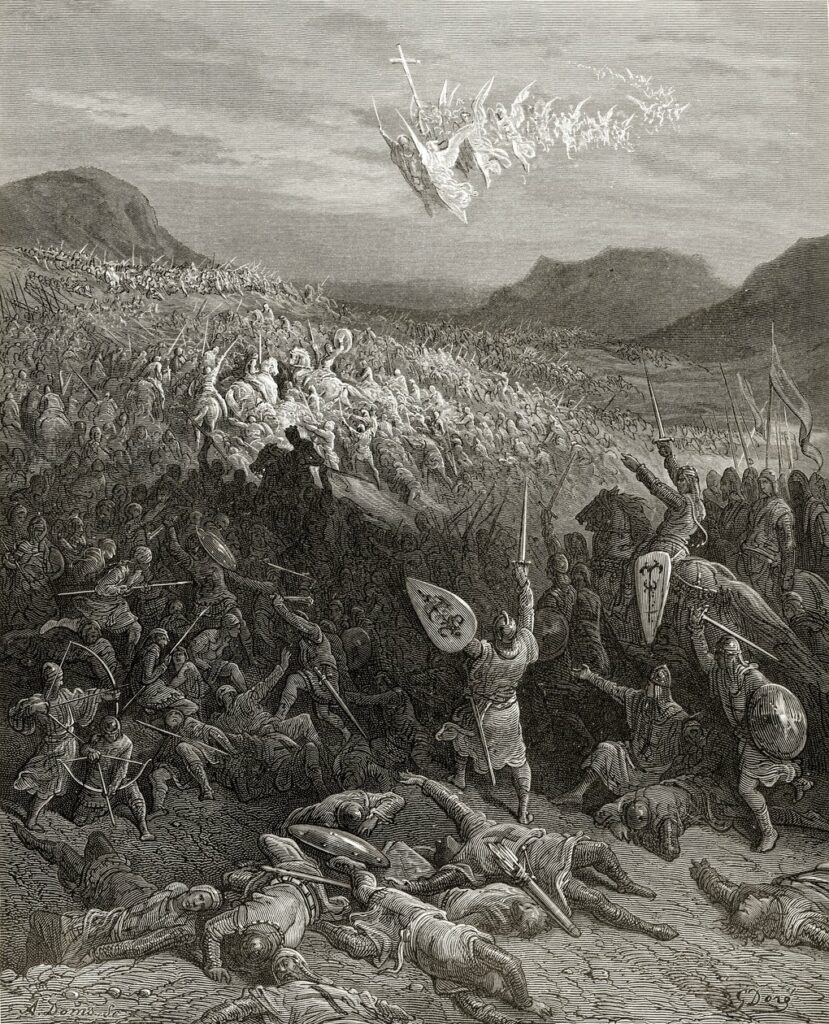
 👆🏻 The Battle of Nicaea, 1097, by Gustave Doré, 1877
And that heavenly procession above the battlefield is typical of Doré: almost like a visionary, religious scene.
A radiant heavenly force — at the very front sits an armed horseman with a shield, with that enormous cross high above him. Behind him follow dozens of luminous figures.
So it is more than a single angel — Doré turns it into a heavenly crusader army.

The contrast is actually brilliant: the earthly crusaders below in their brutal, earthly struggle — dead bodies, horses, weapons, chaos.
Above them is the heavenly counterpart: the battle stands under the sign of the Cross, and victory is confirmed from heaven.
The crusaders had fought for weeks and suffered losses, but they were given no opportunity to enter and plunder the city themselves. To them, it felt as though Alexius had snatched the victory from under their noses at the very last moment.
From the Byzantine point of view, however, things looked different. Nicaea had, after all, formerly been Byzantine territory, and the crusader leaders had promised to return such territories to Alexius.
Moreover, the agreement probably prevented a bloody storming of the city.
It is precisely here that we see how different the interests of the two allies were. They fought against the same enemy, but not for exactly the same reasons.
Sultan Kilij Arslan’s wife and children also fell into Byzantine hands and were protected. They were not handed over to the crusaders.
Thus, the capture of Nicaea became the first major victory of the First Crusade.
At the same time, the siege shows how complicated the cooperation between Byzantium and the Western crusaders was. At that moment they were fighting the same enemy, but their interests were not entirely the same. The crusaders wanted to continue their journey to the Holy Land; Emperor Alexius primarily wanted to regain the former Byzantine territories.
The fair-copy notebook from 1705 also provides an interesting source for this episode. Pages 35 through 38 describe the siege of Nicaea. The transcription, translation and explanation of these pages can be found in the serial on the website.
Nicaea therefore became not only a military victory, but also the first clear test of cooperation between East and West during the First Crusade.
It also shows how diplomacy, politics, negotiation and self-interest (in this case that of Emperor Alexius) played an important role from the very beginning of the First Crusade.
See the card < Without the Order>
After Nicaea, they continued on their way towards Syria, in the direction of Dorylaeum.
A preview of the Battle of Dorylaeum and why it was so important and taught an important lesson:
After Nicaea, the crusaders moved further into Anatolia. The army travelled in several columns, and at Dorylaeum it was mainly the foremost group — including Bohemund — that encountered the Seljuks of Kilij Arslan.
They attacked quickly and with great mobility, especially with mounted archers. For the Western European knights and foot soldiers, this was a very different way of waging war from what they were used to.
The crusaders initially came under severe pressure. They formed a defensive position around their camp and had to hold out for hours.
And that is precisely what is important: they did not break. They kept their lines close enough together to avoid being completely torn apart.
Then other crusader contingents — including those of Godfrey and Raymond — reached the battlefield. This changed the situation.
The Seljuks were suddenly no longer facing a single isolated group, but a much larger combined force. Eventually, they were driven back.
Why Dorylaeum was important:
•it was the first major open-field battle of the First Crusade;
•the crusaders proved that they could not only besiege cities, but could also withstand a mobile enemy in open terrain;
•the battle gave them a great deal of confidence;
•after Dorylaeum, the route further through Anatolia lay much more open.
And there is also a valuable military lesson in it: they did not win because everything went perfectly. Quite the opposite.
The vanguard was initially in considerable trouble. In the end, they won because they held out until reinforcements arrived.
You can read about that in detail in the Battle of Dorylaeum.
Nicaea = first major joint Christian military operation and victory
Dorylaeum = first major open-field battle
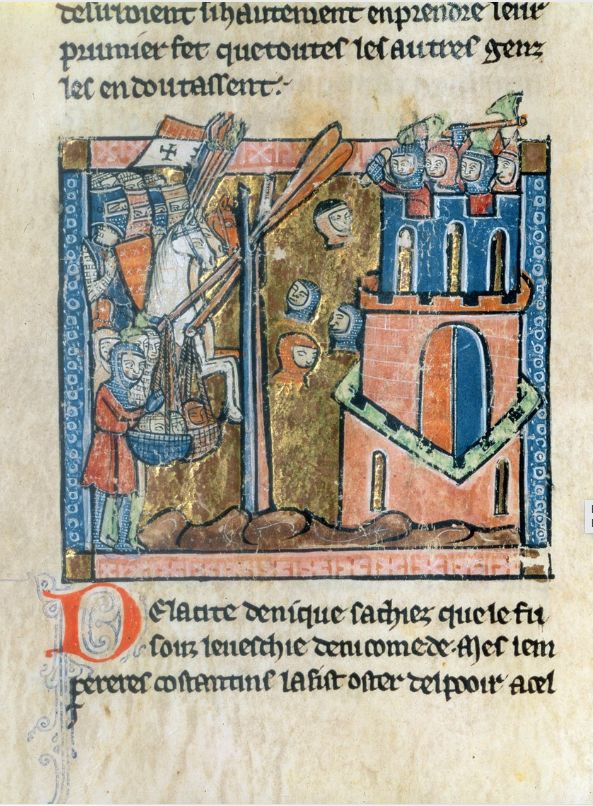
👈🏻 The siege of Nicaea and the launching of severed heads
This miniature was created in the 13th century by an anonymous illuminator, as an illustration to the Old French tradition of the chronicle of Guillaume de Tyr.
Guillaume de Tyr was the famous chronicler and Archbishop of Tyre, and he was closely involved with Baldwin IV, the Leper King of Jerusalem, including as his tutor during his youth.
Above it reads:
Mout furent en grant volente trestuit des estraines de leur guerre bien emploier; et mout desirroient si hautement emprendre leur premier fet que toutes autres genz les en doutassent.
Translation:
The crusaders wanted, in their first joint military action, to act so impressively and forcefully that other peoples would henceforth regard them with awe and fear.
Below it reads:
De la cite de Nique sachiez quele fu desouz larceveschie de Nicomede; mes li Empereres Costantins la fist oster du pooir a cel arcevesque et fu exemte por enneur de ce que li primerains des quatre granz conciles avoit iluec sis.
Translation:
As for the city of Nicaea, you should know that it was under the Archbishopric of Nicomedia. But Emperor Constantine removed it from the authority of that archbishop and granted it a special status, in honour of the fact that the first of the four great councils had taken place there.
Guillaume de Tyr then goes on to discuss the Council of Nicaea, Arius and the 318 church leaders who gathered there.
For him, therefore, Nicaea was not only militarily important; he briefly interrupts the war narrative to explain the Christian history of the city.