

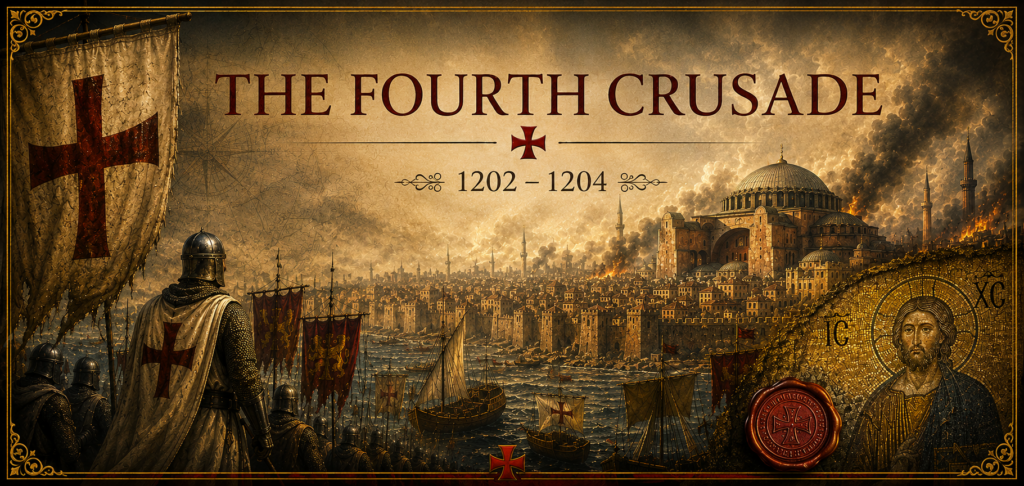
Fourth Crusade (1202–1204)
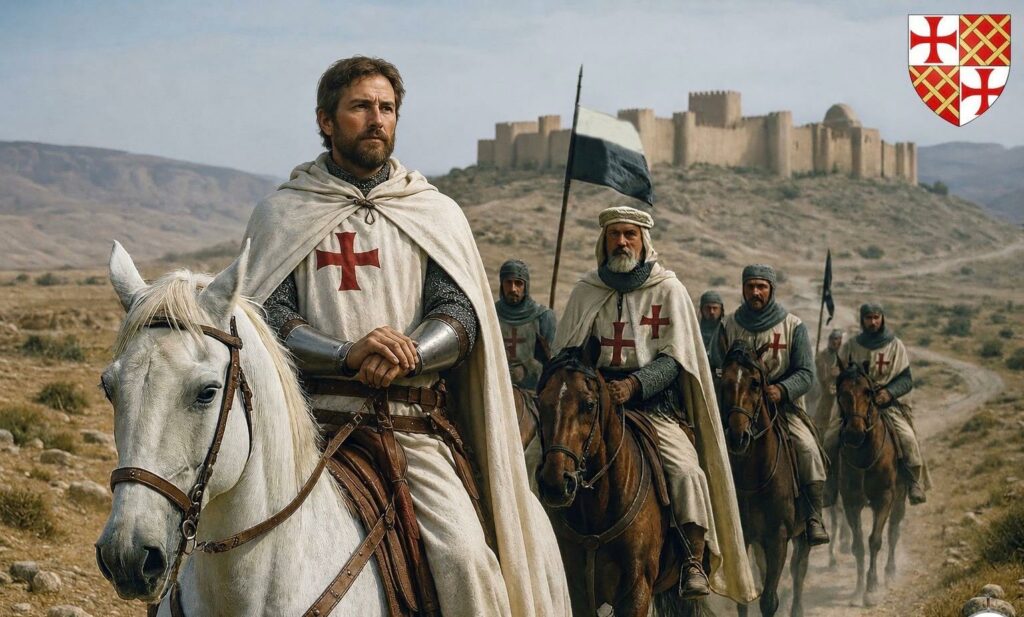
The Knights Templar played only a very limited role in the Fourth Crusade. This is one of those moments in history that clearly demonstrates the Templars did not blindly participate in every crusade that was proclaimed. We deliberately remained largely detached from the events of the Fourth Crusade.
This crusade was proclaimed by Pope Innocent III.
The tragedy of the Fourth Crusade is that Pope Innocent III intended to launch a crusade to Jerusalem. Instead, he ended up with Constantinople.
When Innocent III became pope in 1198 at the young age of just 37, Jerusalem had already been under Islamic rule for many years. Following the Third Crusade, leaders such as:
• Richard I of England
• Philip II of France
• Frederick I Barbarossa
had achieved important victories, yet Jerusalem itself had not been recaptured. The young pope considered this unacceptable. He wanted to strengthen the Christian presence in the Holy Land by organizing a new crusade under direct papal leadership.
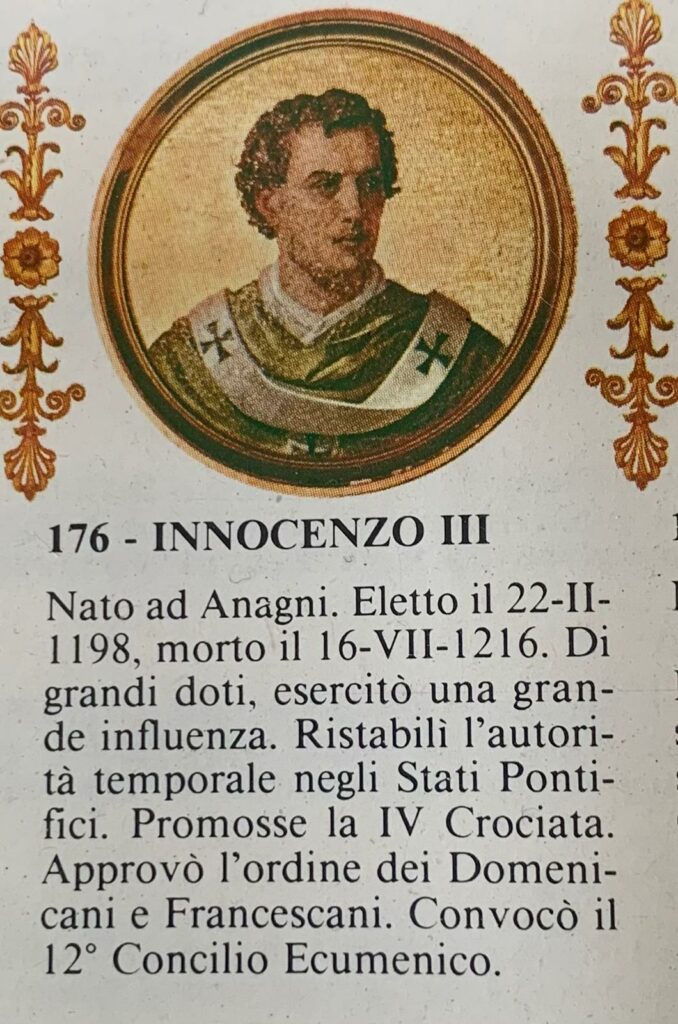
👈🏻 Pope Innocent III
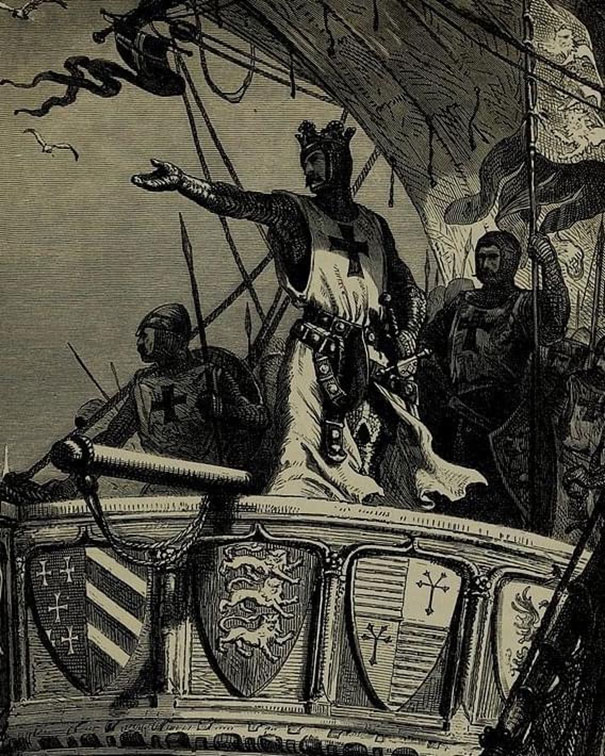
King Richard the Lionheart 👉🏻
The original plan was never to march directly to Jerusalem. There was a strategic reason for this. The idea was to first defeat the powerful Islamic stronghold in Egypt. At that time, Egypt formed the heart of the Ayyubid Empire. Whoever controlled Egypt would be in a far stronger position to reclaim Jerusalem afterwards.
In 1198, while the core of our military strength was already stationed in the Holy Land, Pope Innocent III proclaimed the Fourth Crusade. The strongest response came from French, Flemish and Italian nobles, together with ordinary crusaders, adventurers and knights who had taken the crusading vow. They gathered in Europe—not in Acre, and not alongside the Knights Templar—but in France, Italy and Venice.
Venice played a crucial role. The crusaders required an enormous fleet to transport their army across the Mediterranean. For this purpose they concluded an agreement with the Republic of Venice. For months the Venetians built ships on an unprecedented scale. However, when the crusaders finally assembled, far fewer men arrived than expected. As a result, they were unable to pay the enormous sum they owed.
And that was where the real trouble began.
The Venetian leader, Enrico Dandolo, proposed a solution:
“Help us capture Zadar first, and we will settle your debt afterwards.” The problem was that Zadar was a Christian city. Pope Innocent III explicitly forbade the attack. The crusaders attacked anyway. This was the first moment the Fourth Crusade departed from its original purpose.
But matters became even worse. Constantinople entered the picture. Prince Alexios Angelos promised:
• enormous sums of money;
• military assistance;
• the reunification of the Greek and Latin Churches;
if the crusaders would help him claim the imperial throne in Constantinople.
For an army burdened by overwhelming debts, the offer was extremely tempting.
Slowly but surely, what had begun as a crusade to Jerusalem was transformed into an expedition against Constantinople.
The entire expedition gradually shifted from: “Liberate Jerusalem.” to: “Become involved in Byzantine politics.” That is precisely where we chose a different path.
In the end, the Christian capital of Constantinople was captured and plundered in 1204.
Quite simply, it was a scandal. Churches were looted. Holy relics were stolen. Crusaders—Christians—were fighting fellow Christians.
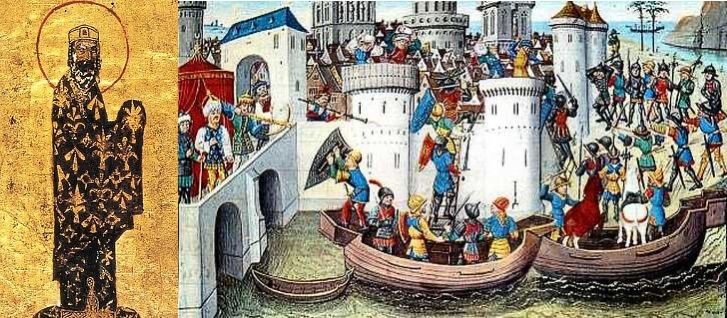
👆🏻Prince Alexios Angelos III
This fifteenth-century miniature depicts the Siege and Capture of Constantinople in 1203 during the Fourth Crusade. Crusaders and Venetian forces attack the city from the sea, storm its walls, and ultimately seize Constantinople. 👆🏻
The Knights Templar were not only monks; we were also *milites*—soldier-monks entrusted with a clear and unwavering mission. It soon became apparent that the Fourth Crusade had drifted away from its original purpose. Venetian commercial interests…financial debts… Byzantine dynastic struggles… the plundering of Christian cities… None of this was compatible with the mission for which our Order had been founded: to protect pilgrims, to defend the Holy Land and to fight the enemies of the Crusader States.
The Knights Templar had a fixed mission.
An ordinary knight might think: “Perhaps Constantinople will make me wealthy.”
A Venetian merchant might think: “Perhaps Constantinople will expand our trade.”
A Templar asked only one question: “Does this help Jerusalem?” Because that was the very reason we had taken up the Cross. That single question shaped every decision we made. We would not have attacked Zadar. We would not have involved ourselves in Byzantine wars of succession. We would have continued directly towards the Holy Land.
Pope Innocent III was furious. He had explicitly forbidden the attack on Zadar and had never authorised an assault on Constantinople. When Constantinople was finally plundered in 1204, he condemned the sack. By then, however, the damage had already been done. There was no way to undo what had happened.
The Fourth Crusade therefore consists of two very different stories.
The Pope’s plan: liberate Jerusalem – apply pressure through Egypt – strengthen Christian unity.
What actually happened: debt to Venice – the attack on Zadar – Byzantine dynastic conflict – the sack of Constantinople.
In summary:
• The Pope proclaims a crusade.
• The Knights Templar are already stationed in the East.
• The crusading army departs from Europe.
• The army becomes entangled in debt and politics.
• Constantinople is plundered.
• The Holy Land gains virtually nothing from this enormous undertaking.
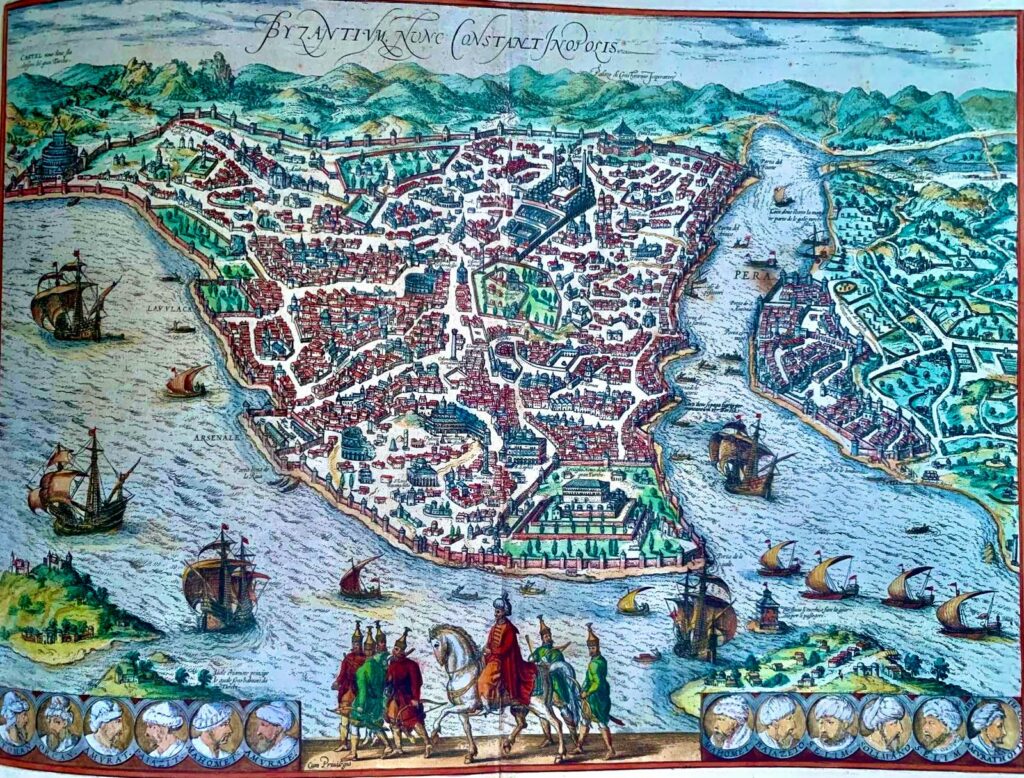
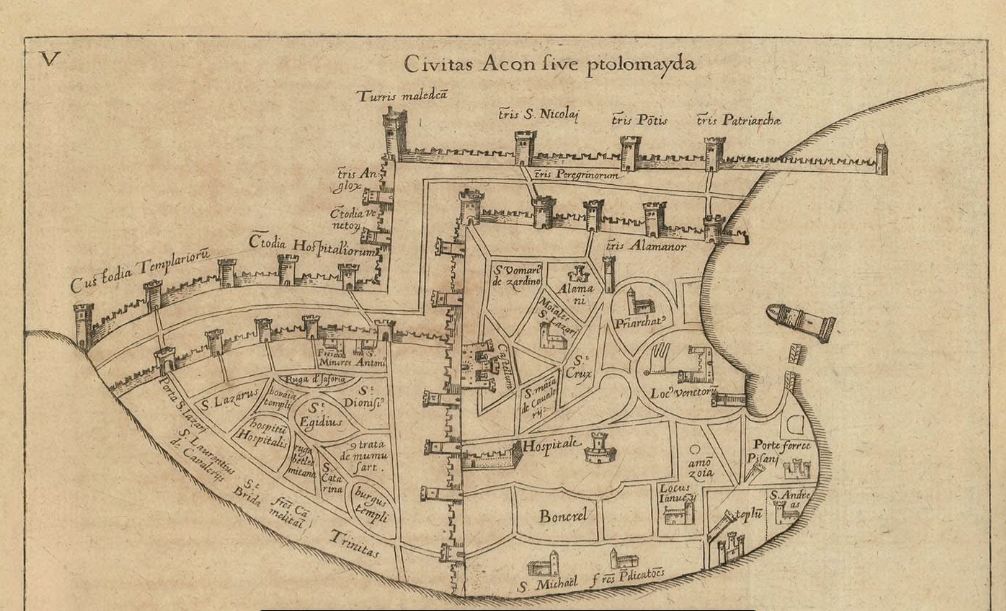
Constantinople on the left, Acre (Akko) beside it.
Below: Jerusalem.

For the Knights Templar, this was extremely problematic. In 1198, we were holding the line in Acre, Palestine and Syria against Islamic powers. That was where our attention belonged. Then Pope Innocent III called for a Fourth Crusade to support the Holy Land.
So you expect reinforcements. You expect men. You expect money for provisions, horses, supplies and everything else that is needed. And then you hear: “They have attacked the Christian city of Zadar.” Later: “They are on their way to Constantinople.” And later still: “They have plundered Constantinople.” Meanwhile, you are still standing in Palestine. 😳 “Hello, brothers… Jerusalem is in the other direction!”
Looking back, the Fourth Crusade was a disaster for the crusading movement.
Instead of reclaiming Jerusalem:
• a Christian capital was plundered;
• lasting hatred grew between East and West;
• the Byzantine Empire was severely weakened.
A weakened Byzantium ultimately also meant less support for the Christian presence in the East.
In summary, the Fourth Crusade was exactly the kind of crusade for which the Order had not been founded. That explains why, in the sources around 1204, we hear far less about the Knights Templar than we do during the First, Third or later crusades.
One of the most fascinating things about the Fourth Crusade is this: the more the Knights Templar disappear from view, the further the crusade drifts away from its original purpose. That does not prove they could have prevented everything.
But it does show how differently their compass was set compared with that of many secular leaders.
Here again, the Fourth Crusade becomes one of the strongest arguments against the cliché image of the Knights Templar as reckless warriors. If there was ever a moment when a large part of the crusading movement drifted away from its true purpose, it was here – and precisely there, we do not see the Knights Templar at the helm.