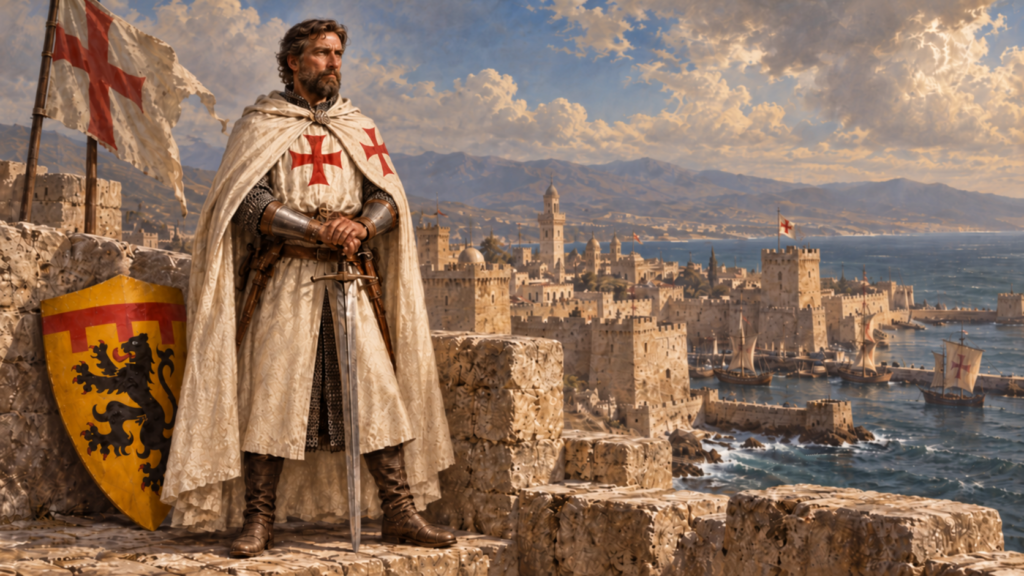
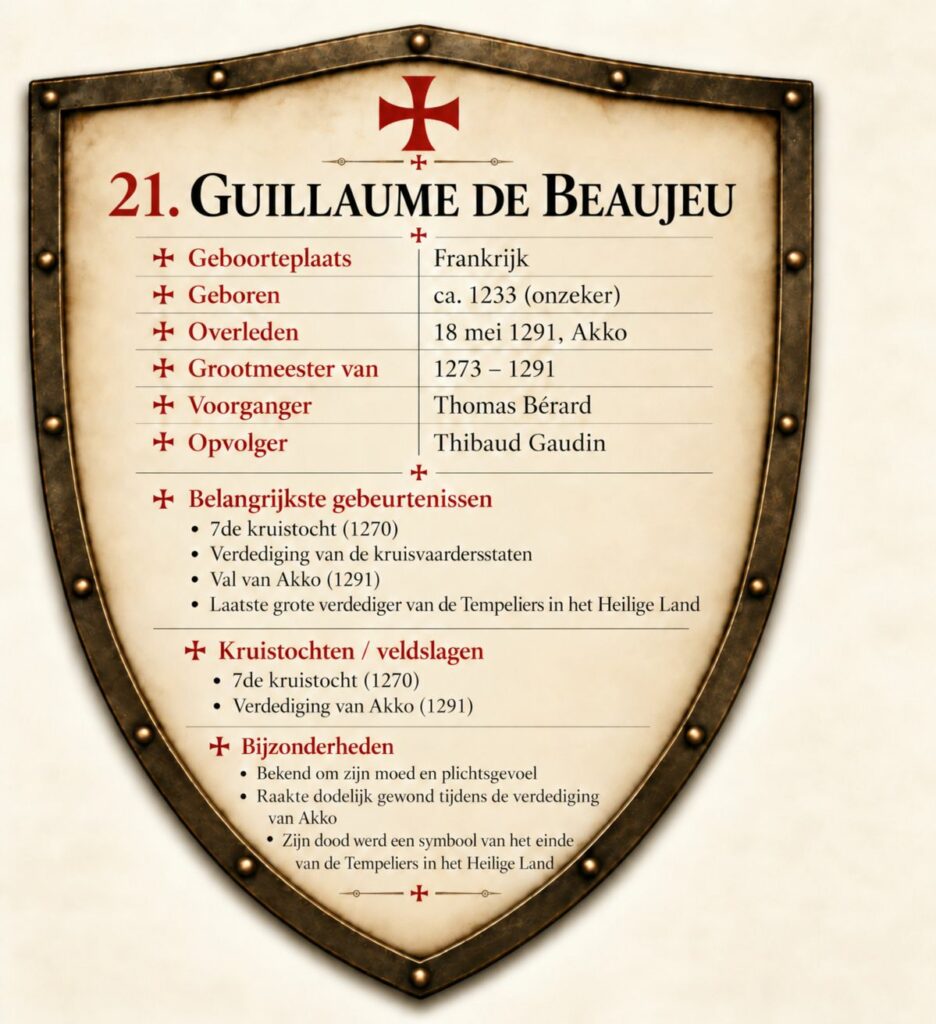
Guillaume de Beaujeu, 21st Grand Master of the Order of the Temple, 1273–1291
Guillaume de Beaujeu, known in Dutch as Willem van Beaujeu, was born around 1230–1233 into a powerful French high-noble family from the Beaujolais region. His father was Guichard de Beaujeu-Montpensier, lord of Montpensier, and his mother was Catherine d’Auvergne. Guillaume had several brothers, including Héric, Humbert and Louis.
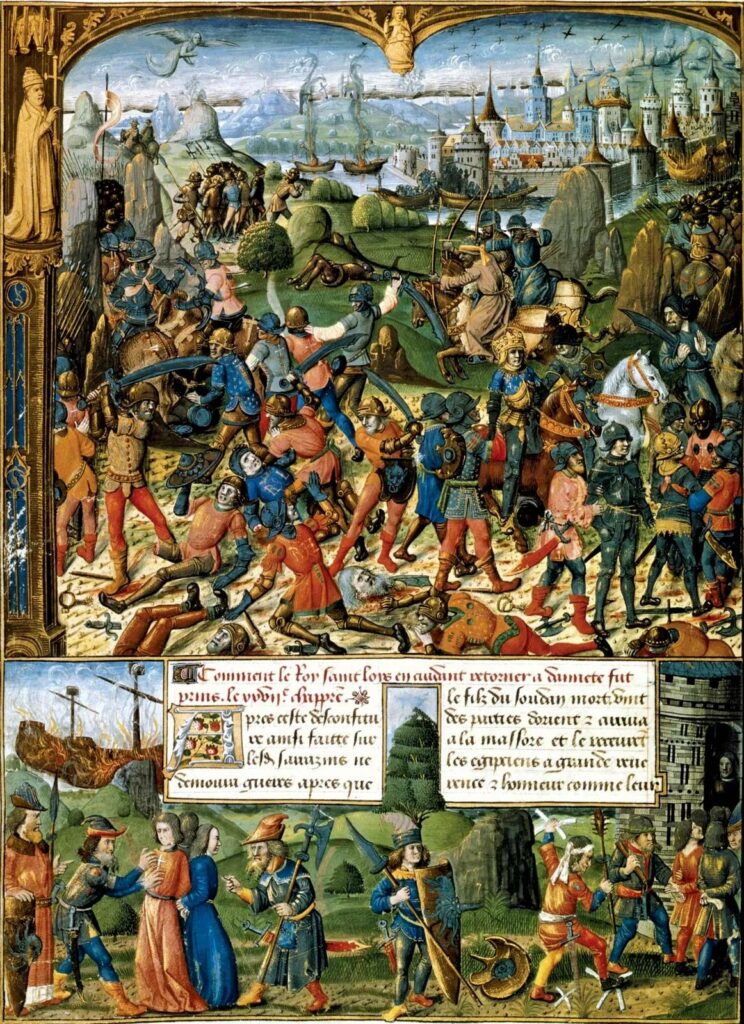
Before 1250, Guillaume joined the Order of the Temple and took part in the Seventh Crusade. In doing so, he chose the life of a religious knight, bound by the rules of the Order and by the defence of the Holy Land. Around 1260–1261 he was in the Holy Land. During an expedition near Tiberias, by the Sea of Galilee, he was ambushed and taken prisoner. He was released not long afterwards.
👈🏻 the Seventh Crusade
He was also involved in the War of Saint Sabas, a conflict that deeply divided the nobility of the Crusader states and the military orders. This gave Baibars, the Mamluk sultan of Egypt, the opportunity to capture numerous Christian strongholds – including Beaufort Castle – while the Principality of Antioch was severely affected. In 1271, Guillaume became commander of the Templars in the province of Tripoli. Two years later, on 13 May 1273, he was elected Grand Master of the Order of the Temple, succeeding Thomas Bérard.
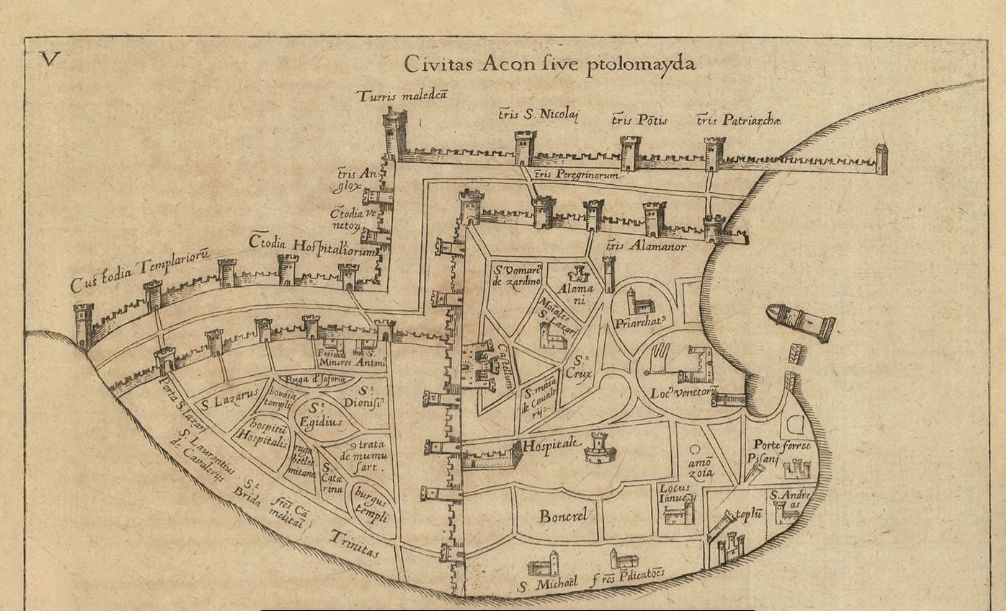
His period as Grand Master came at a time when the Christian territories in the East were under ever-increasing pressure. The Mamluk sultan Qalawun captured Latakia, and in 1289 the County of Tripoli also fell. Guillaume had warned of the danger, but his warnings were not taken seriously enough. In 1290, Qalawun turned his attention to Acre, at that time the most important remaining centre of the Kingdom of Jerusalem. Qalawun died in November of that year before he could launch the attack, but his son al-Ashraf Khalil continued the campaign. Guillaume de Beaujeu thus found the defence of one of the last great Christian strongholds in the Holy Land resting on his shoulders.
During the Siege of Acre in 1291, Guillaume stood with his Templars on the walls of the last stronghold of the Kingdom of Jerusalem. At one point during the siege, he dropped his sword and a spear struck him beneath the armpit.
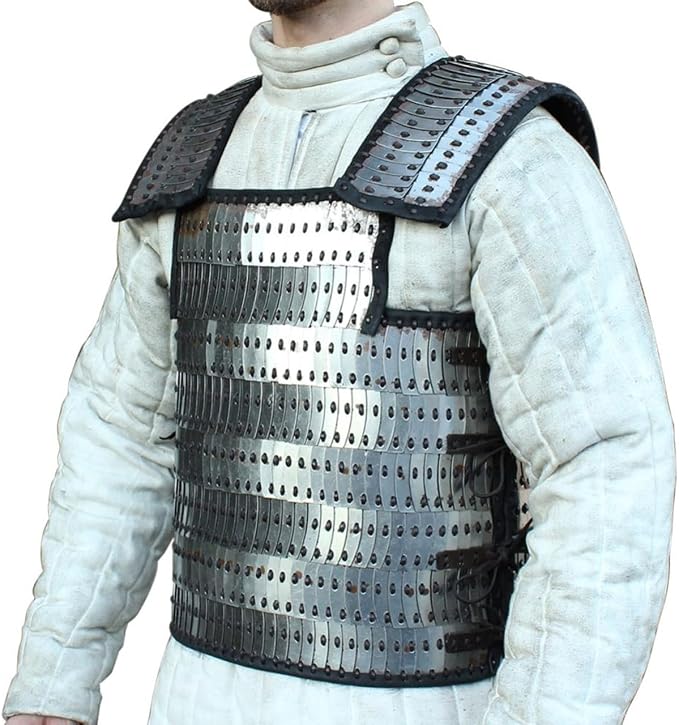
At the time of the injury, first aid involved removing his plate armour (coat of plates – lamieres – see image). A javelin struck the Grand Master of the Order of the Temple at the very moment he raised his left hand. He carried no shield, only his lance in his right hand. The spear pierced him beneath the armpit; the shaft entered his body about a hand’s breadth, precisely through the gap where the armour plates did not overlap. At that moment he was not wearing his regular armour, but a lighter set of equipment hastily put on during an alarm.
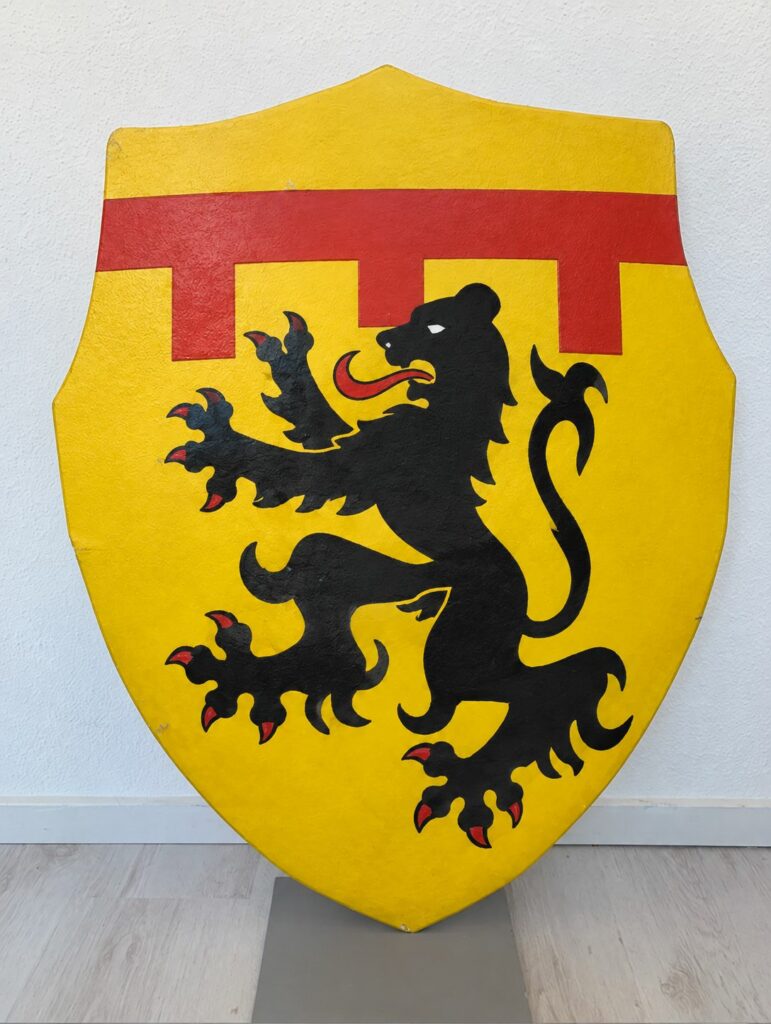
When he realised that he was mortally wounded, he turned and withdrew. Some of the defenders thought he was retreating to save himself. The standard-bearer saw him leave and followed him, and before long the rest of his entourage followed as well. After he had gone a short distance, twenty crusaders from the Vallo di Spoleto saw him leaving. They called out to him: ‘For God’s sake, my lord, do not go! If you leave, the city will fall at once!’ He then cried out in a loud voice, so that everyone could hear: ‘My lords, I can go no farther; I am mortally wounded! Look at this wound!’ Then we saw the javelin sticking out of his body. As he spoke, he let his lance fall to the ground and his head sank to one side. He was about to fall from his horse, but his men immediately dismounted, caught him and lifted him down. They laid him on a shield that had been left nearby – a large, broad shield.
They carried him towards Saint Anthony’s Gate, but it was closed. They did, however, find a small door with a little bridge leading from the moat to the residence of Lady Maria of Antioch – a property that had formerly belonged to Sir James of La Mandelée. There his men removed his armour by cutting it loose at the shoulders; they could do nothing else because of the… the wound he had suffered. They then laid him, still wearing his gambeson, beneath a blanket and carried him to the coast – to the beach between the slaughterhouse and the house of the Lord of Tyre. There, near the Tower of the Legate, they heard cries that the Saracens had arrived. Some members of his entourage jumped into the sea in an attempt to reach two boats lying there – there were only two, because the sea was so rough and the waves so high that the boats could scarcely withstand them – and many of them lost their lives in the attempt. Others from his entourage, with the help of additional men, carried him to the Templar fortress. They brought him inside – not through the gate, which they did not want to open, but through a courtyard where manure had been piled up. He remained silent for the rest of the day; since being lifted from his horse, he had not spoken a word, except for one remark to the people in the Temple. When he heard the uproar of men fleeing for their lives, he wanted to know what was happening. He was told that fighting was taking place, after which he ordered them to leave him in peace.
He spoke no more, but gave his soul to God. He was buried in front of his tabernacle – the altar where Mass was celebrated. It was a great loss of a Grand Master. The city fell into the hands of the Mamluks, marking the end of the Crusader occupation in the Holy Land.
(Source: the “Templar of Tyre”, an eyewitness to the fall of Acre and someone from the immediate circle of Guillaume de Beaujeu)
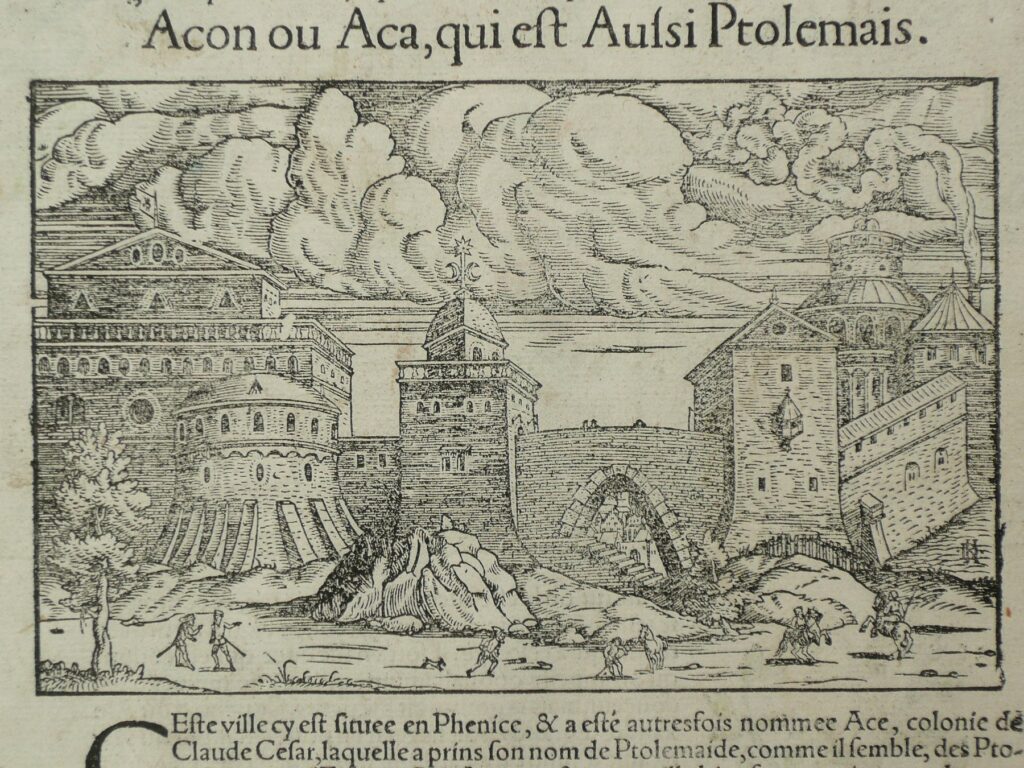
👈🏻 the text at the top reads: “Acon ou Aca, qui est Aussi Ptolemais.”, which roughly means: “Acre or Aca, which is also Ptolemais.”
Below it reads: “Cette ville cy est située en Phenice, & a esté autresfois nommée Acc, colonie de Claude Cesar, laquelle a prins son nom de Ptolemaide…”
For information: from around 261 BC until the 7th century, the city was known as Ptolemais. Before and after that period it was known as Acco or Acre, as it is to this day.