

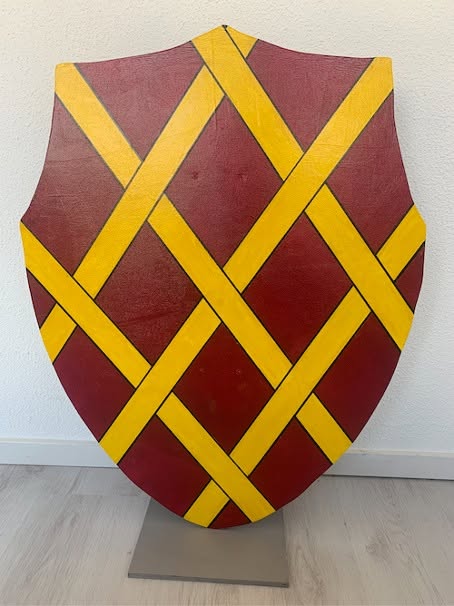
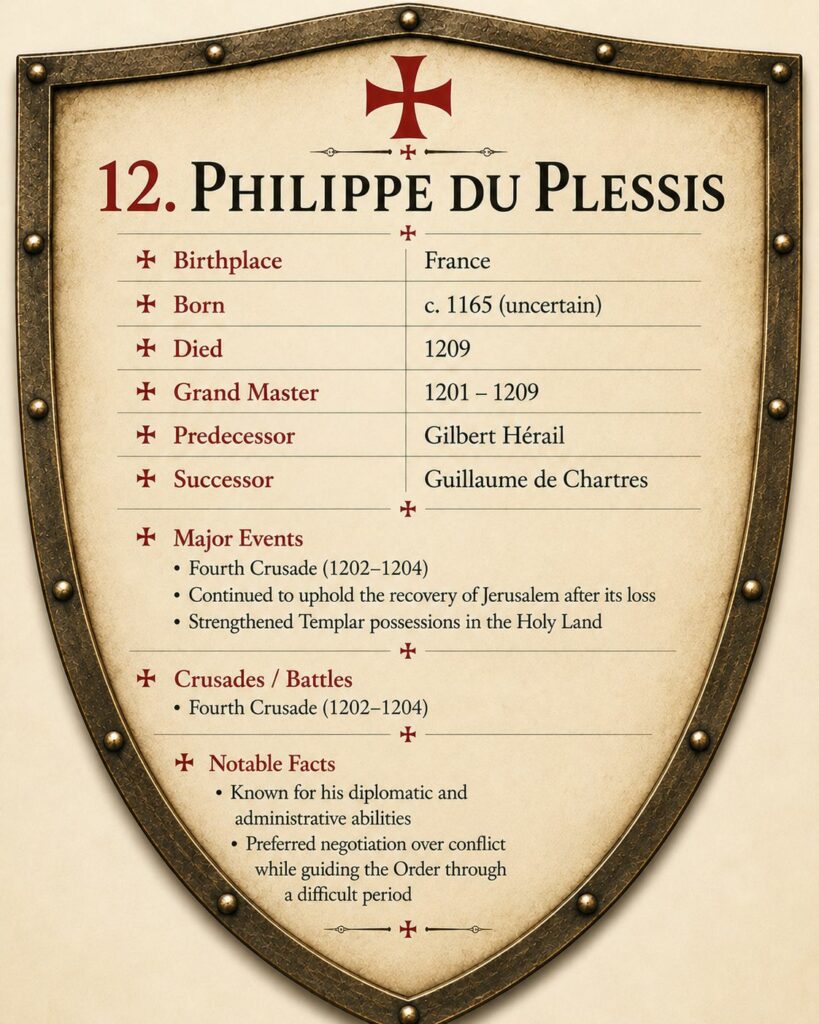
Philippe du Plessis – 12th Grand Master (1201–1209)
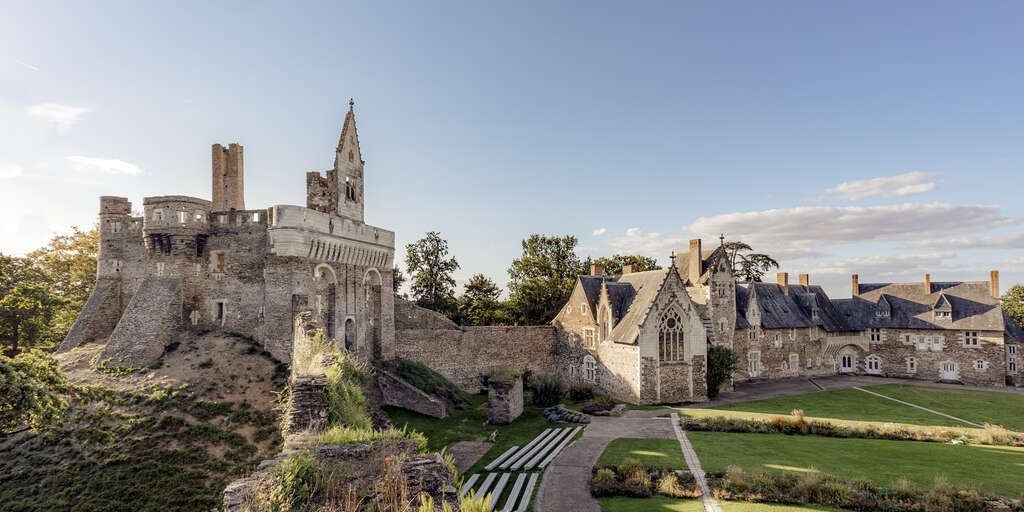
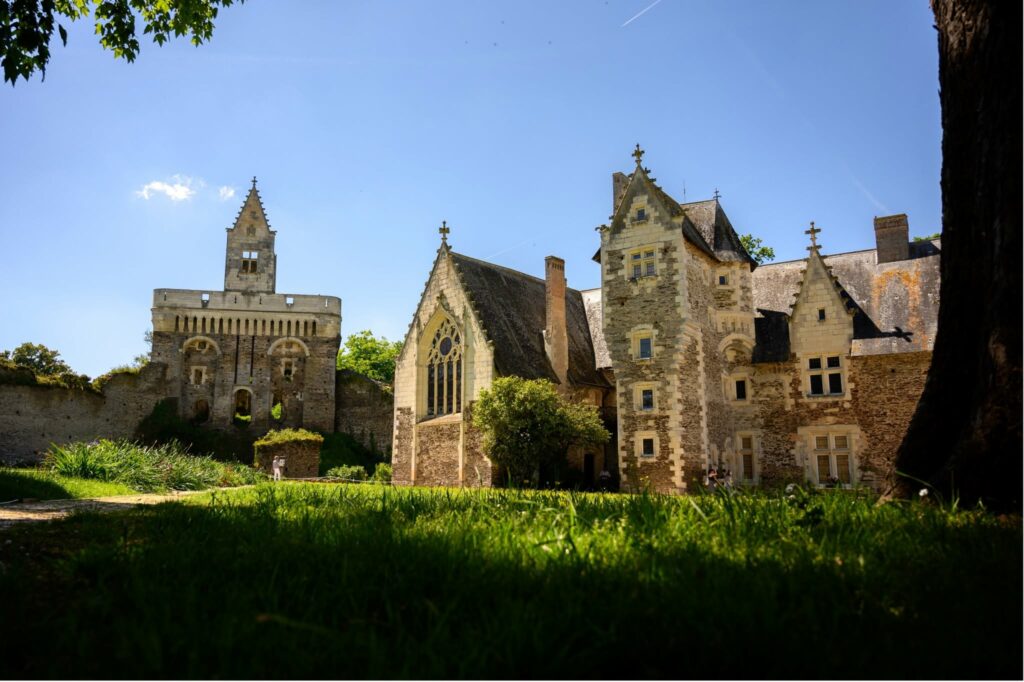
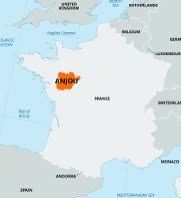
France, c. 1165: Philippe was born at the fortress of Plessis-Macé, near Anjou, into an ancient noble family from the region of Anjou. He grew up in a land where castles, warfare, and feudal defence shaped everyday life. This upbringing formed the knight who would later journey to the Holy Land.
As the youngest son, he left his family and inheritance in 1189, at the age of twenty-four, to take part in the Third Crusade. He only became a Templar after arriving in the Levant, where he was deeply impressed by the discipline and steadfast courage the Knights Templar displayed in battle. He may also have fought alongside King Richard the Lionheart during the famous Battle of Arsuf in 1191.
According to some sources, Philippe became Marshal of the Kingdom of Jerusalem in 1193, although this has never been conclusively established.
The important cities of Acre and Jaffa were recaptured and secured, reversing many of Saladin’s earlier conquests.
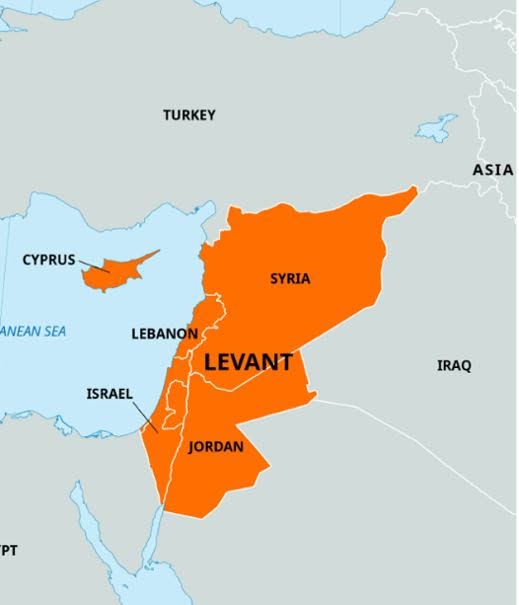
In the spring of 1201, Philippe du Plessis was elected Grand Master of the Order, only a few months after the death of Gilbert Hérail. After his election, he continued the same principles of leadership as his predecessor. Rather than being primarily a military commander, he proved to be a skilled diplomat.
He led the Order during a period of political manoeuvring between kings, sultans, papal legates, and the military orders. Not only did tensions exist between Muslim and Christian rulers, but he also worked closely with the other military orders to negotiate peace agreements with Muslim leaders whenever possible.
He continued the truce that had previously been concluded between Saladin and King Richard I of England.
Towards the end of this agreement, in 1208, Grand Master du Plessis proposed to the Masters of the Knights Hospitaller and the Teutonic Order that they negotiate a new peace treaty with Malek al-Adil. This proposal was strongly condemned by the Pope, who even threatened to accuse the Templars of apostasy.
Relations between the Hospitallers and the Templars also became increasingly strained during his leadership, eventually requiring papal intervention. Although both orders shared similar responsibilities and influence, their interests sometimes conflicted. Nevertheless, they continued to cooperate, knowing that the Christian presence in the Holy Land could only survive if the military orders did not completely weaken one another.
The papacy, however, frequently favoured the Hospitallers, further increasing tensions between the Templars and the Papal Court.
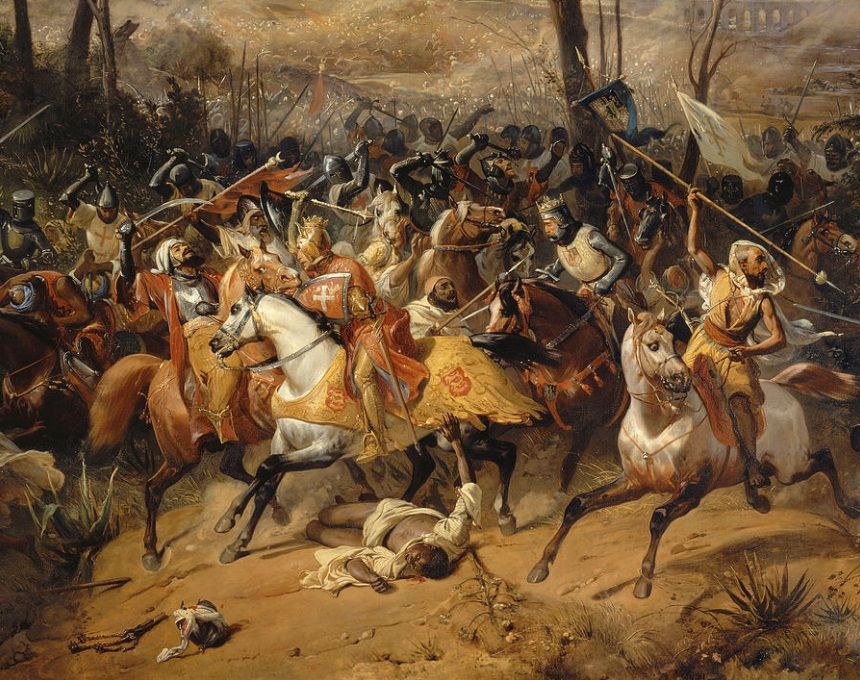
👆🏻 The Battle of Arsuf with King Richard the Lionheart of England
To address these growing tensions, Philippe du Plessis wrote a letter to Pope Innocent III. In this letter, he described the difficult situation in the Holy Land and appealed for papal mediation between the military orders.
A Grand Master was expected to be more than a commander. He also had to be:
• a diplomat
• a mediator between the military orders
• an advisor to the Pope
• and the administrator of an international organisation
After the death of Saladin, the political landscape of the Middle East changed significantly. The Islamic world became less united, yet at the same time more politically complex. Philippe du Plessis understood that endless warfare could ultimately weaken the Christian states rather than strengthen them.
The Christian territories in the Holy Land were also greatly outnumbered by their opponents. Philippe realised that another major war could cause more harm than good to the Crusader states.
For that reason, he not only strengthened castles and defensive fortifications, but also relied on diplomacy and temporary truces whenever these helped safeguard pilgrims and protect the remaining Christian territories.
He therefore increasingly used negotiation and temporary peace agreements as practical tools to preserve the Christian presence in the Holy Land.
This is a side of the Knights Templar that is rarely told.
Despite his best efforts, however, a serious conflict erupted between the Knights Templar and the King of Armenia over the fortress of Gaston, a Templar stronghold in Cilician Armenia. Taking advantage of the dispute, the Armenian king expelled the Templars from his kingdom and confiscated their possessions.
The Pope eventually intervened and ruled in favour of the Templars, allowing the Order to recover the territories that had been unlawfully seized.
Because the Templars played only a limited role in the Fourth Crusade, Philippe du Plessis’ period as Grand Master is remembered primarily as the time in which the Order developed into one of the largest and best-organised institutions of the medieval world.
New recruits arrived from across Europe, while generous donations continued to flow in from every Templar province. Western nobles donated land, wealth, and estates, enabling the Order to expand its network of commanderies.
Commanderies were enlarged throughout:
• France
• England
• Spain
• Italy
These houses served not only as religious centres, but also as:
• logistical bases
• financial support centres
• places of refuge for pilgrims
They formed the lifeblood of the Knights Templar.
Without this strong Western network, the Order could never have functioned as effectively as it did.
According to tradition, Philippe du Plessis died in the Holy Land on 12 November 1209. Some sources suggest that he died of a fever, although this has never been confirmed.
His name appears for the last time in a charter signed in 1209, while the obituary of Reims records his death on 12 November 1209.
Hij had de tempeliersinvloed naar het hoogtepunt gebracht. Onder zijn pragmatische leiding groeide de Orde verder uit tot een van de sterkste en best georganiseerde van de middeleeuwse wereld.
Bonus 1
During the leadership of Philippe du Plessis, there were still knights alive who had personally taken part in the First Crusade.
In other words, there were still brothers living who had personally seen Godfrey of Bouillon.
The historical distance is therefore much smaller than most people imagine.
Only one generation separated them.
Bonus 2
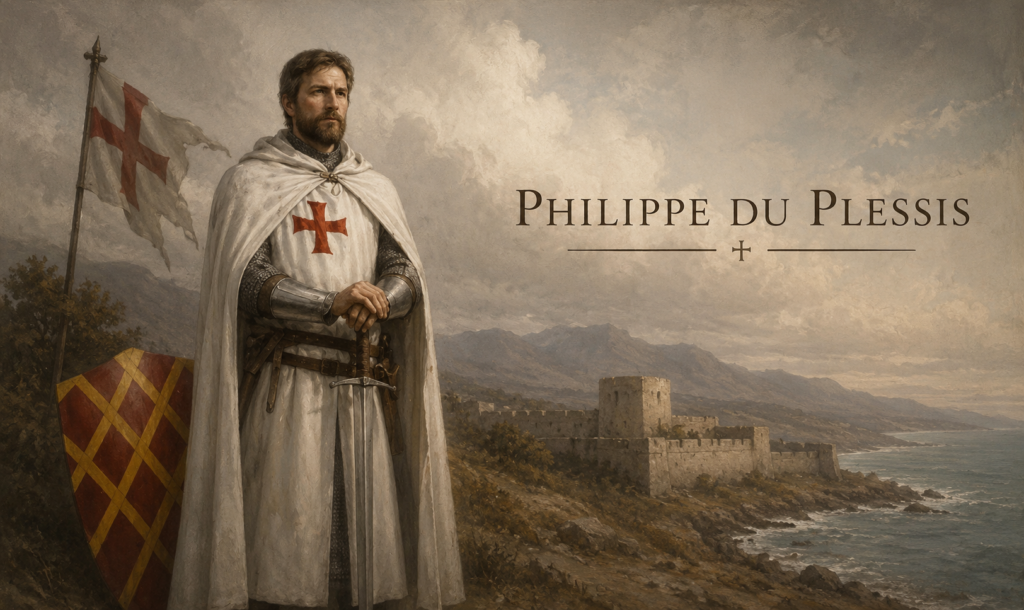
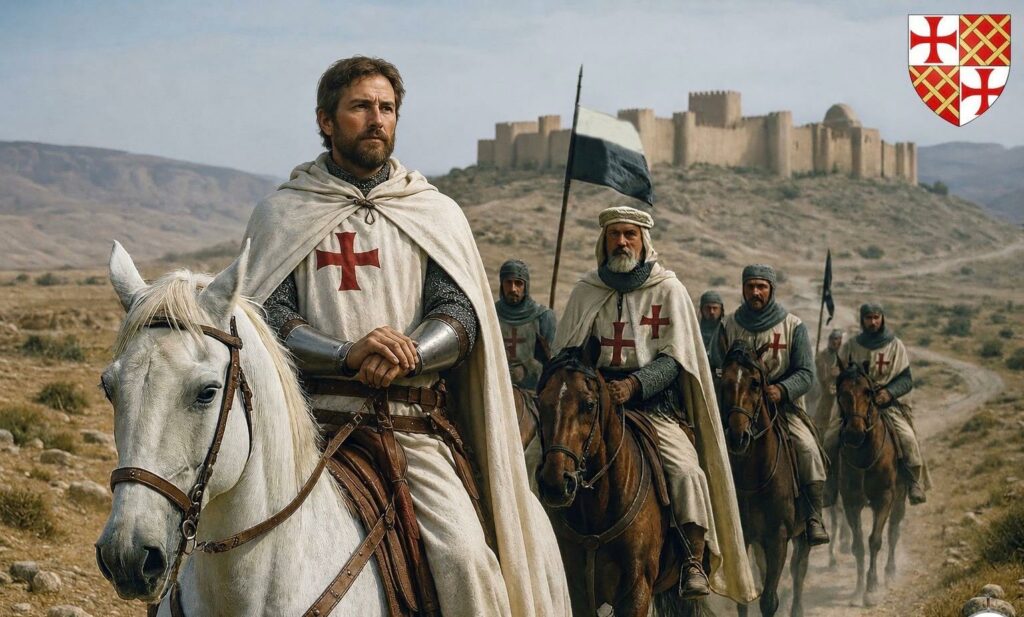
About the title image:
No authentic portrait of Philippe du Plessis, Grand Master of the Knights Templar from 1201 to 1209, has survived. The image used here is therefore an artistic reconstruction. As with nearly all Grand Masters of the Order, the individual himself deliberately remained in the background.
It was never the man who stood at the centre, but the Order and its service to God.
This reflects one of the guiding principles of the Order: a brother renounces his own will and personal glory.
We know the name.
We know the deeds.
But very often, we do not know the face.
Bonus 3
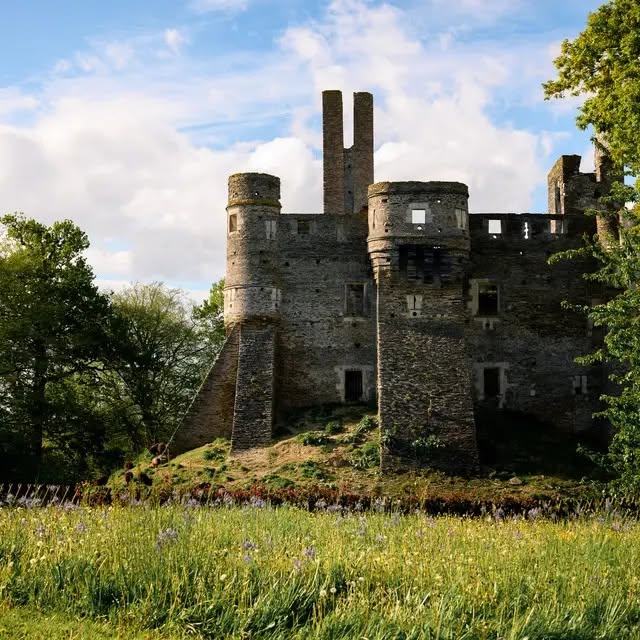
Below are photographs of Plessis-Macé Castle, Longuenée-en-Anjou.