Before Easter, there is a way. Not a celebration, but a preparation. Forty days in which silence, reflection, and direction come together.
The Easter cycle in the Church year consists of the annually recurring Christian feasts that together form the whole of Easter. The earliest possible date for Easter is March 22, and the latest is April 25.
The Easter cycle begins with Septuagesima. (Septuagesima is the first Sunday of the Easter cycle and falls 63 days before Easter.) It ends 50 days after Easter at Pentecost. Within this cycle are: the forty days of fasting, Holy Week, Easter, the Easter Octave (eight days of Easter), Ascension, and Pentecost.
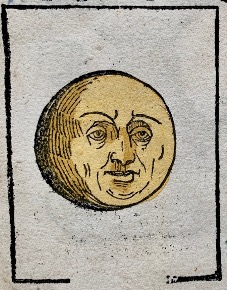
Why does Easter fall on a different date each year? The moon shows the way.
Easter has no fixed date; it shifts each year. Not because it is random… but because it is connected to the heavens. The Church counts from spring. It begins — fixed — on March 21. From that moment, the moon is observed.
The origin lies in the Jewish Passover.
Jesus died and rose again around Passover (Pesach). And Passover is determined by the full moon in spring. The Jewish calendar is a lunar calendar. A month begins with the new moon — and Passover falls at the full moon in the month of Nisan (spring).
👉 the moment of Jesus’ death and resurrection was already linked to the moon
✝️ The Church continued to follow this. The first Christians said: we hold on to that moment. But… 👉 they also wanted to celebrate it always on a Sunday (the day of the Resurrection). So this rule emerged: take spring (March 21) — take the first full moon after that — take the first Sunday after that = Easter and from that point, everything is counted backwards.
In summary: when is the first full moon after March 21? Then the first Sunday after that — that is the anchor point. From there, everything is counted back. The forty days in the desert — Sundays are not counted — which brings you 46 days back to Ash Wednesday, when the cross is received.
It is not the calendar that determines the day… but the rhythm of the moon. A movement from preparation to fulfillment.
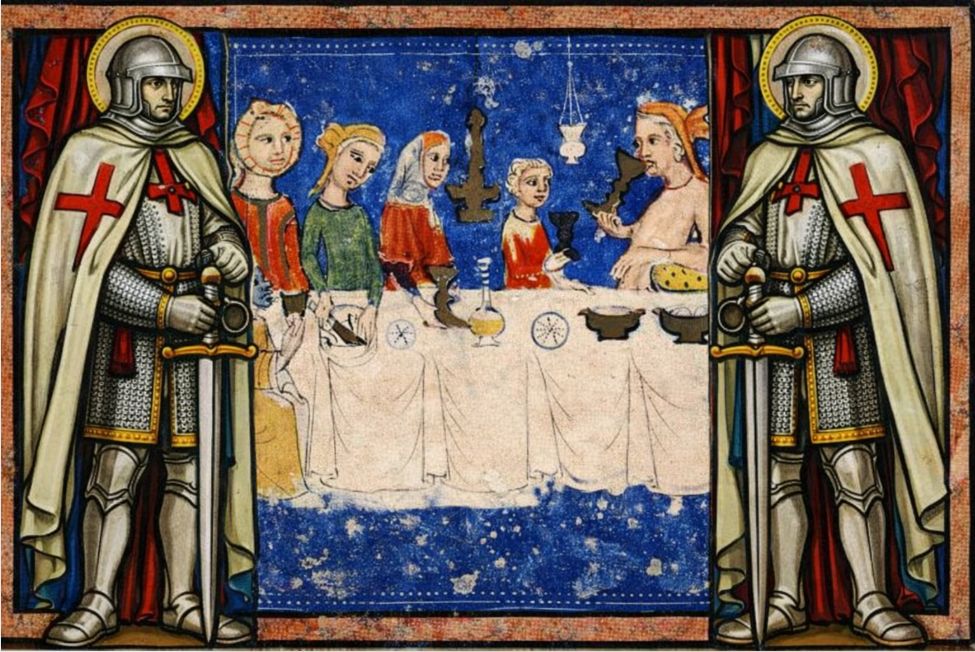
During the Seder meal, there is not only eating… but above all, telling.
Those who speak of the exodus from Egypt keep the past alive in the present..
That is why unleavened bread and bitter herbs are placed on the table — visible signs of what was once endured.
Not only to remember… but to pass the story on again and again.
Baptism in the Jordan
There is another holy moment before Jesus enters the desert:
The Baptism in the Jordan — the beginning of the way
At the bank of the Jordan, He stands. Not in a temple. Not among priests. But in the open land. Where water flows and people come carrying what they bear.
John baptizes.
A voice in the desert. Calling to repentance. To let go of what has been. And there — among the people — He comes. Not to distinguish Himself. Not to stand above them. But to join them. He steps into the water.
John hesitates.
“I should be baptized by You…” But He answers: Let it be so. And so it happens. Water touches Him, as it touches all. Not a sign of distance — but of nearness. And then…
the heavens open.
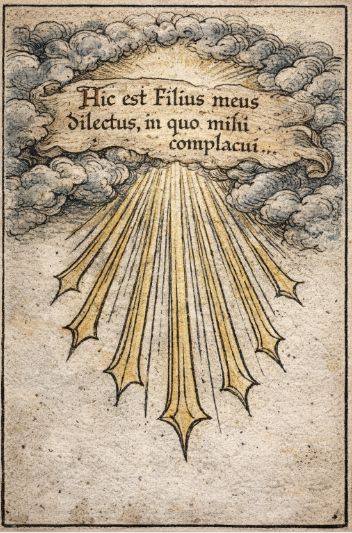
Not visible to everyone, but real. The Spirit descends. Softly a voice is heard:
This is my beloved Son,
in whom I am well pleased.
Jesus lived in simplicity, in silence. Among the people of everyday life. Not absent — but hidden. What He was was not spoken. What was within Him was not shown. Until that one moment, at the Jordan.
…………here, nothing is proven. Here, what already is, is spoken. No miracle. No sign for the crowd. But a beginning. Not loud. Not grand. But clear.
And from this moment… the way begins. Not toward power, not toward recognition, but toward depth. From the water into the desert. From receiving to living through.
Whoever looks here does not see an event… but an opening. A boundary being crossed. Not through words, but through presence. And so it begins — not with doing, but with being.
The way that follows is not chosen by strength… but carried by what has been received here.
Thus, what was hidden becomes visible. Not through words, but through choices. And only then… does the way begin that all will see.
What is formed in silence, is not broken in openness.
From the water… into the silence. The way continues — into the desert.
The Desert
The desert… the way before Easter
What had remained hidden comes forward here for the first time. Before the first miracle… before the first followers…
He is led
Not by people, but by the Spirit. Into the desert. For forty days, there is nothing. No abundance. No distraction. No comfort.
He fasts.
Not out of habit, but out of surrender. Scripture only says that He became hungry. Nothing is said about water. What remains is this: He is there as a human — vulnerable, exhausted… and alone.
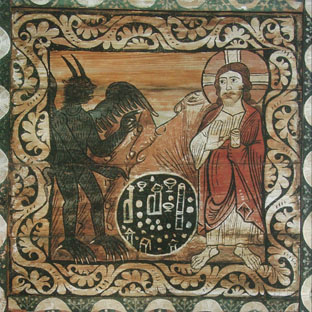
And precisely there… comes the testing. Not with force. Not with coercion. But with words. “Turn these stones into bread.” A simple question. Almost logical. Why suffer if you can solve it? But He answers:
Man shall not live by bread alone
“Jump.” From the height of the temple. The angels will carry you. Prove who you are. Show it. But He refuses.
You shall not put the Lord your God to the test.
No spectacle. No need to prove. No testing of the sacred.
Easter. Ceiling paintings from 1130 in the church of Sankt-Martin in Zillis, Switzerland
And then… power. All the kingdoms of the world, offered in a single moment. Without suffering. Without the way. Only one bow. But here is the boundary.
Away from me, Satan.
The adversary withdraws. And only then — the angels come. This is the way.
Not visible from the outside, but completed within. Where hunger does not become weakness, but clarity. Where power does not become a goal, but temptation. Where trust is not tested, but lived.
In the desert, it was not decided whether He would fall… but revealed that He stood firm. And there, Easter begins. Not at the empty tomb — but here.
In the silence. In the emptiness. In the choice not to turn away.
Whoever understands this way understands that waiting is not standing still.
But preparation.
And that even in emptiness… the first step has already been taken.
After forty days….the adversary withdraws.
Jesus — exhausted, not victorious by power, but by steadfastness.
Only then… the angels come. Not loudly not visible to all, but present. They serve Him. And from that moment… the way outward begins. What was formed in silence now comes forward.
Not to show who He is… but to bring what He carries — the Heavenly Kingdom of God.