


When there was not yet order, nor any Rule…
Not all stories begin in order.
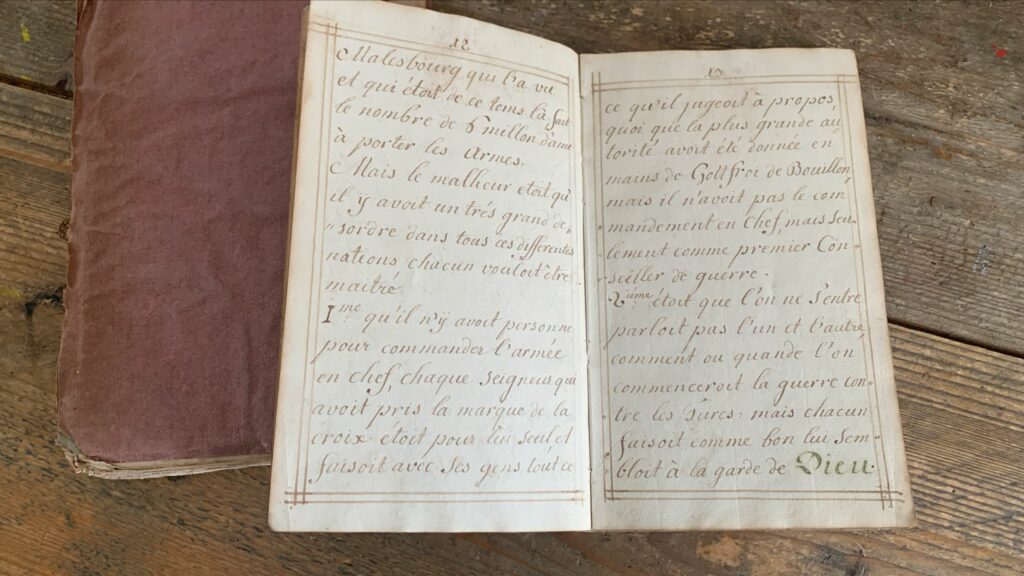
This small handwritten manuscript, written at the beginning of the 18th century, looks back on the First Crusade —
a time in which many set out, burning with faith, yet without unity, without leadership.
On these pages we do not read a tale of heroes, but what came before: confusion, division, and the absence of structure.
Page by page, an image unfolds here of a world still searching — for direction, for authority… for order.
What you see here is not a typical explanatory page. Before you lies a French manuscript from the year 1705, in which an unknown author — we believe a monk — reflects on the early developments leading up to the First Crusade. A small manuscript — with a great story.
On this page, the text is revealed step by step.
Per page you will find:
– on the left: a transcription of the original Old French text
– on the right: a translation into clear, accessible English
– below: a brief interpretation and explanation
The complete text is not presented all at once, but unfolds in sections of five pages.
Between these sections, markers in time indicate how the story develops.
The manuscript consists of a total of 126 pages.
The full text is not published at once, but grows over time — page by page.
Each Friday, we continue along the path of the First Crusade —
with Godfrey of Bouillon, with Peter the Hermit,
we hear Pope Urban II, we travel to Constantinople, to Emperor Alexius…
and so on — step by step — towards the goal.
The story will continue to unfold for those who return.
Walk with us — into the First Crusade…
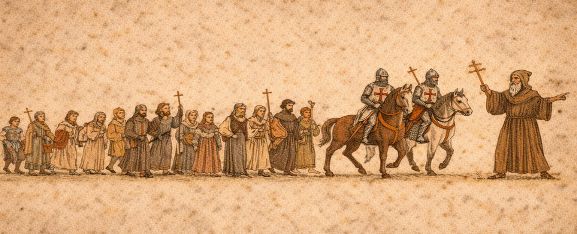
Author’s note: a brief summary of the history of the Holy War.
This is the beginning of the Crusade: how Godfrey of Bouillon took Jerusalem and was proclaimed king — yet refused the title.
On July 15, in the year of Our Lord 1099, on a Friday, at the very hour that Christ gave up His spirit.
After this, the kingdom was ruled by nine kings, all of French origin.
Original text (French)
Page 1.
L’origine des Turcs les Turcs étoient une nations qui habitoit ci devant
dans une isle, qui se nomoit
Sarmadia Assiatica. Est de là ils se sont retirez dans un endroit qui se nome la Marée Caspium, où cette
endroit porte encore le Nom aujourd’huy Turquestan, là ces peuples s’entretenoient seulement de ce qu’ils y eslioient. Sur tout quand ils se fesoit quelque desordre
dans…
Page 1
The Turks were a people who once lived on an island,
called Sarmadia Asiatica.
From there, they withdrew
to a region near what is called the Caspian Sea,
where that land still bears the name Turkestan.
There, these people concerned themselves only
with what they cultivated and produced.*
Especially when unrest arose
in…
Note: The English translation is accurate in content, but more strongly phrased than the original French text, which may cause a subtle nuance present in the original to be lost.

Original text (French)
Page 2.
…dans les Royaumes voisins
Ils prenoient le parti de servir en qualité de Soldats. Ils s’entretenoient seulement
du pillage qu’ils rapportoient dans leur territoire. Dans le tems de l’Empereur Otto 3. ce peuple ont esté pris à la solde par Mahomel, qui étoit Sultan Sarasin dans la Perse, dont l’on étoit en guerre contre les Babyl- loniens, qui les appella
à son secours. Sur la fin de…
Page 2
…in the neighbouring kingdoms, they chose to serve as soldiers. They lived solely from the plunder which they carried back to their own territory. In the time of Emperor Otto III,
this people was taken into service by Mahomel (Mahomet / Mohammed),
who was a Sultan and Saracen in Persia, where war was being waged against the Babylonians, who had called upon them for aid.
Towards the end of…
Explanation (Page 2)
“Mahomel” → likely a French form of Mahomet, meaning Mohammed.
It may also refer to a later Islamic ruler; the context develops further on.
Otto III reigned from 983–1002 → thus before the Crusades. The author appears to describe an early origin of Turkish soldiers in Persian service.
“Babylonians” → here likely used as a general term for peoples east of the Levant.
Page 3
…de la Campagne ils n’ont point voulu cesser ny retourner dans leur isle d’où ils étoit venu, tant que cette nation étoient esfarouchés et alterés du sang humain et la guerre ne cessa qu’aux
que le Roi de Perse et le Sultan de Babylone fut vaincu dont ils ont in-
corporé ces deux Royaumes la Perse et Babilone, dans la Syrie et la Palestine dont Jerusalem étoit de la dépen-
dance, se voyant aussi puissant…
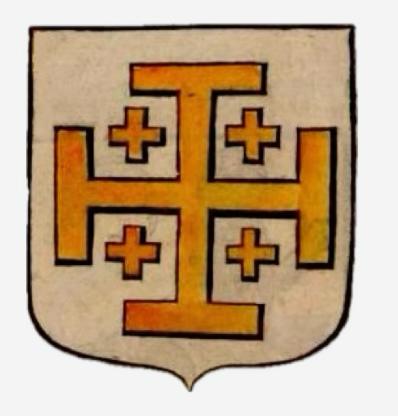
Page 3
…after the campaign they did not wish to cease nor return to the island from which they had come, because this people had become so wild and thirsty for human blood. The war only ended when the king of Persia and the sultan of Babylon had been defeated, after which they incorporated these two kingdoms, Persia and Babylon, into Syria and Palestine, upon which Jerusalem depended.
Now, seeing themselves as so powerful…
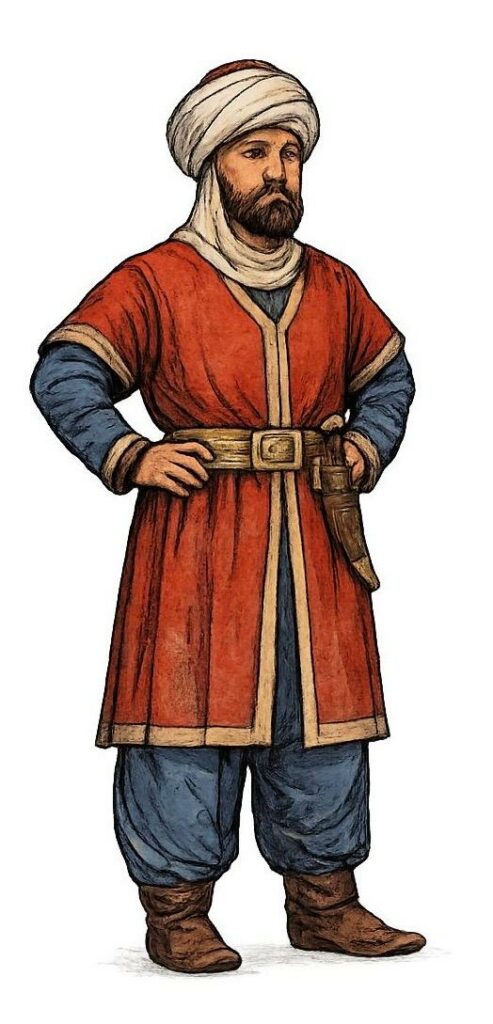
Page 3: The author here follows a (legendary) origin story of the Turks, in which they depart from an “Asian island” → move to the region around the Caspian Sea → then fight as mercenaries → and ultimately conquer Persia and Babylon, expanding into Syria & Palestine.
This is, of course, not a historically accurate reconstruction, but rather the well-known 17th–18th century European tradition of “Turkish origin” narratives.
Page 4
Puissants ils ne se sont pas contants de cette belle conquête, ils ont encore envahi, per, dans la petite Asie, où
estoit le grand et renommé Sultan Solimans, ils lui ont pris le Royaume
de Pontume, auquel ils ont donné le nom d’Turcomanian, et la Capadoc, la Bithiniem et firent la guerre jusqu’au
regne de l’Empereur Henri. 4. et firent leur residence à Nicea l’année 1081
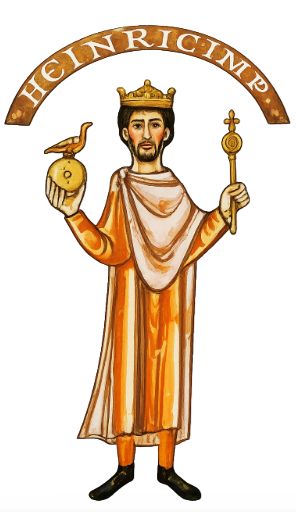
Page 4
Powerful as they were, they were not satisfied with this great conquest; they advanced into Asia Minor, where the great and renowned Sultan Soliman reigned; they took from him the kingdom of Pontus, to which they gave the name Turkomania, as well as Cappadocia and Bithynia, and they waged war until the time of Emperor Henry IV, establishing their residence in Nicaea in the year 1081.
Page 4: Soliman / Solimans
This refers to Suleiman ibn Qutulmish → better known as Suleiman I of Rûm, founder of the Seljuk Sultanate of Rûm.
Historically, this is accurate: he conquered parts of Asia Minor, including Nicaea.
Nicaea (Nicaea / Iznik)
Became a Turkish capital in 1081 → correctly dated.
Henry IV (Heinrich IV)
Emperor of the Holy Roman Empire (1056–1105).
The author uses him as a time marker → shortly before the First Crusade.
Pontus / Cappadocia / Bithynia
Historical regions in Asia Minor.
Turcomanian → Turcomania
A term used in older European sources for regions where Turkish nomads (Turkmen) settled.
This page therefore describes how the Turks — after their conquests in Persia/Mesopotamia — moved further towards Asia Minor under Suleiman, establishing Nicaea as their capital.
This leads historically to the situation just before the Crusade of 1096–1099.
Page 5
C’est là où Mahomet a établi une Loi à son nom, qui subsiste encore aujourd’huy et a quitté celle de Sarasin ou Greque, mais ils n’ont pas quitté leurs mauvaises inclinations Barbare et Tyranne, c’est pourquoi que les Chrétiens qui étoient sous leurs Domination avoient beaucoup à Souffrir, bien plus que quand ils étoient
Sarasin.
Dans ce tems là il arriva que dans la quantité de Pelerins qui viaggioit journellement…
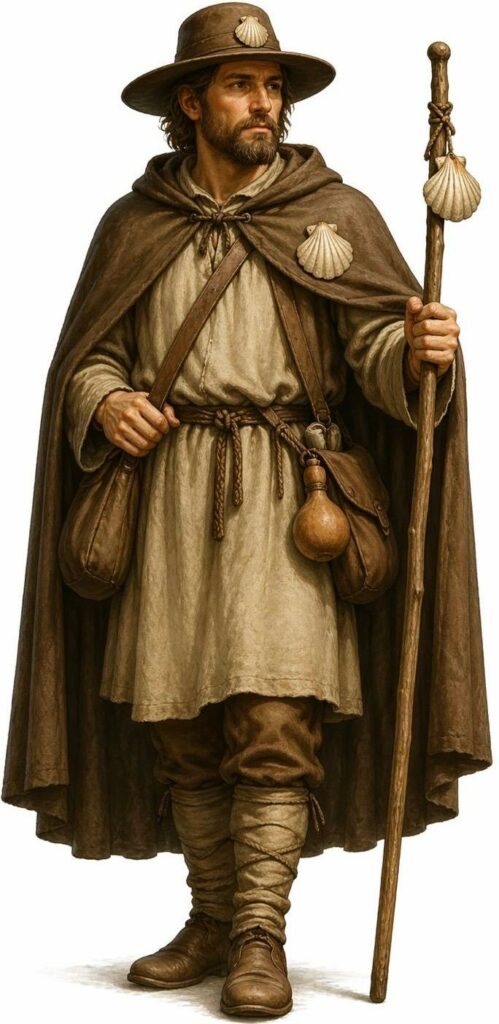
Page 5
It was there that Mohammed established a law in his name, which still exists today, and through which they abandoned the former law of the Saracens or the Greeks.
But they did not abandon their evil, barbaric and tyrannical inclinations;
therefore the Christians who lived under their rule suffered greatly — even more than when they were still Saracens.
At that time, it happened that among the great number of pilgrims who travelled daily…
Page 5 – Mahomet / Mohammed
The author makes a distinction → before: “sarazin ou greque” (that is: earlier Eastern religions/cultures) → after: Islamic law (“Loi à son nom”).
Describing Islam as “established by Mohammed” is typical of the pre-Enlightenment mindset:
→ Islam = a divisive innovation → departure from the older world order
Lead-up to the pilgrims → Pierre l’Hermite → Crusade
The sentence ends with:
“among the great number of pilgrims who travelled daily…”
An introduction to:
→ pilgrims are mistreated → Europe reacts → Crusade
We are now, in terms of content, just before the First Crusade (1096).
Page 6
d’Occident à la terre Sainte
dont entre autre il s’y trouva un Religieux qui se nomoit Pierre l’Hermite, il étoit l’ermite d’Amiens, qui fit plusieurs fois le voyage de la
terre Sainte dont il vit la miserable situation où les Chrétiens étoient, entre les mains de ces Barbares. Il prit l’occasion d’en parler à Simon
Patriarche de Jerusalem et ils en tinrent une Conference, et il le pria d’avoir la bonté de lui prester la main dans cette…
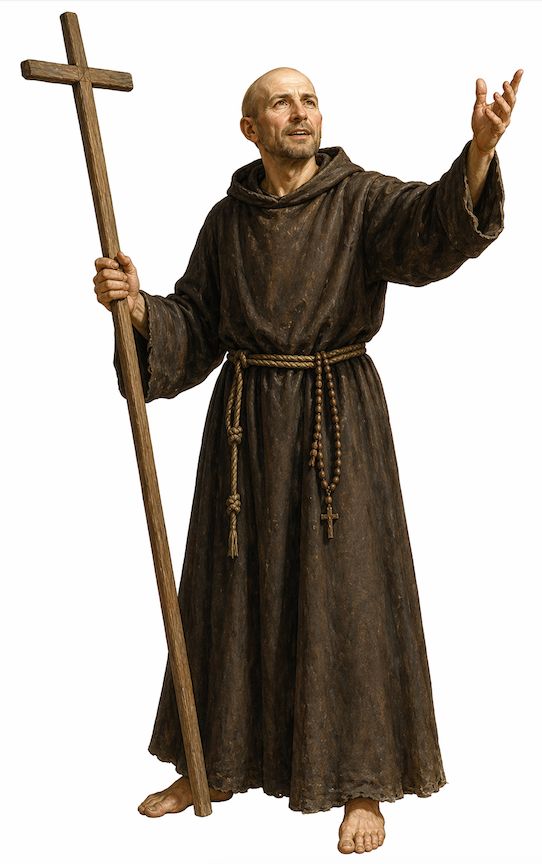
Page 6
…from the West to the Holy Land. Among them was a cleric named Peter the Hermit; he was the hermit of Amiens and made several journeys to the Holy Land.
There he saw the miserable condition in which the Christians lived, in the hands of these barbarians.
He seized the opportunity to speak about this with Simon, the Patriarch of Jerusalem, and they held a conversation; in which he asked him to have the kindness to assist him in this…
Page 6 – Prelude to the First Crusade
1. Pierre l’Hermite (Peter the Hermit)
According to medieval tradition, he played an important role in:
– witnessing the misery in the Holy Land
– stirring the crusading spirit in Europe
→ initiator of the Crusade
• → The situation is severe → Christians = suffering, innocent
→ Muslims = cruel, barbaric (note: this reflects the medieval source perspective)
→ A holy man sees this
→ He cannot remain silent
→ He acts → contact → consultation → action
2. “Patriarch of Jerusalem” Here: Simon — the spiritual supporter of the Crusade.
Page 7
cette affaire, qu’il eut seulement la bonté d’en écrire au Pape, de le faire à savoir aux Princes de l’Europe que pour lui de son côté il se portoit fort d’exciter les Courones de l’Occidentet de faire une expédition contre les Turcs et de conquérir la terre Sainte.
Le Pape Urbain 2 se signala de tenir un Congré à Piacenza par l’avis de
l’Empereur Henri IV là où tous les Embassadeurs de l’Europe, même ceux de…
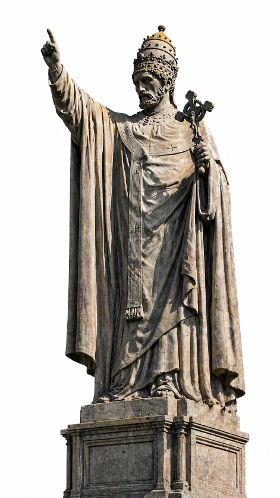
Page 7
In this matter… so that he only had the kindness to write about it to the Pope,
to inform him of it, and to the princes of Europe, that for his part he was prepared to call upon the crowns of the West to undertake an expedition against the Turks
and to conquer the Holy Land.
Pope Urban II resolved to hold an assembly in Piacenza, on the advice of Emperor Henry IV, to which all the ambassadors of Europe came,
even those of…
We now find ourselves at an important historical transition:
→ from Pierre the Hermit → to Pope Urban II
→ the step from spiritual signal → to political action
✅ 1. Urban II & the Council of Piacenza (March 1095)
· the situation of Christians in the East,
· the appeal of the Byzantine Emperor Alexios I for help against the Turks.
The next council — Clermont —
became the moment when the crusade was officially proclaimed.
We read:
· The “bonté” → the humility of Pierre the Hermit
· That he followed the proper path: Pope → princes
· That the Pope acted immediately
✅ 3. The crowns of the West — the term emphasizes that the project:
→ was European & Christian → not merely French, German, etc.
The symbolic value of the crusade: → one Christendom, one purpose.
Page 8
de Constantinople y ont paru, et par après à Clermont en Auvergne, là où on y tint deux Conseils tant pour tout
l’Église, que pour bien des autres chose, mais sur tout au sujet de la guerre contre ces Barbares, pour retirer la terre Sainte de leur mains.
L’on a conclu d’accorder une
indulgence plenierre à tous ceux qui s’offroient à cette entreprise, mais encore tous leurs biens et leurs personnes même sous la protection du…
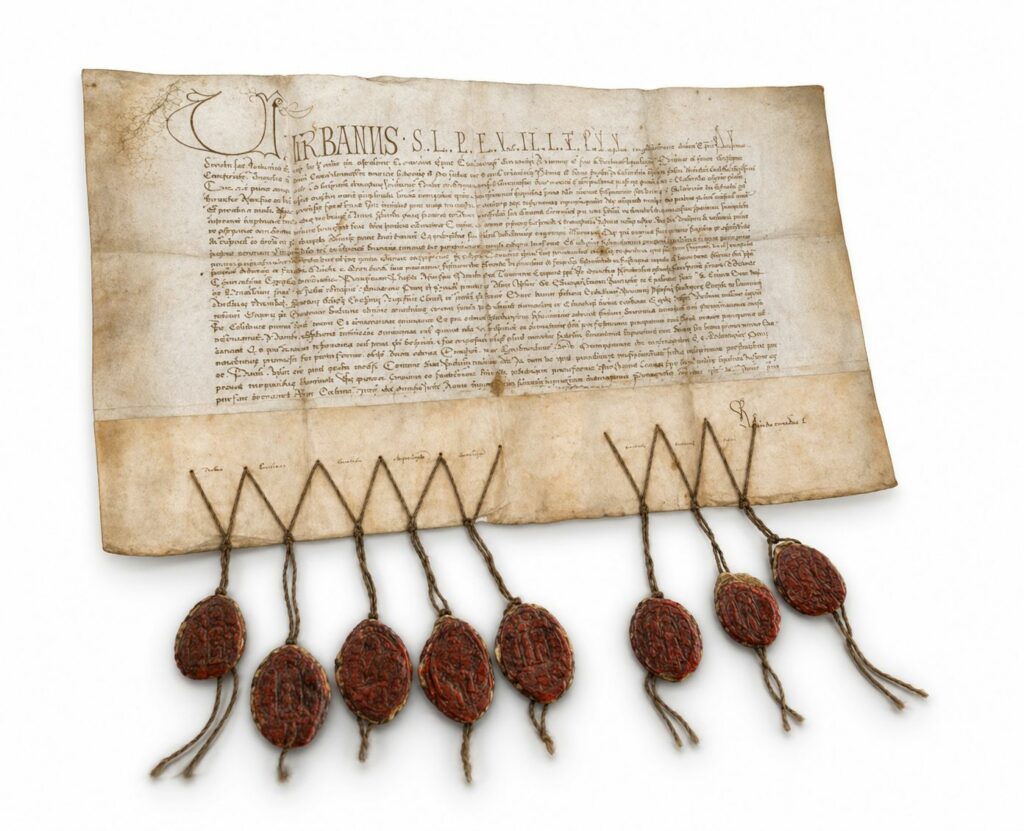
…from Constantinople came there, and afterwards to Clermont in Auvergne, where
two councils were held, both for the whole
Church, and for many other matters,
but especially with regard to the war
against these Barbarians, in order to free the Holy Land from their hands.
It was decided to grant a full indulgence
to all those who offered themselves
for this undertaking, and moreover to place
their goods and their persons under the protection of…
2 Councils:
1: March 1095 in Piacenza
2: Clermont, November 1095
The moment when Pope Urban II officially proclaimed the Crusade.
Full indulgence (indulgentia plenaria):
Whoever took part to liberate Jerusalem
⇒ received forgiveness of all sins
This required:
→ going with pure intention
→ and fighting for the Holy Sepulchre
If someone went on crusade →
his family & possessions were placed under the protection of the Church
This was meant to prevent:
→ families becoming vulnerable
→ possessions being seized
Page 9
du Pape et de l’Église, et tous ceux qui étoient homme de guerre ou qui savoient manier les armes, refuseroient de mettre l’épée à la main seroient
bannie de l’Église et même
excommunié.
L’on donna ordre à tous les Évêques de
donner de prêcher dans tous les
endroits de leur Diocèse, afin d’animer le peuple à cette entreprise, et tous ceux qui auront pris la resolution de cette
expédition fussent marqué d’une Croix rouge qu’on leurs…
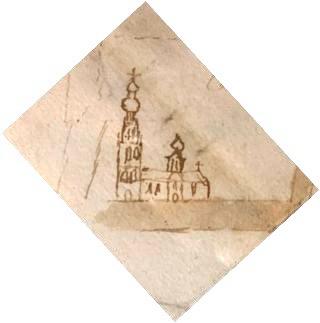
Page 9
…by the Pope and by the Church; and all those who were warriors or who knew how to handle weapons and refused to take up the sword, would be banished from the Church and even excommunicated.
All bishops were ordered to preach throughout every part of their diocese in order to encourage the people towards this undertaking.
And all those who decided to take part in this expedition were marked with a red cross which was…
Page 9.
The rhetoric is: the Holy Sepulchre is so important → that whoever is able to fight but refuses → acts against God Himself.
Preaching spread throughout the entire Diocese. This was carried by: bishops, priests, and popular preachers such as Pierre l’Hermite.
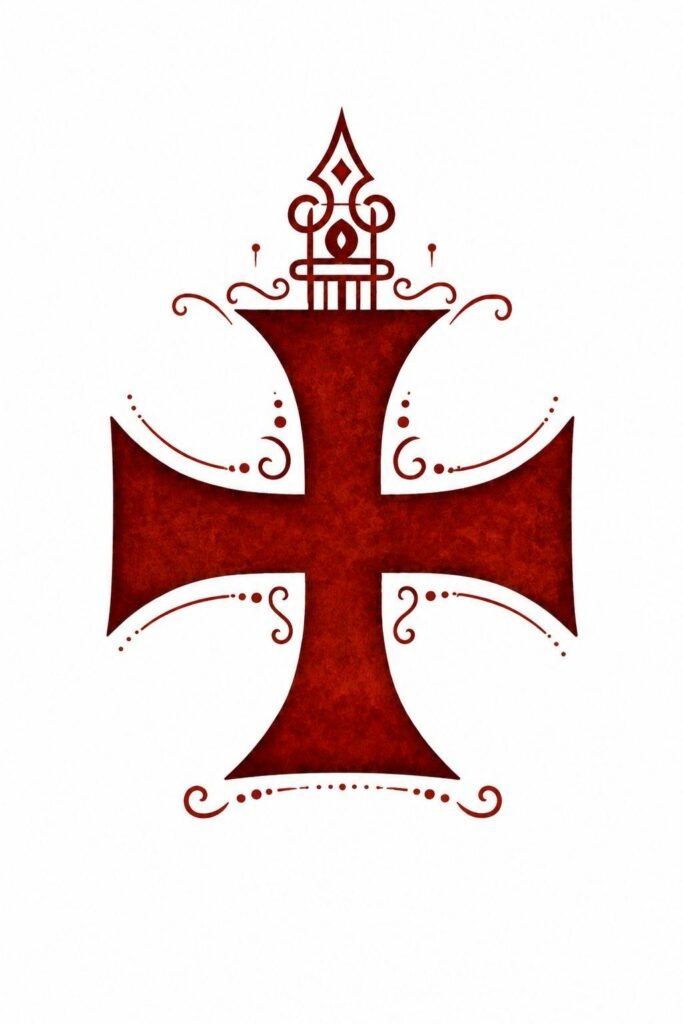
THE RED CROSS. The participants of the crusade received a red cross upon their clothing / mantle and/or upon the shoulder.
This was the original and only official sign of the crusader → crucesignatus = “marked with the cross.”
This is where the crusading identity emerged. This red cross became the origin of the word croisé (crusader).
Note: this reflected the scholarship of 1705. Later research revealed that the red cross was only officially granted by the Pope between 1144–1147.
Likewise: during the time of the Crusades themselves, they did not call it a “Crusade.” That name was only given much later.
Paus Urbanus II spoke of: “Iter Hierosolymitanum” — the journey to Jerusalem.
Page 10
attachée sur l’épaule, c’est par là qu’est devenu le nom de la Croissade.
L’on ne peut exprimer l’effet que ces prédicateurs ont opéré dans si peu de
tems de tous les Royaumes d’Occident le peuple y accourut à grande foule, et
receurent la marque de la croix, quelqu’un d’un vrai zele de voir et d’adorer le vrai sepulchre de Jesus
Christ, et de le retirer des mains des infidelles…
Page 10
…attached upon the shoulder; from this came the name “Crusade.”
It is impossible to describe the effect these preachers produced in such a short time throughout all the kingdoms of the West: the people came running in great crowds and received the sign of the cross.
Out of a true fire and longing
to see and venerate the true tomb of Jesus Christ
and to free it from the hands of the unbelievers…
Page 10.
C’est par là qu’est devenu le nom la Croissade.
→ This refers to the red cross-sign
→ The French word croisade comes from croix (cross)
→ The bearer = croisé
Le peuple y accourut à grande foule = the call of Urbanus II unleashed a mass movement.
Again: this is not how people spoke about it in 1097 — this terminology only emerged around the 13th century.
Page 11
d’autres par curiosité, d’autres par séculantise, et de paresse pour être exanter du travail et de paier leur dettes qu’ils avoit fait dans leur libertinage et debauche, c’est là ils prenoient leur préteste jus’qua aux femmes et les
enfans qu’ils ne voulurent pas être exempt de ce voyage et hors du nombre de la croisade. Enfin que l’armée qui
s’avoit assemblé de tous l’occident comme dit de grand historiens, Wilhelin Malmesburg
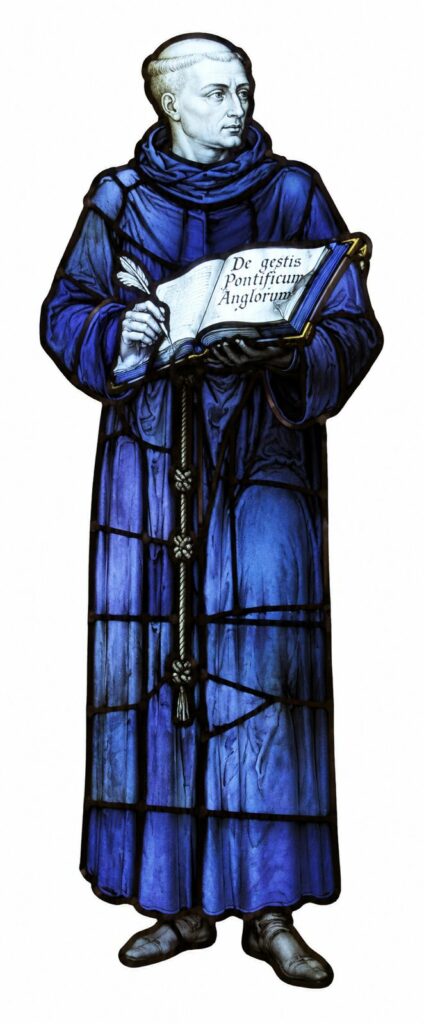
Page 11
…others out of curiosity, others out of worldliness, or out of laziness, to be exempt from labour and to escape the debts they had accumulated through their debauchery and excess. They seized upon every pretext,
to the point that they would not even
leave women and children behind from this journey, but counted them among the numbers of the crusade. In short, the army that gathered from all the West, as great historians say, among them William of Malmesbury…
Page 11.
William of Malmesbury → he († c. 1143) was an important English chronicler. His work is one of the great Latin sources describing the Crusades.
That the writer refers to him
→ shows that he bases his account upon respected tradition
→ or at least seeks to connect it to recognised authority.
Note:
It is exceptional that a school/semi-monastic manuscript explicitly cites a specific historian!
This means that the writer was not a thoughtless reteller, but someone who understood that written authority matters.
Page 12
Malmesbourg qui l’a vu et qui étoit de ce tems là fait le nombre de 5 millions d’âmes à porter les Armes. Mais le malheur étoit qu’ il y avoit un très grand désordre dans tous ces différentes
nations, chacun vouloit être maître.
1º qu’il n’y avoit personne pour commander l’armée en chef, chaque seigneur qui avoit pris la marque de la
croix étoit pour lui seul et faisoit avec ses gens tout ce…
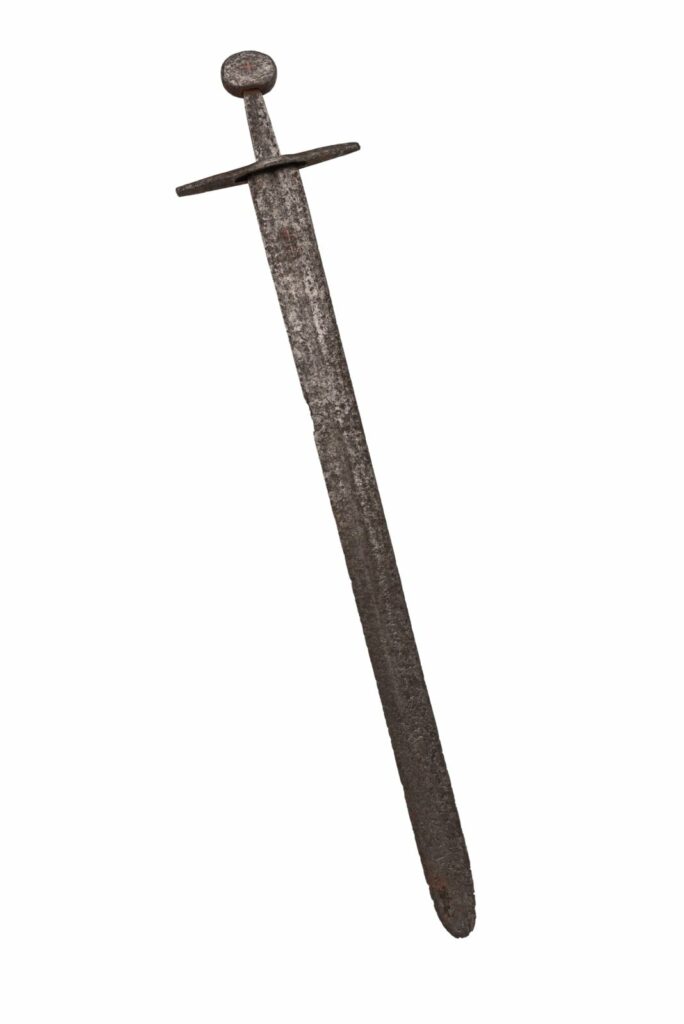
Page 12.
William of Malmesbury, who witnessed it
and who belonged to that time, says that the number of five million souls was able to bear arms.
But the misfortune was that there was great
disorder among all these different nations, for each man wanted to be master.
1º There was no one who commanded the army
as a whole; each lord who had taken the cross
acted for himself and did with his men whatever he wished…
Page 12. During the early First Crusade, there was no supreme commander, but several leaders:
• Godfrey of Bouillon
• Raymond of Toulouse
• Bohemond
• Tancred
• Robert of Normandy
etc.
→ each had his own troops
→ there was no central command
This gives the manuscript historical accuracy.
Page 13
ce qu’il jugeoît à propos, quoique la plus grande autorité avoit été donnée en
mains de GottFroi de Bouillon, mais il n’avoit pas le commandement en Chef, mais seulement comme premier
Conseiller de guerre.
2ºme étoit que l’on ne s’entreparloit pas l’un et l’autre comment ou quand l’on commencerout la guerre contre les Turcs, mais chacun faisoit comme bon lui sembloit à la garde de Dieu.“
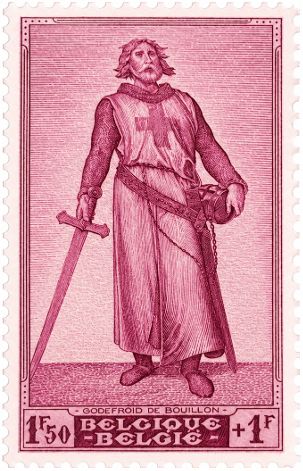
Page 13
“…what he considered good, although the highest authority had been placed in the hands of Godfrey of Bouillon, yet he did not hold supreme command; he was merely regarded as the first
counsellor of war.
The second point was that they did not consult one another about how or when they should begin the war against the Turks; rather, each man did what seemed right to him, under the protection of God.”
Page 13.
Godfrey of Bouillon
Here, something very interesting is being said → he possessed the highest authority, but not supreme command.
Historically, this is correct: there was no official supreme commander. Godfrey was regarded as primus inter pares — “first among equals.” His prestige was immense, yet he did not possess absolute power.
He is described here as premier conseiller de guerre — “first counsellor of war.” In other words, he is portrayed as:
→ a moral leader
→ not a military dictator.
Godfrey is therefore presented as humble, pious, and serving rather than ruling.
Later chronicles would portray him almost as a saint, and this manuscript fits well within that tradition.
“…they did not speak together about how or when they would begin…” → this is a very accurate characterization of the early Crusade.
→ the leaders were rivals
→ planning was lacking
→ faith outweighed logistics
→ yet everything progressed “under the protection of God”
→ despite human shortcomings.
Likewise: “chacun faisoit comme bon lui sembloit à la garde de Dieu.”
→ each man did as he thought best
→ trusting in God
→ acting freely, yet beneath God’s protection.
Page 14
Sans savoir ce qu’il avoit de soin de faire, ou de s’allier avec les autres. 5ᵉᵐᵉ. Ils savoient qu’ils seroient obligez de passer sur le territoire étranger, et que l’on ne s’étoit pas précautioné comme, et où l’on pourroit avoir des vivres, pour l’entretien des troupes: mais ils ont laissé venir les affaires jusqu’à la dernière extrémité.
C’étoit une très grande faute qui a causé une si mauvaise conséquence. Avant que de…
Page 14
Without knowing what they were to do, or how they were to unite themselves with the others. 5th. They knew that they would be forced to travel through foreign lands, and that no provision had been made concerning how or where food and supplies could be obtained for the maintenance of the troops; yet matters were allowed to continue to the very extreme.
This was a very great mistake, one that had terrible consequences. Before one…
Page 14
Here it is explained that little to no precautionary measures had been taken, due to a lack of experience.
This was the First Crusade. They were travelling through unknown lands — for the very first time. In other words: piety alone is not enough; wisdom and foresight are also required.
It is a warning: God may guide you — but He does not cook your meals for you → Holy goals also require worldly wisdom.
Page 15
et parler de cette affaire nous ferons le détail comme les troupes se sont partagé.
Le 1ᵉʳ Convoi, et l’auteur de cette entreprise qui se nomma Pierre l’hermite, qui voulut être Prêtre et General en même tems, mais
comme les troupes étoient trop puissante ils donna 100000 hommes tous bon guerriers a un Gentil home françois nommé Gualtaro qui veut dire en françois. Sans avoir. Car ils étoient tres

Page 15
And to speak about this matter, we shall explain how the troops were divided. The first column, and the instigator of this enterprise, who was called Peter the Hermit, wanted to be both priest and general at the same time; but because the troops were too numerous, he gave 100,000 men, all good fighters, to a gentilhomme (nobleman) of French origin, named Gualtaro,
which in French would mean “Without possessions / Without wealth.” For they were very …
Page 15
Here the manuscript looks back on the People’s Crusade. This was the crusade before the First Crusade itself. It was unorganised. The initiator was Pierre l’Hermite = Peter the Hermit. His followers were divided into several groups/columns. His forces were enormous: 100,000 warriors. A priest is not trained to command 100,000 men in war, no matter how pious his intentions may be. Peter’s ambition was great. He wished to be both priest and military leader at the same time.
From this came a very important turning point. Through failure and suffering it became clear that the Crusades needed proper military leadership => Here it became clear that monk-knights were needed.
Faith combined with military discipline = a Holy fighting force. The birth of the Knights Templar.
Page 16
très pauvres, il marchoit avec ses troupes qui étoient composée que de 800 Cavaliers
et 6000 hommes de pied. Tel étoit les préparations. Ils passèrent par l’Allemagne,
et la Hongrie en paix. Mais comme l’argent commençoit à manquer, et qu’ils avoient
presque tous depensé ce qu’ ils avoient pris avec eux, et lors qu’ils furent arrivez dans la Servie et de là dans la Bulgarie, les troupes se mirent à piller et à ravager.

Page 16
Very poor, he marched onward with his troops, who consisted only of 800 horsemen and 6000 men on foot. Such were the preparations.
They travelled peacefully through Germany
and Hungary. But as soon as the money
began to run out and they had spent almost everything they had brought with them and when they had arrived in Serbia and from there
into Bulgaria, the troops began to plunder and destroy.
Page 16
The People’s Crusade was poor and badly organised. At first the troops marched peacefully. But once their money was gone, they fell into plundering.
Their pious mission lost its holiness because human lack of order and discipline led to moral decline.
This became a lesson for the next Crusade.
Page 17
pour avoir dequoi à vivre. Les habitants de la Bulgarie se sont assemblée, et ont ma-
sacré la plus grande partie des frères de la croisade. Les ont poursuitt jusqu’à dans les
bois et forêts sauvages, là où ils ont souffert la faim et la misère, jusques’ils sont arrivé à Constantinople, là où l’Empereur Alexius leurs a fournie des vivres pour les rafraichir et continuer leur
route, mais ils camperent longtems hors de la ville,
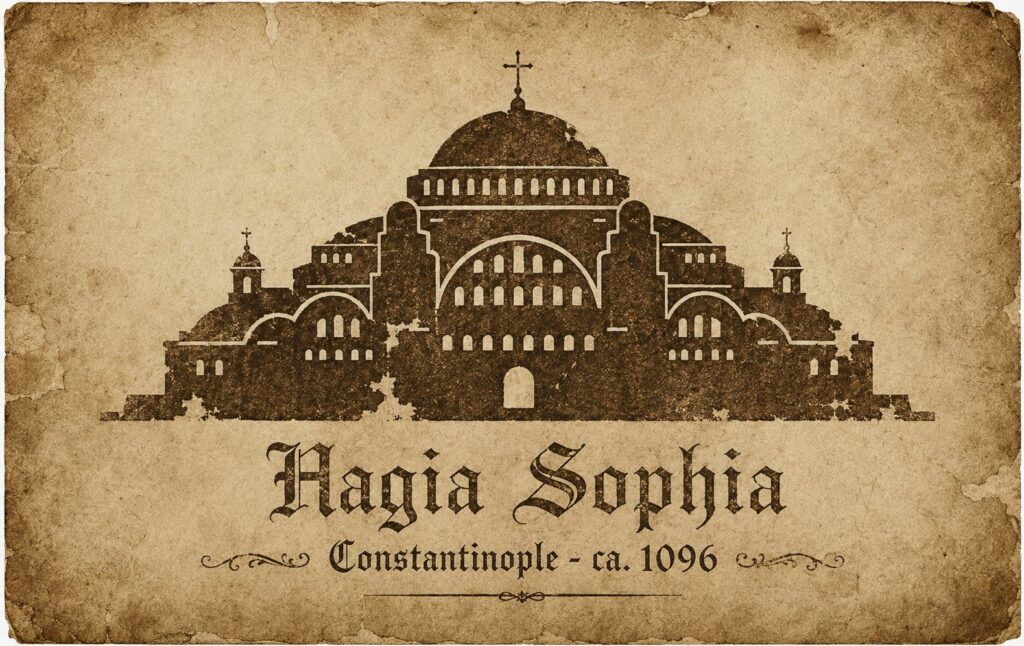
Page 17
To obtain food, the inhabitants of Bulgaria gathered together and slaughtered the greater part of the brothers of the crusade. They pursued them deep into the forests and wilderness, where they suffered hunger and misery, until they arrived in Constantinople. There Emperor Alexius provided them with food so that they could regain their strength and continue their journey, but they remained outside the city for a long time.
Page 17
They came into conflict with the Bulgarian population, who rose up against them, forcing them to flee into the forests. Only a small number eventually reached Constantinople, exhausted. There Emperor Alexius provided them with food and rest, BUT he made them camp outside the city walls. The lesson is clear: whoever fails to bring faith into order becomes the cause of chaos himself.
Page 18
…parce qu’ils furent obligez d’attendre leurs commande- ment, qui étoit dispersé
aussi bien qu’eux.
2ᵈᵉᵐᵉ Convois de 4000 Soldats, la plus grande partie des Lorrains, Bavarois et Moraviens, avec les Autrichiens, la plus grande partie étoient des Brigands que conduisoit Pierre l’hermite, que l’on tenoit dans ce tems là pour un grand Prophète et un Saint très particulier, avec la Croix à la main, mais il
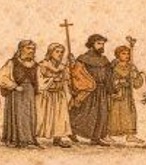
Page 18.
…because they were obliged to wait for their leaders, who were just as scattered as they were.
The second column consisted of 4,000 soldiers, mainly from Lorraine, Bavaria, and Moravia, together with some Austrians. Most of them were brigands and plunderers, under the leadership of Peter the Hermit, who at that time was regarded as a great prophet and an exceptionally holy man, carrying the Cross in his hand, but he…
Page 18
The second column consisted of 4,000 men from Central Europe. Most were plunderers, led by Peter the Hermit, who was seen by the people of his day as a prophet and holy man, carrying the Cross in his hand…
Page 19
n’avoit pas la connoissance des affaires de la guerre, ce qui fit que ses troupes furent
défaites à Nicomédie par les Turcs, où presque tous furent tués, et lui avec quelques
uns s’enfuirent à C. pol.
Cependant les Princes de l’Europe commençoient à s’avancer avec leurs troupes bien équipées et en ordre, nous en parlerons
cy-après.
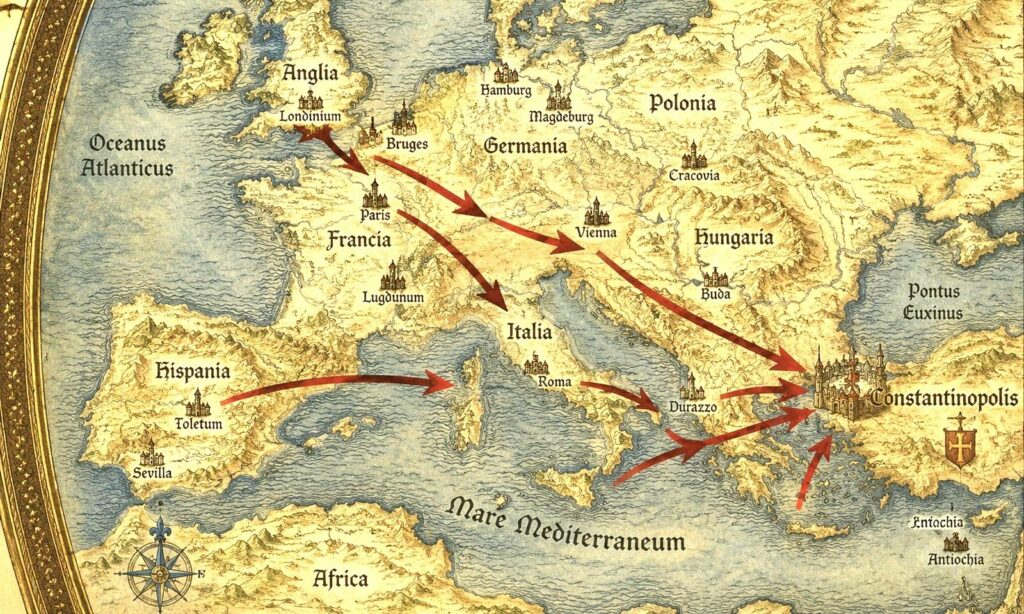
Page 19.
…had no knowledge of warfare, which caused his troops near Nicaea to be defeated by the Turks. Almost all were killed, and he himself fled with a few survivors to Constantinople.
Meanwhile, the princes of Europe began to set their well-equipped and disciplined armies in motion — of which we shall speak later.
Page 19.
The Battle near Nicaea (Nicaea is the present-day İznik in Turkey.) The disorganized forces of Peter the Hermit were completely slaughtered by the Turks under the command of Sultan Kilij Arslan. Only a handful of survivors, together with Peter the Hermit himself, managed to escape back to Constantinople.
Thus ended the People’s Crusade in disaster.
The kings and nobles of Europe saw this — but above all, so did the Pope ! HERE lies the seed of the Templar ideal. For what follows in history is a generation of knights who learned:
“We shall fight for God — but with knowledge, order, and discipline.”
Born to ORDER HOLY STRENGTH, so that it does not descend into chaos and evil.
Page 20
Ses troupes qui n’étoient pas de son commandement de piller tout ce qu’ils y pourroient trouver. Sur cela, comme de
raison, ils furent attaquez des Hongrois et qui ont tomber sur eux et en ont tué 1000,
et les autres mis en desordre.
Leurs or et leurs argent et bagages furent pillez, que le reste qui avoit pris la fuite furent obligé de mendier leur pain en chemin jusque à Constantinople.
Comme ceux-ci furent arrivé…

Page 20
His troops, who were not under his direct command, began to plunder everything
they could find. As a result, and rightly so,
they were attacked by the Hungarians,
who fell upon them and killed a thousand of them, while the others fell into disorder.
Their gold, silver, and baggage were plundered, and the survivors, who fled for their lives, were forced to beg for bread on their way to Constantinople.
When they finally arrived there…
Page 20.
Historical Echo, the People’s Crusade of Walter Sans-Avoir and Peter the Hermit passed through Hungary and Bulgaria, where they repeatedly clashed with local populations who regarded them as looters.
Thousands were slaughtered near Belgrade and Niš.
This marks the lowest point of human chaos: the moment when a pious multitude is reduced to beggars.
Yet this is not the end, but rather the moment of purification within the story —
the necessary humiliation before rebuilding can begin.
For from this grows the conviction that a holy struggle is only possible through:
• order
• obedience
• discipline
• leadership
This is the moment when the ideal of the monastic knight emerges out of necessity.
What follows is the breath of silence after the storm: the moment when the lesson finally sinks in:
NEVER AGAIN LIKE THIS!
Page 21
L’Empereur Alexius leurs demanda de se joindre avec les autres troupes de Sansavoir qui étoient arrivées avant eux, et de se reposer, d’attendre leurs autres camarades; mais comme ils
étoient reposé ils se mirent comme auparavant à voler et à ravager.
Alors Alexius ne les voulut pas souffrir
davantage, et les obligea de partir pour l’Asie, et d’aller trouver leurs ennemis. Étant arrivés en Asie, il s’y assembla
toute sorte de nations, et…
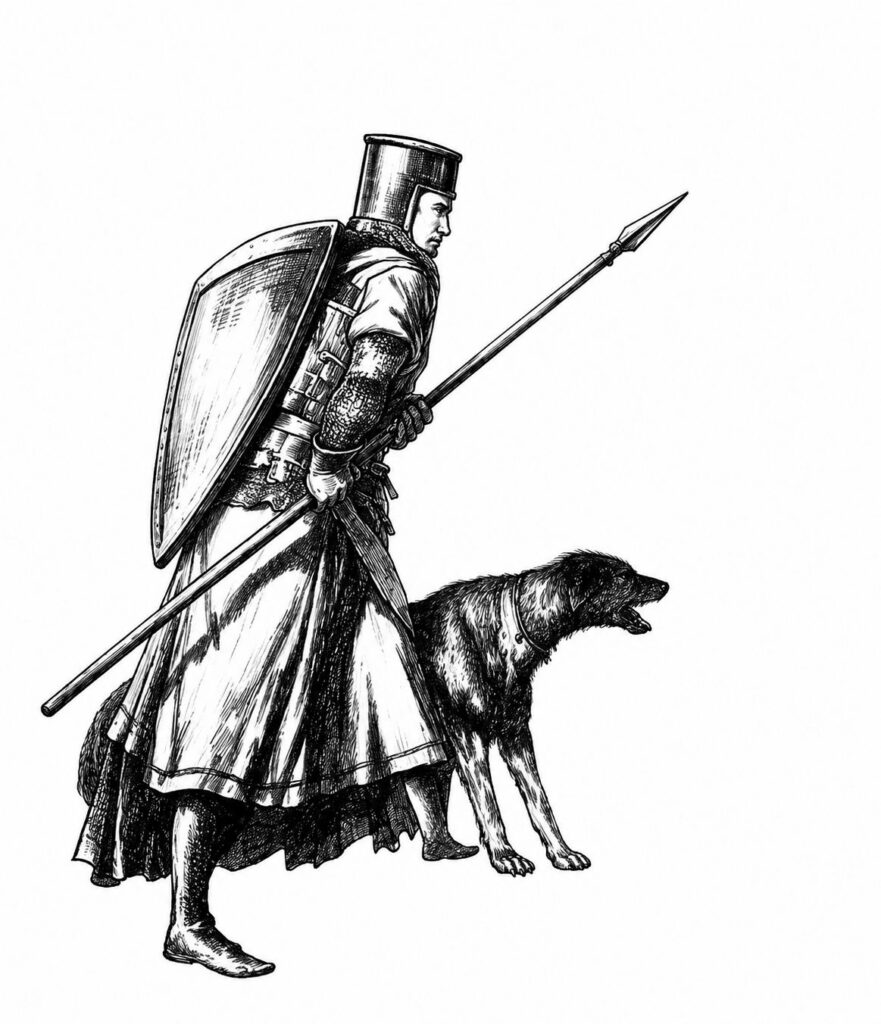
Page 21
Emperor Alexios asked them to join the other troops from Sansavoir, who had arrived before them, to rest and wait for their fellow companions.
But as soon as they had recovered their strength, they once again began to steal and plunder.
Alexios could no longer tolerate this and forced them to depart for Asia to seek out their enemies there.
Once in Asia, all kinds of peoples gathered there, and…
Page 21
Emperor Alexios I Komnenos has reached the end of his patience. The survivors of the People’s Crusade (those who had reached Constantinople) are received warmly by Alexios.
He merely asks them to rest for a while and wait for the remainder of their forces. But as soon as they regain their strength, they fall back into their old habits: stealing and plundering. Even within the emperor’s own territory. Alexios has had enough and expels them from the city.
He compels them to cross the Bosporus into Asia Minor—straight into territory controlled by the Turks.
Here, the emperor shows patience, but also realism—he realizes that these people will ultimately destroy themselves. Once again, this confirms an important lesson: order prevails over chaos. Not undisciplined piety, but disciplined devotion.
Page 22
comme ils étoient obligé de vivre à leur dépens, et leur armée s’augmenta de jour en jour de toute sorte de gens,
les vivres vinrent à manquer, alors il s’éleva une révolte; les Allemands et les Italiens se séparèrent de l’hermite et ils reconnurent pour Chef un nommé Renaldrum.
L’hermite ne se fioit plus de rester auprès de tous ces gens-là, il se retira à Constantinople pour tâcher d’avoir des vivres.
Pendant ce tems-là Solimans…
Page 22
Because they were required to live at their own expense, and because their army grew day by day with people of every kind, their supplies soon ran out. Then a revolt broke out: the Germans and the Italians separated themselves from the Hermit and acknowledged a certain Renaldrum as their leader.
The Hermit no longer dared to remain among all those people. He withdrew to Constantinople in an attempt to obtain provisions.
Meanwhile, Soliman began…
Page 22.
Division and disorder continue to spread. Rebellion, despair, and hunger increase the chaos, and the group becomes increasingly divided. (Divide and rule.) One faction chooses a new leader: Renaldrum.
Peter the Hermit flees back to Constantinople, abandoning his followers.
Page 23
le fameux Roi des Turcs arriva avec ses troupes reguli- ers, jugez, dans quelle détresse pouvoit être ce petit monceau
de troupes mal commandées et dans une si triste et déplorable situation, après avoir pris deux ou trois petites vil-les, il tomba sur eux. D’une terrible fureur il en fit une tuerie et prit tous ceux qui y avoient échappé prisonnier, avec leur
Commandant Renaldos, dont ils embrassèrent la plus grande partie la loi Mahométane.
Page 23
The famous King of the Turks arrived with his regular troops. One can imagine the desperate situation in which this small group of poorly led soldiers now found themselves. In this sad and pitiful condition, after they had captured two or three small towns, he attacked them. In terrible fury he carried out a massacre and took all those who survived prisoner, together with their commander Renaldos, most of whom accepted the Law of Muhammad.
Page 23
The “King of the Turks” refers to Sultan Soliman (more accurately Kilij Arslan), ruler of the Seljuk Sultanate in Asia Minor. He commanded a genuine, well-trained army—in sharp contrast to the untrained multitude of Pierre’s followers. He crushed them and slaughtered them. The survivors, together with their leader, converted to Islam out of fear for their lives.
Page 24
Et ce grand nombre d’hommes plus de 100000 fut detruit, jusqu’au nombre de 3000. Tous bons guerriers qui s’éc-
chapperent et s’en retournèrent à Constantinople, voilà la suite de la première Expédition.
Le 3ᵉ Convoi, Godescalcus, un Prêtre allemand en fut le conducteur, et il suivit l’exemple de Pierre l’hermite et prêcha la Croisade dans l’allemagne, et il assembla le nombre de 15000 hommes,
Page 24
And this great multitude of more than 100,000 people was destroyed until only 3,000 remained. These were all capable warriors who managed to escape and return to Constantinople. This was the continuation of the first expedition.
The third column was led by Godescalcus, a German priest. He followed the example of Peter the Hermit and preached the Crusade throughout Germany. He gathered an army of approximately 15,000 men…
Page 24
Godescalcus (Gottschalk) is a historically known German priest. Around the year 1096, he led his own People’s Crusade, somewhat later than Peter the Hermit. His followers consisted mainly of German peasants—partly fanatics, partly opportunists—and very few actual soldiers. They marched through Bohemia and Austria, where they carried out extensive plundering, and were eventually almost entirely destroyed near Vienna or in Hungary.
Here we are reading a broad European overview of the movements that preceded the official Crusade.
✅ He followed the example of Peter the Hermit — this is crucial. The manuscript describes three waves before the official Crusade:
1. Walter Sans Avoir (Gualtiero Sansavoir)
2. Peter the Hermit
3. Godescalcus
All three were:
* devout
* charismatic
* not military leaders
* responsible for chaos and massacre
The implicit message is crystal clear:
The Holy War cannot be sustained by religious zeal alone: God requires order.
This is why the monastic military orders would later emerge.
✅ “Il assembla 15.000 hommes” (“He assembled 15,000 men”) is consistent with medieval sources. Gottschalk’s army is commonly estimated at between 10,000 and 15,000 men.
✔ This marks the beginning of German participation in the Crusading movement.
✔ Here the later German knightly identity begins to take shape,
→ eventually leading, among others, to the Teutonic Order.
Thus, page 24 is the first moment in the manuscript where Germany, Crusading piety, and military necessity come together.
Between battles, pilgrimages and great historical events, it is often the small objects that tell the most fascinating stories. Every twenty-five pages we open the Order’s Treasury for a brief pause in our journey, before continuing with the beautifully handwritten manuscript of our monk from 1705.
This time, we present one of the best-known symbols of the Order: the Templar Seal.
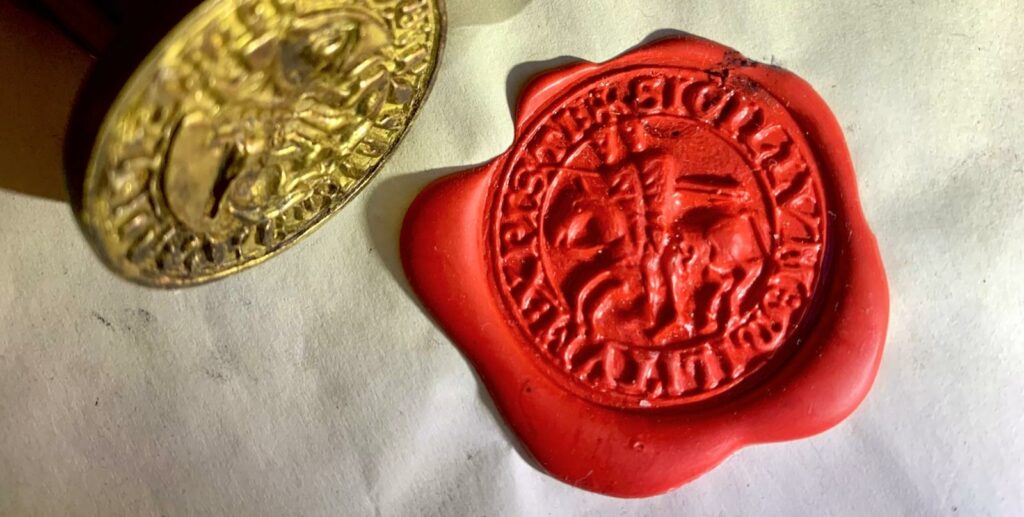
The famous Templar Seal depicts two knights riding a single horse. For centuries, this was interpreted as a symbol of the poverty of the first Templars. Today, however, many historians see a deeper meaning. The seal most likely also represents the strong brotherhood within the Order and their dual vocation: warrior and monk.
But the seal also served another, very practical purpose. It was not merely decorative; it was an official means of authenticating documents. During the Middle Ages, a seal represented authority, authenticity and trust.
✠ Curious to learn the full story? Discover it in our feature The Templar Seal, where we explore the symbolism, use and history of this remarkable seal in greater detail. ✠
Page 25
mais ceux ci trouverent bien tôt leur sepulture dans la Hongrie : car ils ne furent pas sitôt arrivez dans ce païs qu’ils commencerent une vie barbare, ils voulurent mettre les Hongrois dans le harnois mais ils ont bientot eu détruit ce petit monceau de troupes, une partie de tué, et les autres mis à la fuite, et la pluspart assommé en route.4ᵉ Convois. il y avoit aussi un Comte en Allemagne nommé Emico, qui avoit aussi…
Page 25
But these men soon found their graves in Hungary, for they had scarcely arrived in that country before they began to live in a barbaric manner. They sought to subdue the Hungarians, but the Hungarians quickly destroyed this small force. Some were killed, others were driven into flight, and most were slain during their retreat. Fourth contingent. There was also a count in Germany named Emico, who likewise…
Page 25
Introduction to Count Emico of Leiningen. Count Emico of Leiningen was an infamous figure of the People’s Crusade. Claiming to have been called by God, he gathered thousands of followers and was responsible for large-scale massacres of Jewish communities along the route, most notably in Worms and Mainz.
Page 26
asemblé une petite armée de freve de la Croisade, il s’ase- amblà aussi des Lorrains et des Anglois, et d’autre part du costé du Rhin, ainsi qu’il est devenu Seigneur de 20000 hommes à pied, et 3000 à cheval. Le nombre des valets et des femmes et enfans n’é- toit pas à nombrer, ceux ci deschargèrent leur rage sur les ennemis de Jésus Christ. Ils masacrèrent les juifs d’Alle- magne dans les villes où ils passerent, comme Cologne…
Page 26
He gathered a small crusading army, and Lotharingians, Englishmen, and others from the region along the Rhine also joined him, so that he became lord over more than 20,000 men on foot and 3,000 on horseback. The number of servants, women, and children could not be counted. The latter vented their fury upon the enemies of Jesus Christ. They murdered the Jews of Germany in the cities through which they passed, such as Cologne…
Page 26
• A small army ➜ immediately became a force of 23,000 warriors. What began as a “small company” grew explosively as groups from Lotharingia, England, and the Rhine region joined them.
• Here we see the typical dynamic of religious popular movements: a charismatic leader + a religious call = a massive influx of followers.• Here we see the typical dynamic of religious popular movements: a charismatic leader + a religious call = a massive influx of followers.
Page 27
Mayence, Worms, et autres villes plus de 12000 ils pillerient tous leurs butins et les
mirent par leur procedure dans un tel desespoir qu’ils se tuerent eux memes avec femmes et enfans, ainsi ils
poursuivirent leur chemin dans la Hongrie, et come ils y furent arrivé, les hongrois
se ressouvirent des autres qui avoit passé avant eux, ils leurs refuserent le passage,
alors ils se mirent à assieger la ville de Mersbourg qui est
Page 27
Mainz, Worms, and other towns. More than 12,000 people were plundered; they were stripped of all their possessions and driven by such treatment into such despair that they took their own lives, together with their women and children. They then continued their journey through Hungary. When they arrived there, the Hungarians remembered those who had passed before them and refused them passage. Thereupon they began to besiege the town of Mersbourg, which is…
Page 27
• Mayence = Mainz, Worms ➜ These are precisely the cities where Count Emicho and his followers carried out the infamous anti-Jewish pogroms in 1096. The manuscript mentions this explicitly and without attempting to justify it.
• “plus de 12000” ➜ The number is probably exaggerated (as was common in medieval sources), but it clearly points to widespread violence and total social devastation.
• “ils se tuerent eux mêmes avec femmes et enfans” ➜ This refers to historical accounts that Jewish communities committed collective suicide to escape forced conversion and violence. It is one of the darkest chapters of the People’s Crusades.
• The author’s tone is condemnatory, not triumphant. ➜ He shows what uncontrolled and disorderly religious zeal can lead to.
• The transition to Hungary once again marks:
→ distrust
→ closed borders
→ escalation → siege
Page 28
Sur les frontieres de la Hongrie, mais pendant le siege, ils leurs vint une si grande et terrible frayeur qu’ils prirent tous la fuite, la plus grande partie
furent noïé dans la Frai et étouffé dans les marets, les autres furent tué des paisans hongrois, enfin il n’en revint
que fort peu. Second convoi qui etoit tres
bien reglé et commandé par Robert Duc de la Normandie, et Etienne Comte de Chartre et Eustasie Comte de Boulogne
Page 28.
At the borders of Hungary, but during the siege, they were seized by such great and terrible fear that they all fled. Most of them drowned in the River Frait and suffocated in the marshes; the others were killed by Hungarian peasants. In the end, only very few returned. The second contingent, which was very well organised, was led by Robert, Duke of Normandy, and Stephen, Count of Chartres, and Eustace, Count of Boulogne.
Page 28.
1️⃣ Complete destruction of Emicho’s group. This concludes the story of Count Emicho and his people’s army:
• panic
• flight
• drowning
• suffocation
• death at the hands of peasants (not soldiers!)
• “il n’en revint que fort peu” → almost no one survived
The writer shows no heroism here, but rather: moral disintegration → chaos → total destruction
2️⃣ Theological undertone (subtle but clear). The sequence is important:
• violence against the innocent
• pride
• lack of order
→ God’s protection disappears
→ fear takes over
It is not an explicit sermon, but a moral chain of cause and effect.
3️⃣ Crucial transition: Second convoi. Everything changes in a single sentence.
After chaos → order
After Emicho → true nobles
After popular fury → organised knighthood
The author deliberately creates a contrast: People’s Crusade Second convoi disorganised très bien reglé religious frenzy discipline charismatic layman noble leaders destruction (implicit) hope
4️⃣ The three names (highly significant)
• Robert, Duke of Normandy
→ son of William the Conqueror
→ experienced military leader
• Étienne (Stephen), Count of Chartres
→ well-documented crusader
→ will later fail and return home (an interesting contrast later)
• Eustace, Count of Boulogne
→ brother of Godfrey of Bouillon
→ direct line to Jerusalem
➡️ This is the moment when the true First Crusade begins.
🔑 Important for the broader narrative. This manuscript does something very precise: it first shows everything going wrong, and then demonstrates that holy warfare requires order, obedience and leadership.
This is exactly the soil in which the Templars would later take root.
Page 29
avec Robert Comte de Flandre marcherent sous la conduite de Hugo frere de Philippe Roi de France, ils prirent leur route par l’Italie et
s’embarquerent en Orient, mais comme l’hiver les surpris, ils furent obligé de
passer le Quartier d’hiver dans la Calabrie le Prince Hugues qui étoit fort jeune trouva le tems long, il voulu partir pour Constantinople, et y vouloir faire des preparations pour l’arrivée
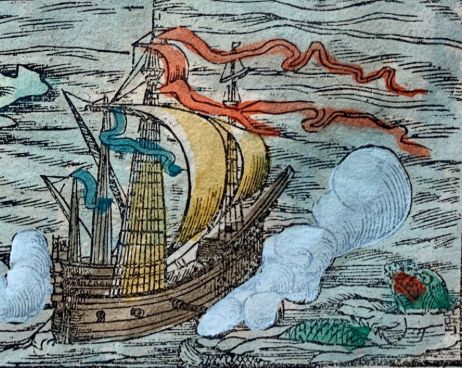
Page 29
Together with Robert, Count of Flanders, they advanced under the leadership of Hugh, brother of Philip, King of France. They chose their route through Italy and embarked for the East. But because winter overtook them, they were obliged to spend the winter in Calabria. Prince Hugh, who was very young, found the waiting long; he wished to depart for Constantinople to make preparations there for the arrival…
Page 29.
Here we see a different type of leader: someone who organises, looks ahead, anticipates and plans. That is why a different route is chosen. Not out of arrogance, but from practical insight and order. At this stage, the arrival of Godfrey of Bouillon is being prepared.
This concerns Robert, Count of Flanders, and Hugh, the young brother of Philip I, King of France. They do not choose a long and uncertain overland route, but the sea route via Italy. When winter overtakes them, they wisely decide to spend the winter in Calabria.
Hugh, young and impatient, finds the waiting difficult. He decides to travel ahead to Constantinople to make preparations for what is to come. Constantinople is the gateway between East and West, the residence of Emperor Alexius, a diplomatic centre and a crucial logistical axis.
Through this preparation, chaos is prevented: the arrival is organised and authority is acknowledged. It concerns the arrival of the great western armies, including Godfrey of Bouillon and his brothers.
Page 30
de ses troupes, l’Empereur Alexius le receu, mais il le regarda comme un disciple pour lui, il le fit mettre aux arets avec toute sa suite. On voiois qui étoit le
conducteur que Dieu avoit destinez Goffroi de Bouillon, à qui l’Empereur Henri peu de tems avant lui avoit donné la base Lorraine, qui étoit du coté du
Brabant pour le defraier dans ce voiage et il avoit vendu la Comté de Bouillionne
Page 30
With his troops, he was received by Emperor Alexios, but the emperor regarded him as a subordinate. He therefore had him and his entire retinue placed under supervision. It then became clear who the leader was whom God had destined: Godfrey of Bouillon, to whom Emperor Henry had, some time earlier, granted the Duchy of Lower Lorraine, which bordered Brabant, enabling him to bear the costs of this journey. He had also sold the County of Bouillon.
Page 30
Hugh, the king’s younger brother, is regarded by Emperor Alexios as a subordinate, and the emperor places him and his retinue under supervision. Emperor Alexios recognised that Godfrey had a divine destiny ➤ nobility and rank ≠ leadership ➤ Godfrey possessed wealth, land and status. He sold his own County of Bouillon for God and for this Crusade = a great personal sacrifice.
Without any safety net. Without any guarantee ➤ That is radical devotion.
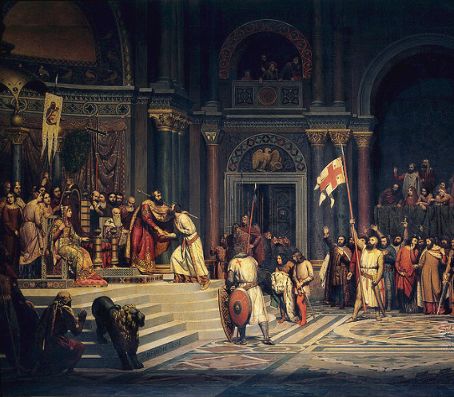
👆🏻The oath of allegiance of Godfrey of Bouillon to the Byzantine Emperor Alexios I Komnenos in Constantinople in 1097, painted by Alexandre Hesse in 1842.
Page 31
Bouillonne à l’Evesque de Lutich et son Duché au Duc de Limbourg, et comme il étoit un homme de grand esprit on lui confia toutes la Noblesse et les plus braves troupes de la France et de la Flandre, ainsi que son armée étoit du nombre de 70000 à pied et 10000 à
cheval, et peu de libertins il passa partout parce qu’il marchoit en bon ordre et pay-
oit tout pour l’argent, il passa la Hongrie et la Bulgarie sans accident jus qu’à la frontière
Page 31
He gave, or transferred, Bouillon to the Bishop of Liège and his duchy to the Duke of Limburg. Because he was a man of great understanding, the entire nobility and the bravest troops of France and Flanders were entrusted to him. His army numbered 70,000 men on foot and 10,000 on horseback. There were only a few unruly men among them. He was able to travel everywhere because he marched in good order and paid for everything with money. In this way, he passed through Hungary and Bulgaria without incident, as far as the border.
Page 31
Here our monk deliberately presents Godfrey of Bouillon as:
• “un homme de grand esprit” → not only courageous, but wise
• someone entrusted with the nobility and the finest troops
• not a brutal warlord, but a force that creates order
This connects seamlessly with the contrast between Godfrey’s army and the earlier People’s Crusades: → chaos → plundering → destruction.
Opposed to this: → order → discipline → safe passage. The great difference is order and payment. Two sentences are crucial here: “il marchoit en bon ordre” and “il payoit tout pour l’argent”. This is not merely a detail, but a moral statement: he does not plunder – he respects foreign territory – he keeps his men under control.
Therefore: “il passa partout” → he is allowed to pass → without conflict and bloodshed. This is exactly the lesson learned from the People’s Crusade. The word libertins here means: • unruly individuals
• undisciplined followers • morally unreliable elements.
The author explicitly writes: “peu de libertins” → Godfrey’s army is purified, selected and controlled.
The numbers, 70,000 + 10,000, present this as a worthy, legitimate and God-fearing army, in contrast with the earlier excesses.
God does not go with the largest crowd, but with the most orderly and faithful. This is precisely the spirit from which the following would later arise:
monastic discipline + knightly obedience + sacred order
➤ from disorder → to dignity
➤ from a mass of people → to leadership
➤ from chaos → to sacred order
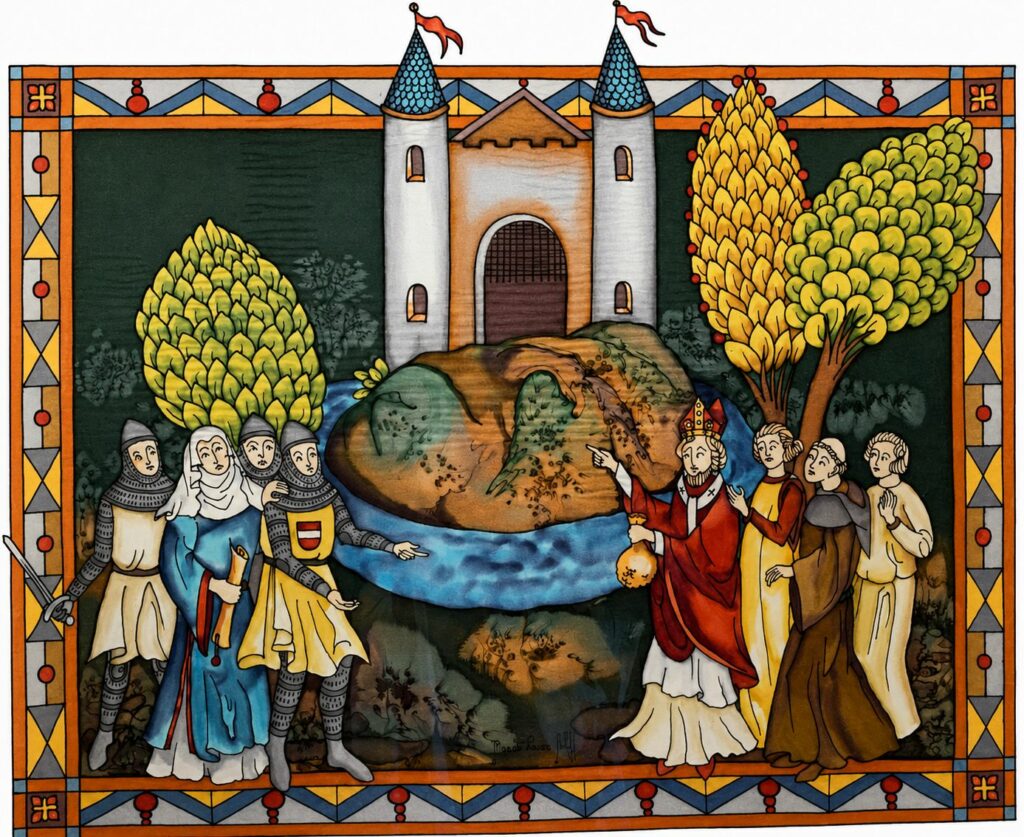
👆🏻Painting depicting the sale of the Fortress of Bouillon to the Bishop of Liège. The painting hangs in the fortress of Bouillon itself.
page 32
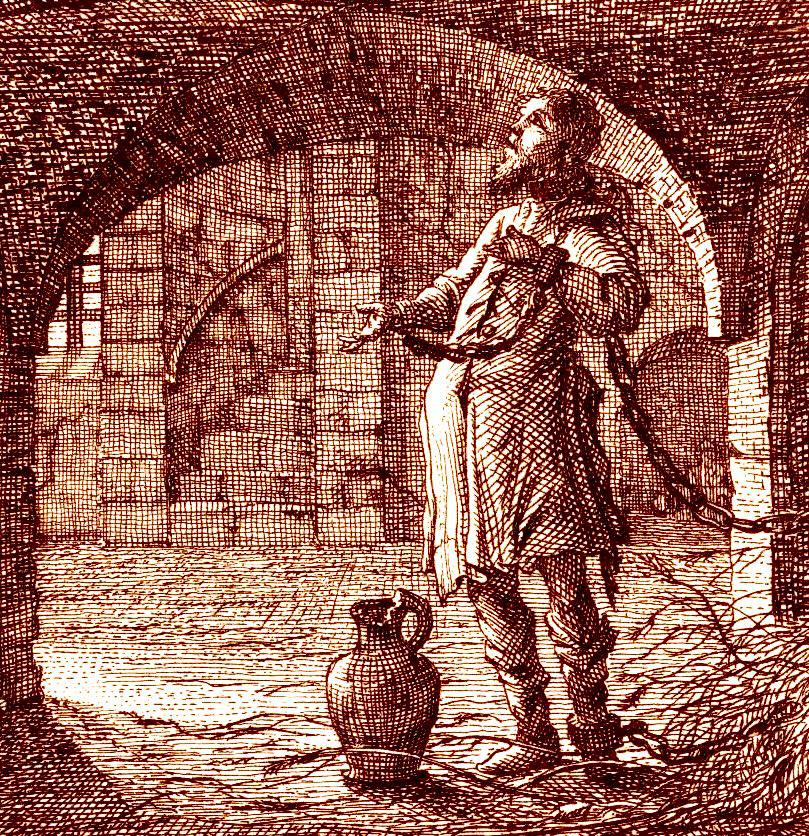
de l’Empereur Grec, c’est là où il apris la triste nouvelle, que le Prince Hugue etoit aux arets, alors il se resolut de piller les fauxbourgs de Constantinoples et de
mettre le siege devant la ville, l’Empereur Allexius se sentant pressé de pres il remis le Prince hugue en liberté.
7ᵉ Convois comandé par Rocmundus Duc de Normandie de Tarento, avec ses Italiens et Normans qui estoit du nombre de 10000 à
Page 32
At the court of the Greek emperor, he received the sorrowful news that Prince Hugh had been imprisoned. He then decided to plunder the suburbs of Constantinople and lay siege to the city. Emperor Alexius, feeling closely threatened, had Prince Hugh set free again.
Seventh column, led by Rocmundus, Duke of Normandy and of Taranto, with his Italians and Normans, who numbered
10,000 …
Page 32
Tensions between West and East: the alliance between the crusaders and Byzantium is fragile. Godfrey hears that Hugh is being held prisoner. (that is the translation, although it is more a matter of being kept under guard) This is interpreted as betrayal, abuse of power and injustice against a Christian prince. Godfrey’s response is threatening: plundering the suburbs and laying siege to Constantinople. That is extreme — this is a Christian city.
Alexius’ pragmatism: Emperor Alexius I Komnenos is portrayed here as astute, politically realistic and willing to avoid conflict when necessary. He senses: “se sentant pressé de près”. → the threat is real → the situation could escalate. His solution is not military but diplomatic: Hugh is released. This is typical Byzantine statesmanship: no concern for honour – no chivalric pride – but stability above all.
Godfrey as guardian of the boundary: he threatens, but does not actually plunder the city. Godfrey protects his people, yet does not cross the sacred boundary → He enforces justice. → without causing irreparable damage. This is Godfrey as he truly is: a just leader, not a reckless warlord.
The “7ᵉ Convois” changes the tone once again: from diplomacy, threats and imperial tension → to military structure, new leaders and clearly defined armies. Rocmundus Duc de Normandie de Tarento is Bohemond of Taranto, son of Robert Guiscard. One of the most experienced military leaders of the crusade. His introduction signifies: the professionalisation of the war – real battles – strategic thinking. Italians + Normans → the Normans of southern Italy → hardened by war.
In one sentence: tension between Christian powers + Godfrey’s moral authority + Byzantine diplomacy + the announcement of Bohemond. Everything is now ready for the true military phase of the crusade.
Page 33
cheval, et 15000 à pied ils partirent par eaux dans le païs de grecs. 8ᵉ Convois par Raimond Comte de Toulouse qui avoit
des troupes de la Lombardie Gascogne, et de la Toulouse avec des Espagnols plus de 100000 hommes et il prit son chemin par la Lombardie et la Dalmatie.
9ᵉ et dernier convoi étoit composé de la Noblesse françoise qui étoit pour la
conduite du Prince Hugue en
Page 33
on horseback, and 15,000 on foot; they departed by water for the land of the Greeks.
Eighth column, under the command of Raymond, Count of Toulouse, who had troops from Lombardy, Gascony and Toulouse,
together with Spaniards — more than
100,000 men. He took his route through Lombardy and Dalmatia. The ninth and final column was composed of the French nobility, who were intended for
the command of Prince Hugh…
Page 33.
From a logistical point of view, the water route was chosen deliberately. The previous journey over land had been catastrophic. Both those on horseback and those on foot travelled by water to Byzantine territory. This was a conscious decision to spread the risks and learn from earlier mistakes: travelling over land had led to catastrophe, hunger and plundering. This is no longer a pious procession, but an organised movement of troops.
Raymond of Toulouse, the southern counterpart, appears here as the leader of the southern European forces – Lombardy, Gascony, Toulouse and Spain – an internationally composed army. Importantly, Raymond was older – experienced – politically influential – deeply religious, but less idealistic than Godfrey. He represents steadfastness and sheer numbers.
The route: Lombardy and Dalmatia → safe, familiar passages → controllable supplies → maritime support. This is the opposite of the People’s Crusade: not impulse, but planning.
The 9ᵉ column: French nobility & Prince Hugh. Very subtle and important: “composé de la Noblesse françoise”. This is not a people’s army, nor a religious multitude, but a concentrated elite.
Their connection to Prince Hugh restores his honour after the earlier incident and makes him visible once again as a leader. But within a collective body of nobles, not as a solitary figure. Hugh is supported by structure, not driven by impulse.
All the columns have now been named. Every region has its leader. Every route has been carefully considered. Every earlier mistake has been corrected.
We now stand on the threshold of: 👉 the First Crusade as an actual military reality.
Page 34
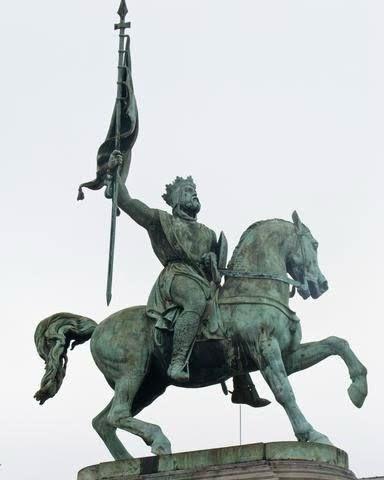
talie en quartier d’hyver qui furent commandé par Robert Duc de Normandie, poursuivirent leur chemin droite à Constantinople, et comme ils y furent arrivé, alors Goffroi fit l’accomodement avec l’Empereur Alexis en lui proposant qu’il n’avoit pas de la canaille
dans ses troupes comme Pierre l’hermite, et que c’étoit tous des braves gens qu’il conduisoit, alors l’Empereur Alexius qui étoit bien embarrassé de voir une si formidable armée de
Page 34
In Italy they took up their winter quarters; they were under the command of Robert, Duke of Normandy. They then continued on their way directly to Constantinople. When they arrived there, Godfrey reached an agreement with Emperor Alexius, pointing out to him that there was no rabble among his troops, as there had been with Peter the Hermit, but that he commanded only brave men. Thereupon Emperor Alexius, who was greatly troubled at the sight of such a formidable army of…
Page 34
Winter quarters = mature warfare. It prevents exhaustion, preserves discipline and demonstrates strategic patience. This is professional leadership, not pious haste.
Godfrey as a diplomat. “Goffroi fit l’accomodement avec l’Empereur Alexis.” Godfrey: chooses negotiation, not coercion; explicitly distinguishes himself from Peter the Hermit; defends the moral quality of his army.
This is rhetoric, but also truth: no unruly crowd, no lawlessness, no religious frenzy → This is order, honour and discipline.
“Pas de la canaille” → Godfrey deliberately distances himself here from: earlier failures; morally derailed crusading expeditions.
In effect, Godfrey is saying: “I do not bring chaos, but responsibility.”
Emperor Alexius is “bien embarrassé”. Not angry. Not hostile. But apprehensive. He sees: an enormous power; well organised; religiously motivated; not controlled by him. That makes this moment historically explosive.
Godfrey is the central figure. He combines: military authority; moral superiority; diplomatic restraint. This is the kind of leadership from which the monastic military order would later emerge: the Knights Templar.
Page 35
devant la porte de la ville, et quie la craignoit bien plus que celle du grand Turc il fit une alliance autant qu’il put avec Goffroi de bouillon et lui promis de lui fournir des provisions de bouche autant qu’il en pourroit fournir afin qu’il arrive heureusement à leur sainte entreprise et de plus qu’il assembleroit une armée et qu’il la conduiroit lui même en personne, et qu’il les iroit rejoindre pour les assister à reprendre les Villes qui sont sous la puissance des Turques
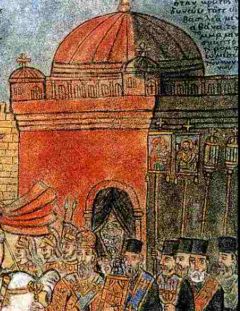
Page 35
Before the gates of the city; and because he feared this power more than that of the Great Turk, he entered, as far as he could, into an alliance with Godfrey of Bouillon and promised to provide him with provisions, as much as he was able to supply, so that he might safely reach their holy undertaking. Moreover, he promised to raise an army, to lead it personally and to join them in order to help them recover the cities that were under the power of the Turks.
Page 35
Emperor Alexius knows the Turks: their Muslim faith; their tactics; their wars; their borders. He sees Godfrey’s army: it is Christian, Western, enormous, extremely disciplined. AND it is standing before his gates. BUT this is not just any army. Not only because of the qualities just mentioned, but also because this army is more of a partner on equal footing, in terms of purpose and devotion: to restore Christian power in territories that had been conquered by the Muslims.
So Emperor Alexius enters into an alliance with Godfrey. He does this through three things:
1. He supplies Godfrey with provisions
→ food = power
→ whoever supplies food, influences
2. He binds him to a shared objective
→ “their holy undertaking”
→ Jerusalem, not Constantinople
3. He promises to take part personally
→ he does not merely send troops
→ he commits his imperial honour
This is diplomacy at the highest level. And why with Godfrey rather than the others? → Godfrey is not a plunderer → He maintains order → He listens → He negotiates → He possesses moral authority. Emperor Alexius sees: if there is anyone I can trust, it is him. But also: if there is anyone I must bind to me, it is him.
That is precisely why Godfrey.
Page 36
qui appartiennent au Royaume me de Jerusalem au benefice de la Croisade mesme il en fit
serment, mais le Comte Raimond de Toulouse ne voulut pas ajouter foi à ce serment c’est pourquoi l’Empereur Alexius tomba de nuit dans son Camp et ruina ses troupes mais les troupes de Raimond
se sont si bien tenu qu’ils ont repousser les grecs.
l’an 1097 l’on fit la premiere entreprise, et c’étoit presque tous des françois, il mit le
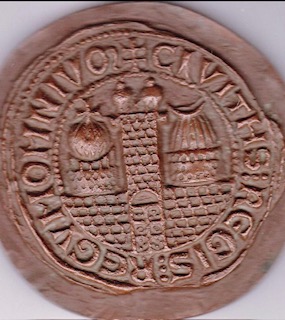
Page 36
They were to belong to the Kingdom of Jerusalem, for the benefit of the Crusade; he even swore an oath to this. But Count Raymond of Toulouse refused to put his trust in this oath. Therefore, Emperor Alexius attacked his camp during the night and scattered his troops. But Raymond’s troops held their ground so well that they drove the Greeks back. In the year 1097, the first undertaking began, and almost all of them were French; he placed the…
page 36
The Crusader leaders – Godfrey, Bohemond of Taranto, Robert of Normandy, Stephen of Blois and Raymond of Toulouse – were required to swear an oath to Emperor Alexius that, if territories were reconquered which had formerly belonged to Byzantium, these would be returned to Byzantine rule. This applied, for example, to Nicaea, cities in Asia Minor and former Byzantine provinces. Raymond of Toulouse took the oath only partially and with reservations. He distrusted Alexius.
Emperor Alexius carried out a night attack on Raymond’s camp in order to put pressure on him. It was a show of power and a warning. But Raymond remained disciplined, did not allow the situation to escalate, kept his forces in good order and drove the Greeks back.
Here we clearly see the tension between: * East and West * Rome and Byzantium * Oath and conscience * Order and political manipulation
What we learn: Not every Christian power acts justly, and not every refusal is disobedience.
Page 37
Siège devant Nicée, Ville Capitale des Turcs qui est en Bithanie, c’est là où la plus grande partie de l’armée s’assembla, et elle étoit du nombre de 60000 hommes à pied, et 10000 à cheval, s’en
compter femmes et enfants et voleurs, coquins, prêtres et valets. Cette Ville se défendit vigoureu-
sement pendant 52 jours, l’Empereur Soliment junior y voulut aussi mettre une garnison de 40000 hommes mais il fut repoussé avec…

Page 37
The siege of Nicaea, capital of the Turks, situated in Bithynia. There the greater part of the army assembled, numbering about 60,000 men on foot and 10,000 on horseback, not counting women and children, thieves, rogues, priests and servants. The city defended itself vigorously for 52 days. Emperor Soliman the Younger also wished to bring a garrison of 40,000 men into the city, but he was driven back with…
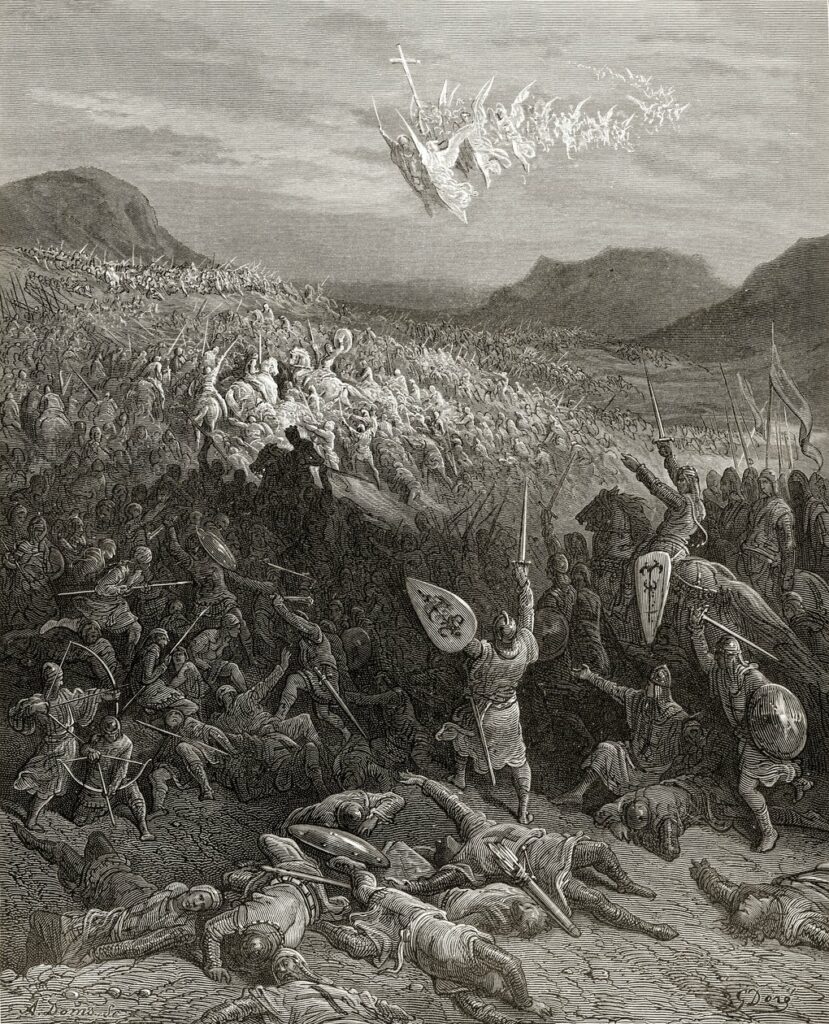
👆🏻 Battle of Nicaea 1097, The siege lasted 52 days, from May to June 1097
Page 37
Nicaea – present-day İznik – marks the true beginning of the First Crusade. Nicaea was the capital of the Seljuk Turks. It had been lost to the Turks since 1081. For Emperor Alexius, the city was therefore of symbolic, strategic and existential importance. Nicaea was the first major joint operation between Byzantium and the Western Crusaders: Emperor Alexius together with Godfrey and the other leaders. The army consisted of 60,000 foot soldiers and 10,000 horsemen.
The siege lasted 52 days, from May to June 1097 – approximately seven weeks. Nicaea had strong walls, lay beside a lake and could be supplied by water. This is why the city was able to hold out for so long. Sultan Kilij Arslan attempted to relieve Nicaea and bring in reinforcements, but failed and was driven back.
This was the first major victory of the First Crusade.
Page 38
Vaincus par plusieurs reprises et il perdit d’une attaque 4000 hommes, donc l’on jetta les têtes de ces Barbares dans la Ville pour effraier les habitans, après avoir fait breche la Ville se rendit, et toute la garnison, mais l’épouse de
Soliman et ses enfants furent mis en discretion non pas aux françois, mais à l’Empereur Alexius qui s’i avoit trouvé en personne. Après la prise de la Ville de…
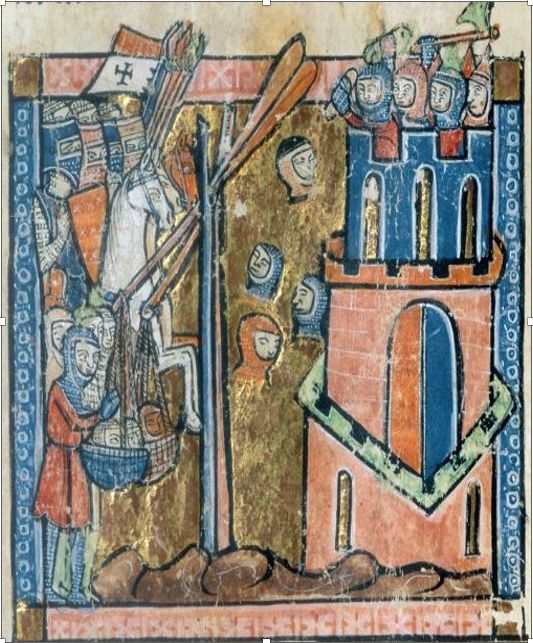
Page 38.
Defeated several times, he lost 4,000 men in an attack. Therefore, the heads of these barbarians were thrown into the city in order to frighten the inhabitants. After a breach had been made, the city surrendered, as did the entire garrison. But Soliman’s wife and his children were placed under the protection — not of the French, but of Emperor Alexius, who was personally present there. After the capture of the city of…
✠ The Siege of Nicaea in 1097 was the first major joint military operation of the First Crusade ✠
✠ This siege is explained under Battles in the History section ✠
Page 38.
An important point on this page: Soliman’s family was placed under the protection of Emperor Alexius ➤ Nicaea was conquered through a joint military effort, but Emperor Alexius personally ensured, through agreements made behind closed doors, that the city passed into Byzantine hands — something that was perceived in Western Europe as a profound breach of trust ➤ the French were excluded, which was enough to justify their distrust.
Raymond of Toulouse sees his distrust confirmed.
Page 39
Nisée ils continuèrent leur route du côté de la Syrie, mais comme l’armée étoit trop grande ils furent obligé de se séparer en deux Corps d’armée, l’un commandé Goffroi et l’autre Boemundus qui soutenoient la droite et l’autre la gauche en chemin Boemund dus fut attaqué des turcs, dans la vallée de Gorgonie et comme les turcs étoient plus puissant en Cavaleries que l’armée de la Croisade ils
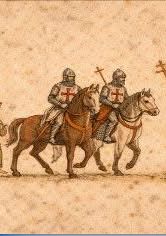
Page 39.
After Nicaea, they continued on their way towards Syria. But because the army was too large, they were forced to divide into two army corps: one under the command of Godfrey, the other under Bohemond, with one keeping to the right side of the march and the other to the left. Along the way, Bohemond was attacked by the Turks in the valley of Gorgonie. And since the Turks were stronger in cavalry than the army of the Crusade, they…
Page 39.
Nisée = Nicaea (old spelling)
Boemundus = Bohemond of Taranto
Gorgonie = Dorylaeum (an outdated/confused name in this manuscript)
Nicaea is behind them. The alliance with Emperor Alexius comes to an end; he returns. The crusaders continue independently, towards Syria, towards Jerusalem.
The army divides because of its great size. This is a military necessity: necessity and order. One force is under the leadership of Godfrey: organising, supportive and stabilising. The other is under the leadership of Bohemond: offensive, militarily astute and accustomed to fighting the Turks. Bohemond goes ahead and is attacked by the Turks/Seljuks, with their fast cavalry, encirclement, hit-and-run tactics and skill.
Page 40
les mirent en peine, mais Gottfroi apris cette nouvelle vint au secours avec son aile droite, ils ont repousser les turcs à leurs désavantage, car ils ont quitté et abandonné
leur camp, cependant il y resta des franconiens 3000 hommes sur la place, ce combat fit un très grand effet, car toutes les
petites Villes se sont rendues et même la Ville d’Antioche qui ne fit aucune resistance, c’est là que Gottfroi s’a trouvé dans un grand danger, en
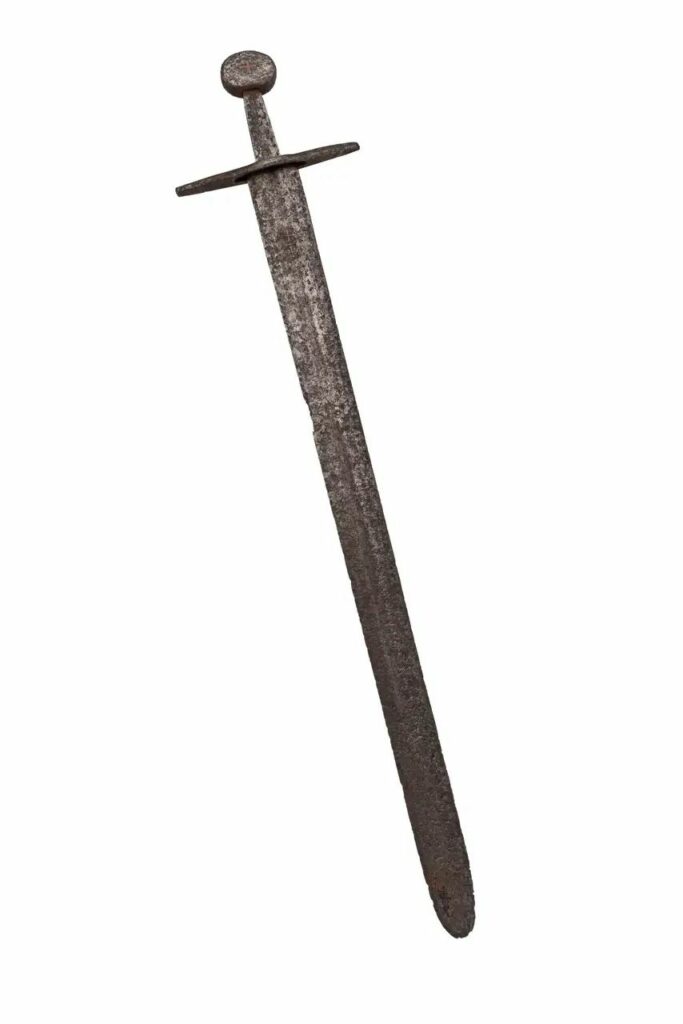
Page 40
They brought them into great distress, but Godfrey, having heard this news, came to their aid with his right wing. They drove the Turks back, to their disadvantage, for they abandoned and left their camp behind. Nevertheless, 3,000 Franks remained on the spot.This battle had a very great effect, for all the smaller towns surrendered, and even the city of Antioch offered no resistance. There Godfrey found himself in great danger, in…
Page 40
They brought them into great distress, but Godfrey, having heard this news, came to their aid with his right wing. They drove the Turks back, to their disadvantage, for they abandoned and left their camp behind. Nevertheless, 3,000 Franks remained on the spot.This battle had a very great effect, for all the smaller towns surrendered, and even the city of Antioch offered no resistance.
There Godfrey found himself in great danger, in…
Page 41
passant dans un bois seul il vit un Soldat, qui voulut couper du bois fut attaqué d’un
Ours il voulut le secourir, quand l’Ours le vit venir se jetta sur lui, et l’aracha enbas du Cheval: mais par bonheur il put encor se servir de son Sabre il en donna un si grand coup à la tête qu’il la clefa à mort. Alors il se
tira d’embaras, mais ce fut en tombant qu’il se fit une blessure mortelle, cependant
Beaudoin son frere s’avança,
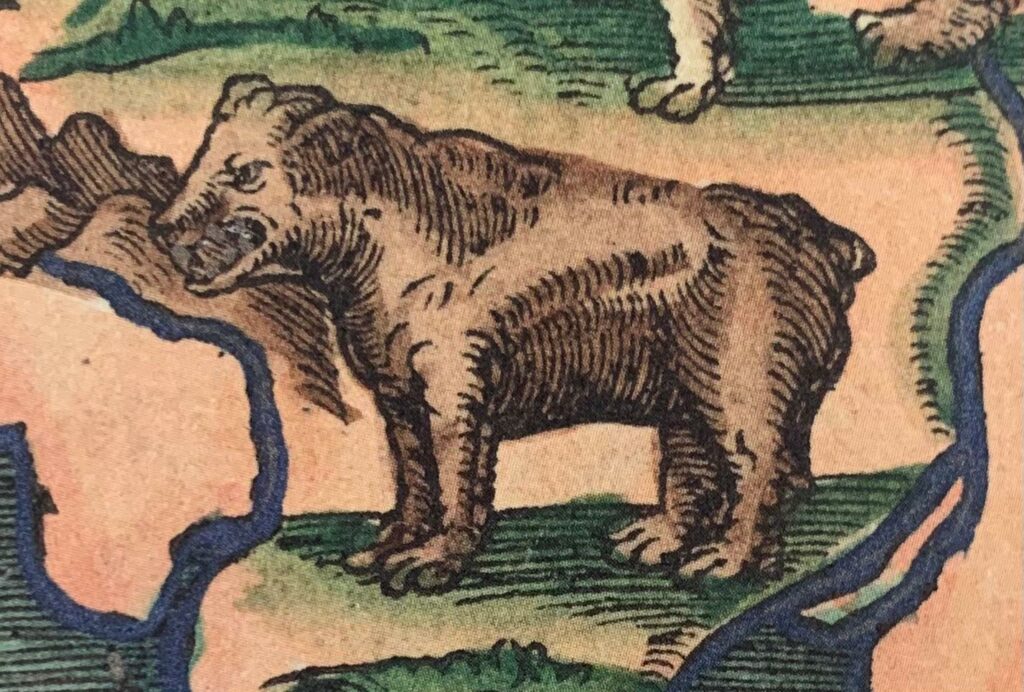
Page 41
While travelling alone through a forest, he saw a soldier who wanted to cut wood and was attacked by a bear. He wanted to rush to his aid, but when the bear saw him approaching, it threw itself upon him and tore him from his horse. Fortunately, he was still able to use his sabre. He struck the bear so hard on the head that he dealt it a fatal blow. In this way he managed to free himself from danger, but in the fall he himself suffered a fatal injury. Meanwhile, his brother Baldwin advanced…
Page 41
Godfrey of Bouillon travels alone through a forest. Not as a commander, not surrounded by his knights, but simply as a man. There he sees a soldier who wants to cut wood and is suddenly attacked by a bear. Godfrey does not hesitate. He wants to rush to the soldier’s aid. But as soon as the bear sees him approaching, the danger turns upon Godfrey himself. The animal throws itself at him and tears him from his horse.
Yet Godfrey prevails. Even on the ground he manages to use his sabre. With one decisive blow, he mortally wounds the bear. In the fall, Godfrey himself is mortally injured. He escapes the immediate danger, but his body pays the price for what his soul and sense of duty compelled him to do. True leadership protects others, but does not spare itself.
At that moment his brother, Baldwin of Boulogne — the future King of Jerusalem — appears.
Page 42
toujours avec ses troupes et s’attira de la gloire par ses victoires, il conquit le grand
Duché d’Essa, qui est d’une si grande renommée; il le garda pour lui, parce qu’il
est de la dépendance de la Mesopotamie, et se nomma Orsa.
Alors on fit le siege d’Antioche, qui est la Capitale de Sirie, mais par malheur le Duc Gottfroi et le Comte Raimon de Toulouse devins malade et l’armée des chretiens
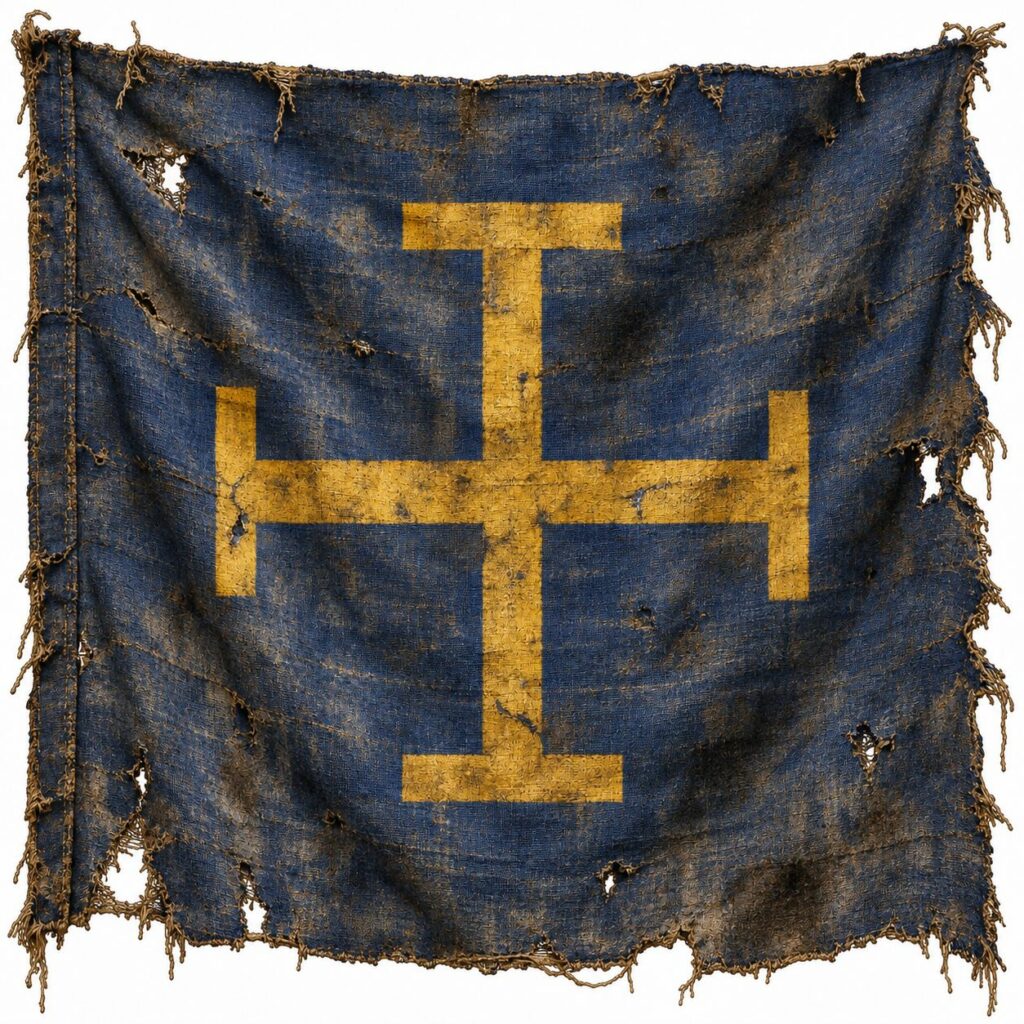
Page 42
still with his troops, he won renown through his victories. He conquered the great Duchy of Edessa, which was widely renowned. He kept it for himself because it lay within Mesopotamia,
and called himself Orsa.
Then the siege of Antioch began, the capital of Syria. But unfortunately Duke Godfrey and Count
Raymond of Toulouse fell ill, and the army of the Christians…
Page 42
After the rescue in the forest and the wound that leaves Godfrey weakened, the focus of the story shifts decisively. The writer now follows Baldwin of Boulogne, who continues to advance with his troops and earns a name for himself through victories. Not as a deputy, but as an independent leader.
His greatest achievement in this phase is the conquest of Edessa. The author calls it a “great duchy”, renowned and strategically situated. Baldwin’s decision to keep the territory for himself is not condemned but explained: Edessa lies on the edge of Mesopotamia, far outside the core route of the crusade towards Jerusalem. It is not a breakaway born of ambition, but a deliberate establishment of Christian power in a vulnerable frontier region.
Thus Baldwin becomes count — Orsa — and the first Crusader state comes into being. For the first time, the crusade takes on a lasting political form.
The story then returns to the shared objective: the siege of Antioch, capital of Syria and one of the greatest obstacles on the road to Jerusalem. But it is precisely there that misfortune strikes. Both Godfrey of Bouillon and Raymond of Toulouse fall ill.
Page 43
a été diminué, tant par les garnisons et par la désertion et maladie, et ceux que l’on avoit perdu dans les Batailles qu’elle n’étoit plus que de 30000 hommes à pied, et de 1000 hommes à cheval, et Antioche étoit une des plus forte Ville de l’orient et elle avoit une armée entiere pour garnison, les provisions commencerent à manquer dans notre armée, la maladie et la famine commença a y regner si la permission de Dieu
Page 43
had been so greatly reduced, both by the
garrisons that had had to be left behind, by desertion and illness, and by those who had been lost in battle, that the army now consisted of only 30,000 foot soldiers and 1,000 horsemen. Antioch, moreover, was one of the strongest cities of the East and had an entire army as its garrison. Supplies in our army began to run out, and illness and famine began to prevail,
if the permission of God
Page 43
The Christian army, once massive and impressive, has slowly been worn down — not only by battle, but by the need to leave garrisons behind, by illness, desertion and exhaustion. What remains is a core force: substantial, but vulnerable.
Facing that shrinking fighting force stands Antioch, one of the most strongly fortified cities of the East, with a full garrison and abundant defences. The contrast is stark: outside the walls hunger increases, while within the walls strength prevails.
Hunger and illness are presented not only as logistical problems, but as a trial. The sentence breaks off at “si la permission de Dieu…” — a classic moment in 17th-century historiography. What follows will depend not only on weapons, but on divine permission.
Page 44
Il n’étoit pas survenue deux flottes une de Pise et l’autre de Venise, et de Gênes qui ont
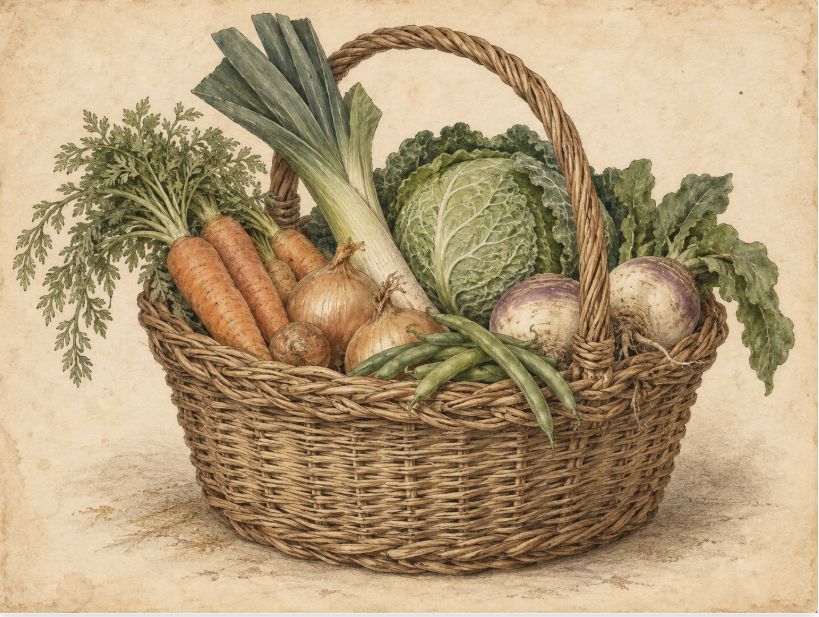
amenés des provisions. Pierre l’hermite, qui étoit l’auteur de la guerre voyant qu’il n’avoit plus rien que des légumes lui qui étoit
accoutumé de jeûner dans son Ermitage voulut quitter l’armée et s’en retourner si la Noblesse ne l’avoit retenuë; comme les troupes alloient à la provision sur les
bateaux les turcs firent
Page 44
If two fleets had not arrived, one from Pisa and the other from Venice and Genoa, bringing provisions. Peter the Hermit, who was the one who had set the war in motion, saw that he had nothing left but vegetables. Although he was accustomed to fasting during his life as a hermit, he wanted to leave the army and return, had the nobility not prevented him. While the troops went to the ships to collect provisions, the Turks…
Page 44
The Christian army at Antioch stands on the brink of collapse. Not for lack of courage, but for lack of food. Only the arrival of two maritime lifelines — from Pisa, Venice and Genoa — prevents disaster. This is no coincidence, but a quiet acknowledgement: without logistics, there is no holy war.
Peter the Hermit is once again called “the one who set the war in motion” — not as a title of honour, but as a statement of fact. And it is precisely he, the man accustomed to fasting and solitude, who reaches his limit. Vegetables are not the problem for him; he is used to deprivation. But an army cannot live like a hermit.
Peter wants to leave. Back to his hermitage. Away from the chaos he himself helped to unleash. An important moral moment: the nobility holds him back. Not because he is militarily indispensable — he is not — but because one can no longer flee from responsibility. The one who lights the fire may not walk away when it is burning.
At the same time, the threat is already pressing in again: while the troops search for food near the castles, the Turks react. Hunger forces movement, and movement provokes a counterattack.
Page 45
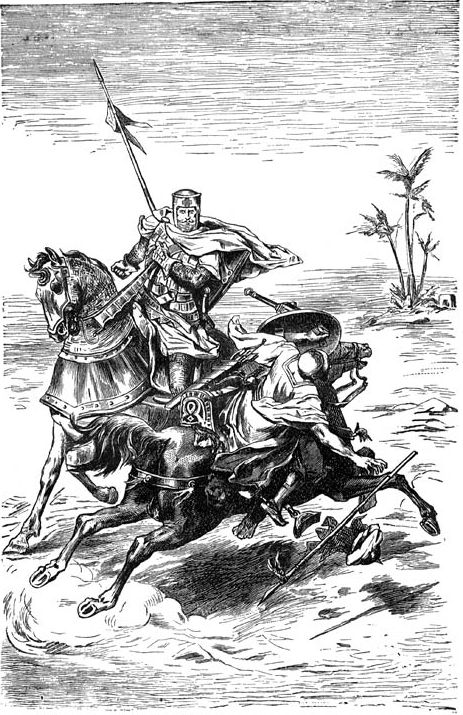
des sortis, mais ils furent repousse, il arriva qu’un turc fort grand et puissant se lança jusqu’au bout de l’armée, mais Gottfroi fit voir par cette occasion aux yeux de toute l’armée sa valeur; il
tira son sabre et coupa ce turc en deux morceaux, depuis l’épaule jusqu’à la hanche le Siege a duré 7. mois, et un chacun se désesperoit par rapport que le Sultan de Perse
étoit venu au secour de la ville avec une armée de 650000 h.
Page 45
a sortie, but they were driven back. Then it happened that a Turk, large and powerful, made his way as far as the edge of the army. But Godfrey showed his courage on this occasion before the eyes of the entire army: he drew his sabre and cut this Turk into two pieces, from the shoulder down to the hip. The siege lasted seven months, and everyone began to despair, because the Sultan of Persia had come to the aid of the city with an army of 650,000 men.
Page 45
After months of hunger, illness and exhaustion, the siege of Antioch enters a decisive phase. The defenders make sorties, desperate attempts to break the siege. The Crusaders repel them, but the tension rises when a huge Turkish warrior ventures deep into the lines.
At that moment Godfrey of Bouillon steps forward. Not as a commander watching from a distance, but as the physical protector of the order. Before the eyes of the entire army, he draws his sabre and fells the attacker with one devastating blow — from shoulder to hip.
The scene is clearly exemplary. This is not an account of a duel for the sake of the duel, but a moral anchor point: at the moment when the army threatens to break, Godfrey shows what steadfastness means. His deed is meant to be seen.
Yet the threat immediately returns. The siege drags on — seven months — and despair grows when news arrives that the “Sultan of Persia” is on his way with an enormous army to relieve Antioch. The writer magnifies the numbers to heighten the effect: this is the moment when everything seems lost.
Page 46
mais Dieu assista la Chrétienté et inspira un capitaine de la Ville qui avoit été de la religion et de plus il étoit grande amis de Boëmondus
Duc de Tarento Commandant dans une tour au dessus d’une porte de la Ville, et lui donna avis
de la faire monter dans la tour par des cordages faites en echelle, il y monta lui et ses troupes la nuit, là où il ouvrit la porte de la Ville, et donna par là aisance, à l’armée d’y pouvoir entré; l’on ne sauroit…
Page 46
But God came to the aid of Christendom and inspired a captain of the city, who had embraced the faith and was a good friend of Bohemond, Duke of Taranto. This captain commanded a tower above one of the city gates and informed Bohemond that he could climb the tower by means of ropes fashioned like a ladder. Bohemond climbed up during the night with his troops. There he opened the city gate and thus gave the army the opportunity to enter the city; one would never…
Page 46
When all seems lost — when hunger, disease and exhaustion threaten to break the Christian army — the tide is turned not by force, but by intervention from above.
God Himself comes to the aid of the Christians. Not through a miracle in the heavens, but by touching the heart and mind of a man within the walls of Antioch. He is a captain of the city, himself a Christian, and also a good friend of Bohemond, Duke of Taranto. This man commands a tower overlooking one of the city gates — a position of great importance.
In secret, he lets Bohemond know what is possible. The tower can be climbed at night, not through the gate, but by means of ropes fixed like ladders. The plan is simple, but dangerous. And it is precisely in this that the writer sees God’s guidance.
That same night, Bohemond climbs the tower together with his men. In the darkness, they open the gate of Antioch. What had seemed impossible for months happens in a single moment: the city lies open. Through this opening, the exhausted army finally gains access to the city.
It is the moment when despair turns into hope, and when it becomes clear that — despite everything — God has not relinquished His guidance.
Page 47
Croire le carnage et la barbarie que les Chretiens firent dans cette Ville, c’est là où ils firent voir leur brutalité, mais ils furent puni de Dieu, peu de temps apres, car ils netoient pas encor posté, ny ils navoient pas pris encor possession du chateau qu’un General de Perse nommé Corbogathe vient avec son armée, et il investit la Ville aussi fortement qu’eux, et quand ils ont assiegé les turcs, c’est là qu’ils furent bien embarassé, car ils n’avoient plus de provisions
Page 47
One can scarcely imagine the bloodshed and barbarity that the Christians committed in this city. In this, they revealed their cruelty. But shortly afterwards they were punished by God, for they had not yet properly taken up their positions, nor had they taken possession of the citadel, when a Persian general named Corbogathe arrived with his army. He surrounded the city just as effectively as they themselves had done before. And now that they had the Turks under siege, they themselves found themselves in serious trouble, for they had no provisions left.
Page 47
The capture of Antioch is not a triumph, but a warning. The Christians carry out a bloodbath. They reveal their unrestrained cruelty and lose themselves in violence. This is not a heroic moment, but a derailment. Where there had previously been talk of divine guidance, there is now moral disapproval.
Retribution is not long in coming. Before the Christians have even been able to establish themselves, before they have taken the citadel and truly secured possession of the city, disaster strikes. From Persia a new enemy appears: Kerbogha of Mosul, here referred to as Corbogathe. With his army, he surrounds Antioch with the same determination with which the Christians themselves had besieged it.
The roles are reversed. Those who had just been the besiegers now find themselves trapped. And then it becomes clear just how fragile their victory is. The city has been conquered, but not secured. The supplies are gone. Hunger and fear return, this time from within.
It becomes clear that victory without restraint, without self-control and without humility turns against the victor. Antioch once again becomes a place of trial — not through walls or weapons, but through deprivation, guilt and divine chastisement.
Page 48
tous etoient consumée, l’on s’a tendoit a une famine aussi grande que celle de jerusalem, ils contoient tous d’être perdu, mais par bonheur que l’Empereur alexeius en recu des nouvelles, il se mit en chemin pour les secourir avec une armée de 40000 hommes, mais aussitôt qu’il aprit qu’ils etoient tenue de près, et qu’ils n’avoient plus de vivre cette triste nouvelle le fit retourner a Constantinople… A la fin
Page 48
Everything had been consumed, and they expected a famine as severe as the one in Jerusalem. They all believed they were lost. Fortunately, Emperor Alexios received news of their situation and set out to come to their aid with an army of 40,000 men. But as soon as he learned that they were being hard pressed and had no provisions left, this grim news caused him to turn back to Constantinople. …..At last
Page 48
The situation inside Antioch has now reached its lowest point. The victory has been consumed. The supplies are exhausted. The men are worn out to the bone. In the camp there is a growing conviction that the end is near — a famine as severe as that of Jerusalem seems unavoidable. No one expects rescue any longer; they consider themselves lost.
Then a small spark of hope appears from outside. Alexios I Komnenos, Emperor of Constantinople, receives reports of the army’s desperate situation. He decides to come to their aid and advances with an army of forty thousand men. For a brief moment, it seems as though the promise he made earlier may yet be fulfilled. But that hope is short-lived.
When Alexios learns just how desperate the situation really is — that the city is completely surrounded and that no food remains — doubt sets in. The news breaks his resolve. Instead of pressing on, the emperor turns back and withdraws to Constantinople.
For the Christians in Antioch, this is another severe blow. Not only are they surrounded and starving, but now the help they had expected is slipping away from them as well. The city becomes a trap, and the rescue they had hoped for disappears beyond the horizon.
In Alexios I Komnenos, politics, self-interest and faith are intertwined, but the heart of the matter is strategic.
Why Alexios set out in the first place:
Alexios had several reasons at the same time:
1. Imperial self-interest — the main reason
Antioch formally lay within the Byzantine sphere of influence.
Alexios had made agreements with the crusaders:
👉🏻 cities recaptured from the Turks were, in principle, to be returned to the Empire.
If Antioch fell, he needed to be present in order to reinforce that claim — especially against Bohemond.
2. Control over the crusaders
An independent and successful Latin army in Syria was dangerous to him.
His presence meant:
* supervision
* balance of power
* preventing someone — Bohemond! — from keeping Antioch for himself.
3. Alliance, not charity
He did not see himself as the “rescuer of Western knights,” but rather as:
* an ally for as long as it served his interests
* an emperor who wanted to regain his lost territories without having to do the dirty work himself.
4. Religion played a role — but a secondary one
Alexios was a Christian and felt responsible for the East, but his faith followed politics, not the other way around.
Why he turned back:
And here it becomes painfully clear. When he heard:
In summary: Alexios set out because of self-interest, in order to preserve his power, and to prevent Antioch from falling into Bohemond’s hands. He turned back because the military risk had become too great and the potential reward uncertain.
Page 49
il s’éleva deux Ermites de Marsal nommé Etienne et Pierre qui ont representé aux peuples qu’ils ont eu une revelation de Dieu qui prometoit la victoire aux chretiens pourvu qu’ils
fassent penitence. Pour certifier la prediction Pierre dit allors aux peuples allé dans l’église de St Pierre, et ils leurs montra l’endroit, et ils leurs dit Creuses, et vous trouverez ici la lance dont le Sacré côté de Jesus Christ à été ouvert,
Comme de vrai, ils ont trouvé
Page 49
Then two hermits from Marsal, named Étienne and Pierre, came forward. They told the people that they had received a revelation from God, in which He promised victory to the Christians, provided that they did penance. To confirm this prophecy, Pierre told the people that they should go to the Church of Saint Peter. There he pointed out a place to them and said: “Dig here, and you will find the lance with which the sacred side of Jesus Christ was opened.” And indeed, they found…
Page 49
When all human hope has been exhausted, another form of salvation appears — or at least, that is how it is presented. From among the army, two hermits come forward, originating from Marseille: Étienne and Pierre. They declare that God has spoken to them. In their vision, He promises victory to the Christians, but not without condition. Salvation will come only if the army does penance and repents.
The message takes hold. In a camp that is starving, surrounded, and feels abandoned by both man and emperor, it sounds like the last anchor. To lend greater force to his words, Pierre — historically known as Peter Bartholomew — steps forward even further. He leads the people to the Church of Saint Peter and points out a place there. Here, he says, they must dig. At this spot, the lance was said to be hidden — the lance with which Christ’s side was pierced on the cross.
And so — they find it. A divine confirmation.
The timing is almost too perfect. The need is too great. The promise is too precisely tailored to what the men require in order to keep fighting. But that tension does not yet exist within their worldview. In this world, faith is not the opposite of reality, but its driving force.
Antioch thus becomes not only a military battlefield, but a spiritual arena as well. The struggle shifts from walls and swords to guilt, penance and signs. The lance gives the army a new direction and the courage to hold out.
Page 50
une pièce de fer en façon de lance, cette prediction donna du courage à toute l’armée chrétienne, qu’ils se resolurent de faire une seconde sortie, quoi que l’armée étoit tres foible, car l’on n’étoit plus que
13’000 hommes, et que l’on n’avoit presque plus de Chevaux, mais comme il n’y avoit plus de remede, et qu’il falloit vaincre ou mourir, la chaleur étoit fort grande, et le combat fort long, et entre autre Boë-
mundus
Page 50
a piece of iron in the shape of a lance. This prediction gave the entire Christian army courage, so that they decided to make a second sortie, although the army was very weakened, for there were only 13,000 men left and they had almost no horses remaining.
But since there was no other way out and they had to conquer or die, the heat was very intense and the battle lasted a very long time. And among others Bohemundus…
Page 50
The lance — not as a relic, but as a sign — does what no supplies, no emperor and no strategy can any longer achieve. In the end, it is merely a piece of iron in the shape of a lance. Yet that is enough. The prediction associated with it restores the morale of the army. The Christians regain their determination and make a decision that can hardly be defended rationally: they will leave the city once more and enter into battle.
Their condition is wretched. The army has dwindled to around fifteen thousand men. There are hardly any horses left. The exhaustion is total. But precisely because there is no longer any way out, only one choice remains: win or die. In the scorching heat, a battle breaks out that lasts a long time and demands everything the men still have left in them. The writer does not emphasize tactics, but determination — the moment when despair turns into action. The lance has defeated no enemy, but it has defeated fear.
At the end of the page, a familiar name appears once again: Bohemund of Taranto. The text prepares us for individual acts of courage within this collective struggle of exhaustion. The victory — if it comes — will not be attributed to numbers or strength, but to perseverance, faith and the ability to keep fighting when everything seems lost.
Page 51
étoit dans une grande misere, par rapport que les turcs ont mis le feu dans l’herbe qui étoit seche, à l’endroit où les chretiens étoient campé, et les vents leurs chassant le feu et la fumée dans les yeux qui les aveuglois, mais par après Dieu changea la Victoire à l’avantage des chrétiens, et ils donnerent aux
Persiens et à leur General Corbogath, qui étoit sur une montagne pour regarder le combat; mais cette attaque étoit si forte
Page 51
Bohemundus was in great distress, because the Turks had set the dry grass on fire in the place where the Christians were encamped. The wind drove the fire and smoke into their eyes, blinding them.
But afterwards God turned the victory to the advantage of the Christians and they attacked the Persians and their general Corbogath, who was on a mountain to watch the battle. But this attack was so fierce…
Page 51
The Christians are struck not only by the enemy, but also by the circumstances. The Turks set the dry grass around the camp on fire. The wind does the rest: fire and smoke are blown straight into the Christians’ eyes, leaving them barely able to see. Confusion, suffocating smoke and fear dominate the beginning of the battle.
God turns the course of the battle. What began in chaos turns into determination and strength.
The Christians press forward and inflict heavy losses on the Persians and their commander Kerbogha of Mosul. He stands on a height and surveys the battle from above — a position that normally symbolizes power and control, but here instead emphasizes distance and powerlessness. The Christians’ attack is so fierce that even this superior position no longer offers safety. The smoke that first blinds them becomes the backdrop to a reversal.