


~Ascension Day, or “The Ascension of the Lord,” in Latin: Ascensio Domini, is part of the entire Easter celebration.
After Easter, everyone is in a kind of shock. What has happened here? What does this all mean? There is still sorrow over the death on the Cross, there is confusion — all of this is unknown and unfamiliar, and therefore there is also fear of the unknown.
The period leading up to Ascension is a preparation toward this moment: “Now you (and therefore we) must continue.” That is why Jesus appears several more times after the encounter with the disciples on the road to Emmaus.
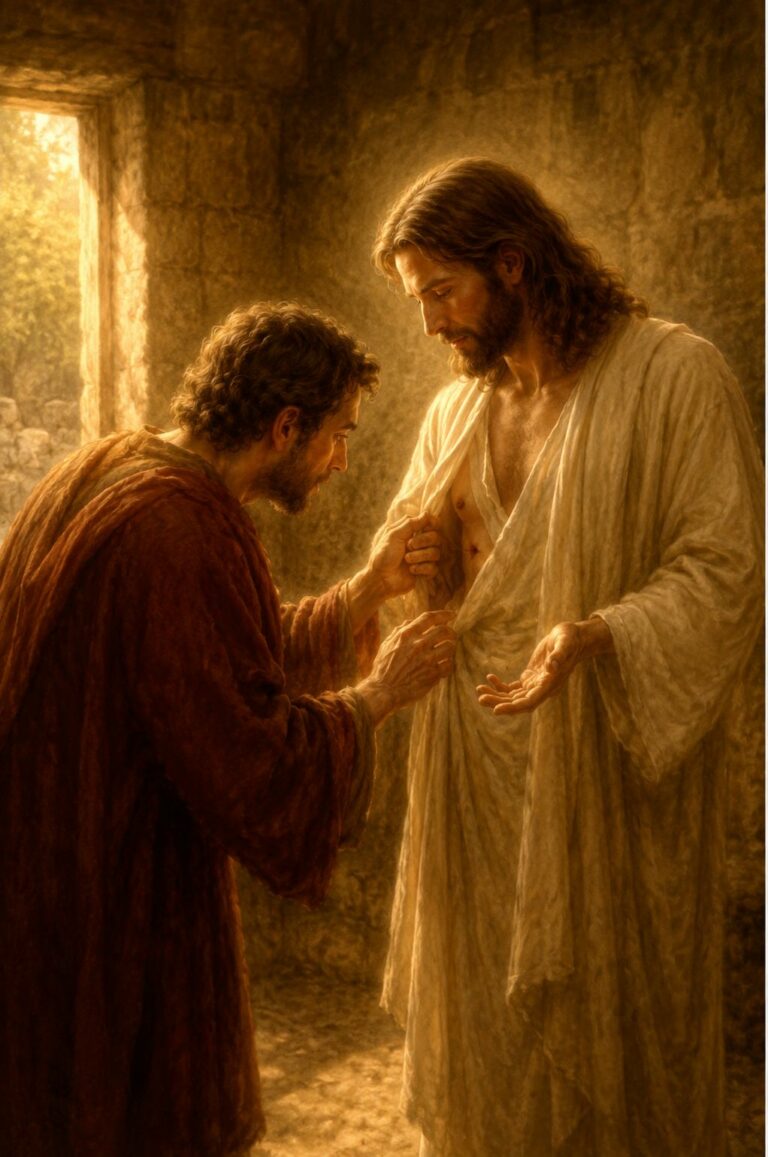
There is the meeting with His disciples in a closed room. The disciples are still afraid and confused. Then Jesus suddenly stands among them and says: “Peace be with you.”
That is not just a simple phrase or an ordinary “good day everyone.” The Biblical meaning of peace is much deeper: wholeness, restoration, reconciliation, safety — but also: BEING UNITED WITH GOD AND WITH ONE ANOTHER.
So the very first thing Jesus does after betrayal, fear, fleeing, and crucifixion is not: “Where were you?” or “You abandoned Me.” He comes with peace. Precisely that continues to live on through the Eucharist.
That is why the priest says: “The peace of the Lord be with you always.” And afterward: “Let us offer each other a sign of peace.” This refers directly to this moment. The exchange of peace in the Mass is therefore not merely a friendly social interruption. It points directly toward:
• the risen Christ,
• reconciliation,
• communion,
• and the gathering of people back to God.
The sign of peace during Mass is therefore much more than a kind gesture. It reminds us that fear, division, and sorrow do not have the final word. First comes peace. First comes reconciliation. Only afterward follows the shared meal of the Eucharist. After saying: “Peace be with you,” Jesus shows His wounds. Because Thomas was not present and did not believe (from this comes the expression “Doubting Thomas” 💡), Jesus appears once more — especially for him. 👉🏻 Here fear slowly changes into faith.
Another encounter takes place at the Sea of Tiberias.
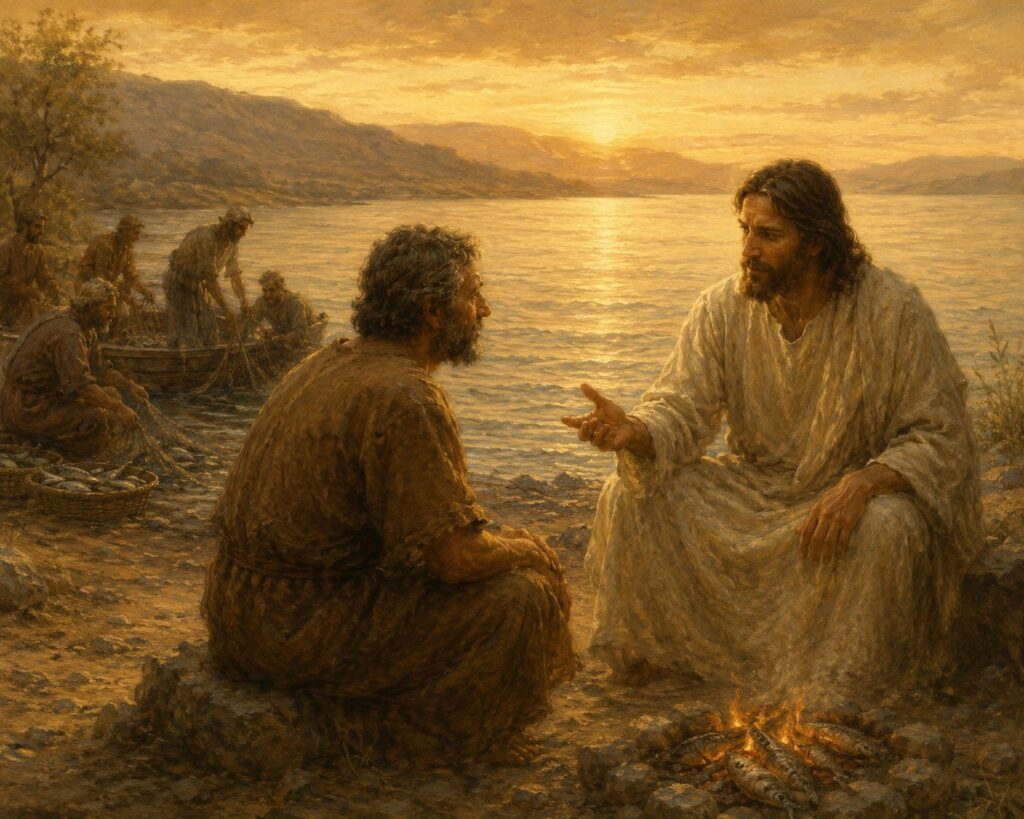
Another encounter takes place at the Sea of Tiberias. Several disciples return to fishing. But there are no fish in their nets; they catch nothing. Then, at sunrise, a man stands on the shore, though they do not recognize Him. Suddenly their nets are filled with fish. Afterward they share bread and fish together beside a fire. Then comes the famous moment in which Jesus asks Peter three times:
“Peter, do you love Me?” This is important because Peter had earlier denied Jesus three times beside the fire on the night of Good Friday. 👉🏻 Here Peter is not humiliated … but restored.
After each answer Jesus says: “Feed My sheep.” Love for Christ therefore remains not merely a feeling or a promise. It becomes connected to caring for others, faithfulness, and responsibility.
After this, Jesus speaks about the path Peter will still walk. Not an easy road, but a life in which he will ultimately remain faithful until the end. And then He says once more: “Follow Me.” The very same words with which everything once began.
When Peter then looks at another disciple and asks: “And what about him?” Jesus essentially answers: “That is not your path to carry. You — follow Me.” Do not compare yourself with others.
Do not live from fear or control. But remain faithful, step by step, to the path before you.
Jesus then begins preparing them for their task. Soon they must continue without Him physically present on earth. He explains the Scriptures to them, opens their understanding, and gives them the mission to teach, baptize, and spread the Gospel. 👉🏻 not remaining hidden away, but going out into the world.
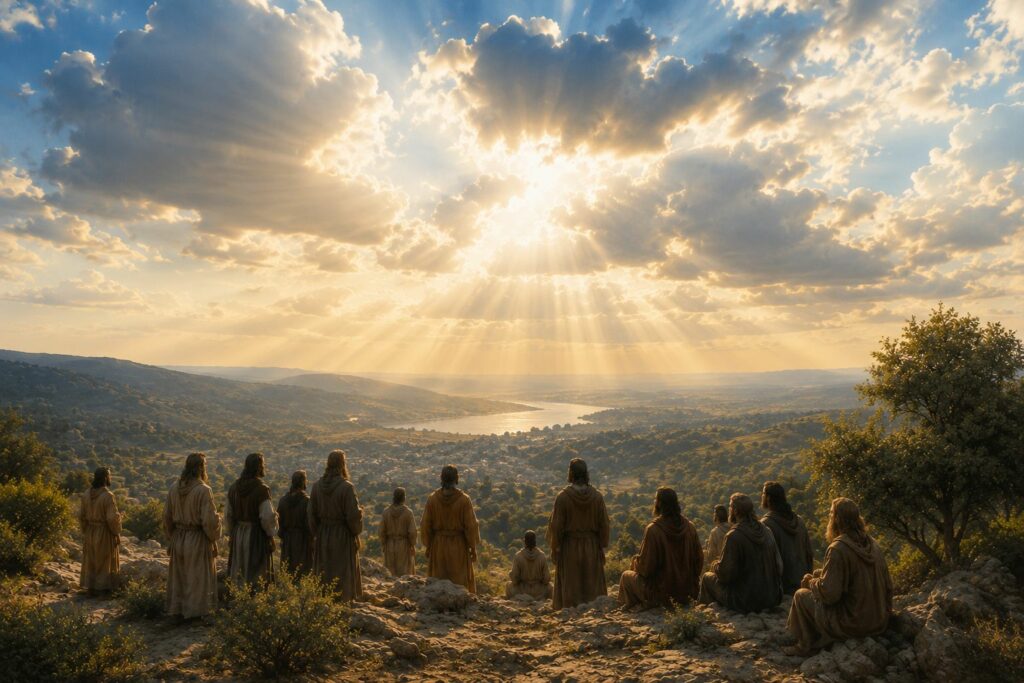
Later, Jesus gathers His disciples together once more. Together they leave Jerusalem and climb a mountain east of the city — the Mount of Olives. This is the day of the Ascension — the fortieth day.
There Jesus speaks to them one final time. He tells them that His task on earth has now been completed. Now they must proclaim the Gospel to the ends of the world. (Acts 1:4–8) He also tells them that the Holy Spirit will help the apostles build the Church and proclaim the Gospel to the ends of the earth.
After these words they saw Jesus being lifted up. A cloud took Him from their sight. (Acts 1:9)
… stunned and confused, the disciples continue staring upward … Then angels say: “Why do you stand looking into heaven? As you have seen Him ascend into Heaven, so He will return.”
This almost literally means: Continue onward. It is only beginning now.
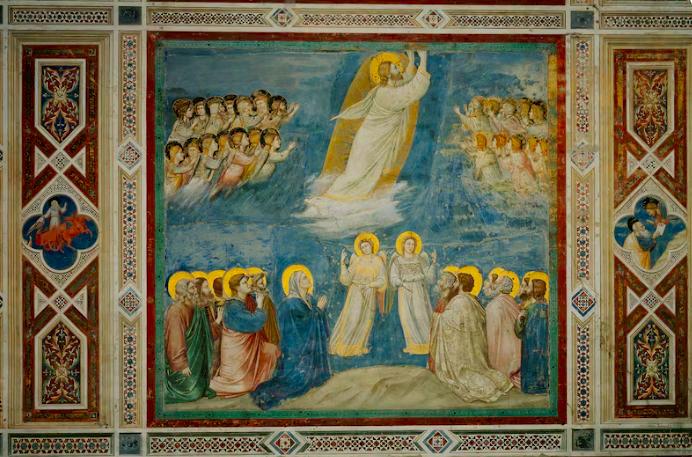
Jesus is taken up upon a cloud and returns to the Father to take His place at His right hand. From this moment onward we may truly call Him King.
His work on earth is now complete. He restored the connection between Heaven and earth — and that work is fulfilled. We are once again connected with Heaven.
For the disciples this feels not only like joy, but also like letting go. Yet Christ does not remain absent.
The priest celebrates this by saying: “Almighty God, let us rejoice and be glad in thanksgiving, because the Ascension of Christ, Your Son, is also our exaltation. His glory with You is our hope, for we form one body with Him who is our Head: Jesus Christ our Lord.”
The first known celebration of Ascension Day dates from the 4th century. Described by church historian Eusebius. Later it became a regular holiday. Ascension Day always falls on a Thursday, thirty-nine days after Easter (the fortieth day of Easter) and ten days before Pentecost.
Especially during the Middle Ages this was experienced in a highly visible and sensory way. In monastic life — within commanderies, monasteries, and chapels — Ascension was celebrated with special Masses, the Divine Office, solemn feasts, and fasting periods.
Here our spirituality becomes visible: Christ as the exalted King — not worldly, but with eyes directed upward. Journeying onward, living between Heaven and earth.
Often something remarkable happened in churches during the liturgy:
• images of Christ were lifted upward toward the vault or tower,
• sometimes through an opening in the ceiling,
• accompanied by incense, bells, and singing,
• while flower petals or white cloths fell downward as symbols of blessing or the presence of angels.
Ascension was therefore not merely “told” — people attempted to make it almost tangible.
Processions were also very common:
• outdoors through the fields,
• alongside farmland,
• with prayers for protection and fertility.
The Paschal Candle continues burning at every celebration until Pentecost. This strengthens the unity with Easter — the feast of the Resurrection, the feast of Light. Ascension is not a feast of Jesus’ absence. It is a feast of His continuing presence among us as the glorified Lord.
We also remember that in 1891 Pope Leo XIII issued the papal encyclical on social justice, Rerum Novarum. On this day abbey pilgrimages were traditionally walked.

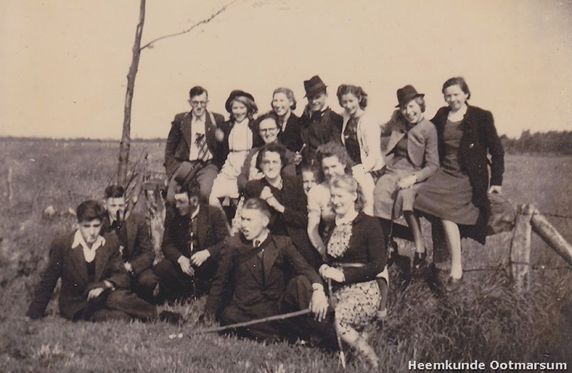
Dew walking in the previous century — source: photograph from the Historical Society of Ootmarsum 👆🏻
An old tradition that still survives today is the custom of “dew walking” on Ascension Day. In earlier times, people likely rose as early as three o’clock in the morning on Ascension Day to sing and dance barefoot upon the grass. The term “dew walking” is believed to originate from this tradition. The dew upon the grass was thought to possess a purifying power. This was done to celebrate the May feast or the rebirth of nature.